

Morley and Parker (2010) define information system as a discipline that is formed from elements of business and computer science and is developing to form a separate area of scientific study. It has been stated that “healthcare information systems and healthcare processes are closely entwined with one another. Health care processes require the use of data and information and they also produce or create information” (Wager et al, 2009, p.65) Three basic components of system are explained by Bagad (2010) as input, process/transformation and output. In information system inputs are data that are going to be transformed. The process component of an information system transforms input into an output. Output is considered to be the final product of a system. In case of an information system, an output would be obtaining necessary information in a desired format (Currie, 2009). Explanations of all of the components of information system are offered by Stair et al (2008) in the following manner: Components of information system Definitions Data Input the system takes to produce information Hardware A computer and its peripheral equipment: input, output and storage devices; hardware also includes data communication equipment Software Sets of instructions that tell the computer how to take data in, how to process it, how to display information, and how to store data and information Telecommunications Hardware and software that facilitates fast transmission and reception of text, pictures, sound, and animation in the form of electronic data People Information systems professionals and users who analyse organisational information needs, design and construct information systems, write computer programs, operate the hardware, and maintain software Procedures Rules for achieving optimal and secure operations in data processing; procedures include priorities in dispensing software applications and security measures Source: Stair, R.M, Reynolds, G & Reynolds, G.W. (2008) “Fundamentals of Information Systems” fifth…

Secondary data authors have proposed specific strategies public sector organisations can use in order to increase customer satisfaction levels. The most popular recommendations proposed by secondary data authors include adopting business approach towards the issues of customer services, increasing the level of funding of customer services, institutionalising training and development programs for public sector customer service representatives, outsourcing customer services operations to the private sector, and increasing the level of accountability of public sector customer service managers. Adopting Business Approach towards the Issues of Customer Services The most popular recommendation found during the literature review in terms of increasing the quality of customer services in public sector organisations relates to the adoption of relevant business principles. Recommendations of this nature have been offered by authors like Kassel (2010), Sims (2010) and Starling (2010). The authors point to the high customer service standards in the private sector, and argue that the duplications of those practices by public sector could offer the benefits of increased levels of customer services. However, there is a serious shortcoming associated with the works of above mentioned authors. Specifically while they give a recommendation of adopting business approach towards the issues of customer services they recommendation is very general and authors fail to offer any specific guidance in terms of how the business approach could be efficiently adopted by public sector organisations. Increasing the Level of Funding of Customer Services Beevers (2006), Flynn (2007) and Bovaird and Loffler (2009) associate the issues of lower customer services quality in public sector compared to the level of customer services of private sector to the amount of funding organisations in each sector attract. The authors convincingly argue that private sector organisations justly associate the achievement of their organisational objectives with the level of customer satisfaction that is directly…

“A literature review introduces the problem, develops the background by providing a history of scholarly work on the subject, and ends with the purpose and the rationale for the study” (Wysocki, 2007, p.215). According to Brown (2006) there are five criteria for the evaluation of the validity of literature review: purpose, scope, authority, audience and format. Accordingly, each of these criteria have been taken into account and appropriately addressed during the whole process of literature review. McNabb (2008), on the other hand, formulates three fundamental purposes of literature review that are described below: First, literature review shows the audience of the study that the author is familiar with the major contributions that have already been done to the research area by other authors. Second, literature helps to identify the key issues in the research area and obvious gaps in the current literature. Third, the literature review assists the readers of the research in term of comprehending the principles and theories that have been used by the author in different parts of the study. References Brown RB, 2006, Doing Your Dissertation in Business and Management: The Reality of Research and Writing, Sage Publications McNabb, DE, 2008, Research Methods in Public Administration and Non-Profit Management: Qualitative and Quantitative Approaches, 2nd edition, ME Sharpe Wysocki, DK, 2007, Readings in Social Research Methods, Cengage Learning
By John Dudovskiy
Category: Literature Review

Kotler and Keller (2006) state that people usually buy familiar brand because they are comfortable with products or services with which they are familiar. Moreover, there is also an assumption that a familiar brand is probably reliable and also of better quality as it has been previously consumed by the consumers. Therefore, a familiar brand is preferred over an unknown branded product as customers tend to give preference over the brand they hardly heard of or used. Moreover, this is also supported by Hall et al (2007) who state that unknown brands have little chance, if any, in today’s competitive marketplace. Therefore, creating awareness of the brand in the marketplace is one of the challenges for many businesses due to the fact that this process is very costly and requires well-tailored strategy to accomplish. As the table above illustrates, the more brand awareness is achieved, the higher the sales to be achieved by the company. The table shows an example to Prada, a luxury fashion brand product which it has been achieving higher sales as it has been improving its brand awareness in the marketplace. This is to say that Prada brand image is already well-established; however, it still keeps updating to promote its brand image in order to increase the awareness of its brand in the minds of its consumers. The table above also illustrates the stages of achieving the brand awareness in the marketplace. This is to say that the brand starts with “Brand foundation” stage where the company puts its efforts to make its brand’s identity and relevant to its core business purposes. This is followed by above the crowd stage, as the company achieves to differentiate its brand image from other competitors in the market. The next stage of the brand building or improving the brand…

The ultimate level is brand name dominance where, in a recall task, most customers can only provide the name of a single brand such as Coca-Cola, Steak Sauce, Kleenex, Xerox and many more. This shows that dominance of the brands on the peoples’ mind. This is usually referred as a successful brand positioning and promotion as the value of the company also increases together with the value of the brand name. However, ironically this ultimate success may be tragic if the brand name becomes such a common label for the product that is not legally protectable and is lost. This happened in the cases of Aspirin, Cellophane, Escalator and Windsurfer. In order to avoid losing the trademark, a firm should begin protecting it early in its life by starting with the selection of the name itself and beware of the descriptive names such as Windows as it becomes harder to distinguish from the generic product and hence harder to protect. In the case of luxury brand fashion products, it does not seem to be a reason for concern as majority luxury brand fashion products already have their unique and patent protected names which are not also generic names which are hard to protect. However, they still have to be careful about making their products or brand names to be used to describe other similar products in the market as it creates confusion and damages the brand name and image.

Baker (2007) states that as markets have become more competitive and products have only marginal differences in their physical formulation, it becomes critical and very important for the companies to add psychological values through their advertisement and packaging and other aspects of the marketing mix. This indicates that the companies, in order to differentiate their brands and products in the competitive market are spending more than before in order to attract and retain more customers. Burrow (2008) further supports Baker (2007) in regards to the ever increasing budgets for the advertisement and promotional strategies employed by the companies in order to promote their brand images to differentiate their products and services in the competitive market. He states that one of the top spenders in the industry are Jewellery sector, Chemists, Sport Shops and Luxury Brand fashion products as they consider their success through advertisement and promoting their brand images. Gilbert (2003) defines the brand personality as being a unique mix of functional attributes and symbolic values. The functional values of the brand are extrinsic tangible product properties such as hardwearing or easy to use function of the product, whereas the symbolic values of the product describe intangible properties such as friendliness or fun sides of the products which are usually achieved through promotion and advertisements in order to make these features popular to the segment market consumers. Burrow (2008) states when a brand is created and promoted which is strong both in functional attributes and symbolic values, if promoted successful, then these brands become part of the peoples’ life styles. This is to say that the consumers start talking about the brand personality, its image and try to link it to their own personal needs and wants as it integrates into their personal life standards. Therefore, it can be said…

The positioning of the products, namely the luxury brand fashion products which are designed and aimed at upmarket customers in the form of differentiated products may have several forms and varieties. This is to say that the luxury brand fashion products can be positioned in the market based on the usage or function of the product, price of the product, being a substitute product and many more. According to Callen (2009) luxury brand fashion products may be positioned in the market as a substitute product to products. This is to say that even if there is already a product which is targeting the same upmarket segment, the new substitute product may be offered that adds some twists and changes to the product that may also create another niche market within the concentrated and niche market. Even though this marjet segment tends to smaller than the original market segment, it still can be profitable and worth positioning by luxury brand fashion products as the prices for the products will be too high compared to other market segments. Alternatively, Hackley (2009) states that the price may be another focus when positioning the luxury brand fashion products. In the high street clothing industry, the top designer brands usually create their designs first, which is usually copied and launched to the market market by other mid-to-low market focusing companies. However, in some cases, a company in the mid-to-low market may launch a product that may trigger the luxury brand fashion company to launch the similar product to the upmarket as exclusive and unique product as some customers are willing to pay extra for the extra add-ons on the products. The author calls this as copying from midmarket and introducing it to the upmarket which usually have been successful in the high street fashion sector…
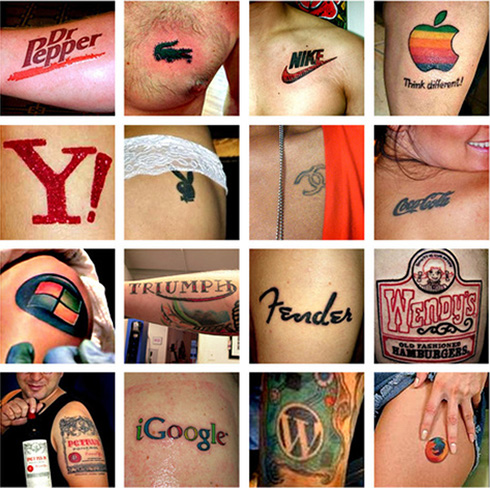
Kitchen (2010) states that retailers should focus on building a customer relationship marketing in order to build a brand loyalty of their customers in order to promote their repetitive purchasing behaviour. He further mentions that some consumers use the same retail outlet or purchase the same brand of product in most occasions. This leads to a loyalty either to a particular store or brand thus store or brand loyalty. There are several reasons for basing customer loyalty either on brand or the store which are as follows: Kotler (2003) states that some customers are loyal to stores due to the monopoly position of the stores as they have no other alternatives for their shopping decisions. This leads to a compulsory brand loyalty where the retailers enjoy loyalty to their stores, but not often to their brand names which is not usually assumed to be a long-term loyalty by their customers. Inertia loyalty is another example of loyalty to specific brand names where customers remain loyal to certain brand names due to the level of satisfaction they get from it, therefore, do not seek other alternatives as they do not wish to try something new. This type of loyalty is a loyalty to brand names rather than the stores which usually leads to relatively longer term loyalty by customers. In this type of loyalty, customers usually follow the same type of brand names wherever they go. Lancaster et al (2002) mention about convenience loyalty where customers tend to stick to their local retailers due to convenience and comfort. This is usually referred as casual loyalty, but does not tend to be a long-term loyalty by customers. However, in the case of this dissertation, this type of brand loyalty does not apply or suit the branding strategies of the high street luxury…

Kotler (1997) defines a brand as a name, sign, symbol or design or a combination of them, intended to identify the goods or services of one seller or group of sellers and to differentiate them from those of competitors. By creating brand image and name, retailers, especially luxury brand companies which target upmarket customers usually differentiate their products, hence charge higher prices. Hall et al (2007) also supports Kotler (2007) and states that when promoting the brand image and name, retailers should be aware of the specific market segment they are targeting as luxury brands usually tend to focus on niche market. Lancaster et al (2002) also mentions about the importance of strong and popular brands as a key to a long term and consistent success in the future. They state that successful branding is derived when the company can associate or create a personality of the brand and when customers can not imagine their lives without those brands or these brands become an active part of their lifestyle. Gilbert (2003) further illustrates the importance of the brand as by associating it to emotions and experiences. He states that an individual’s awareness of the world is made up of experiences, learning, emotions and perceptions or in other words cognitive evaluations of such experiences. This image obviously creates an individual’s preference and motivation towards products as it will provide a pull effect resulting in different demand schedules. Therefore, he defines a success of brand as not what thet company outs in it, but how the customers perceive it and associate it to some of their emotional and cognitive evaluations. The strong positive brand is very important in the developed and highly competitive markets. Therefore, the UK is an example for a marketplace where the existence of a strong positive brand image…

The main time management challenges include interruptions, distractions, procrastination and dealing with lateness. Let’s analyse each of these challenges in detail. Interruptions and Distractions Authors define interruption as “when an external force, such as phone ringing or a person walking into your office and asking a question, breaks your attention” (Evans, 2008, p.35). Negative impacts of interruptions and distractions in effective management of time have been mentioned by Green and Skinner (2005), Limoncelli (2006), Butler and Hope (2007), Mancini (2007), Rivera (2007), Tracy (2007), Alexander and Dobson (2008), and Becker and Mustric (2008). It has been also noted that “a distraction takes your attention away from the task in front of you to focus on something else, often something more interesting” (Evans, 2008, p.35). Green and Skinner (2005) consider the loss of focus to be the greatest disadvantage of interruptions. Limoncelly (2006) defends this viewpoint by confirming that “interruptions are the natural enemy of focus. They steal time from us both directly and indirectly” (Limoncelli, 2006, p.12). The major interruptions and distractions for successful time management identified during the literature review include phone calls, unexpected visitors, meetings, mail and e-mail, internet and family obligations. Phone Calls In relation to dealing with phone calls Rivera (2007) recommend using voice mails and setting aside a specific time during the day to return the calls. Rivera (2007) argues that the advantages of such an approach include being more prepared to deal with the caller through having time to think about the issue before returning the call. A more proactive approach is recommended by Becker and Mustric (2008), who recommend setting specific times for during the day for receiving the call as well, and communicating this time to usual contacts. Tracy (2007), on the other hand, recommends to be avoiding small talks…