
Snowball sampling

Snowball sampling is a non-probability sampling method in which existing participants help researchers recruit additional participants. It is particularly useful when studying hard-to-reach, hidden, specialised, or restricted populations where no complete sampling frame exists.

On This Page:

  • Snowball Sampling Explained Simply
  • What is Snowball Sampling?
  • Snowball Sampling vs Convenience Sampling
  • Types of Snowball Sampling
  • How Snowball Sampling Works
  • Snowball Sampling in Business Research
  • Common Mistakes
  • Advantages and Disadvantages of Snowball Sampling
  • Snowball Sampling in the Age of AI and Digital Research
  • When to Use Snowball Sampling
  • Exam Tip


Aspect Snowball Sampling Convenience Sampling
Participant recruitment Through referrals Through availability
Suitable for hidden populations Highly suitable Usually unsuitable
Researcher control Moderate Higher
Sampling bias High High
Cost Usually low Usually low
Generalisability Limited Limited

Snowball sampling vs convenience sampling (comperative table)

Snowball Sampling Explained Simply

Imagine you want to study venture capital investors who specialise in artificial intelligence start-ups. There is no public list containing all such investors. You interview one investor and ask them to introduce you to others in their professional network. Those participants then refer additional investors, and the sample gradually grows.

This is snowball sampling.

A similar approach may be used when studying cryptocurrency traders, senior executives, whistleblowers, luxury club members, startup founders, or employees working in highly specialised industries.

In simple terms, researchers start with a small number of participants and allow the sample to expand through referrals, much like a snowball rolling downhill and increasing in size.

Not sure whether snowball, purposive, convenience, or stratified sampling is most appropriate for your dissertation?

The Dudovskiy AI Research Assistant can recommend the most suitable sampling strategy and generate a complete methodology justification tailored to your research topic.

What is Snowball Sampling?

Snowball sampling, also known as chain-referral sampling, is a non-probability sampling technique in which existing participants identify and recruit additional participants who possess characteristics relevant to the study. Unlike probability sampling methods, not all members of the population have a known chance of selection. Instead, access to new participants depends on referrals from existing participants.

Snowball sampling is particularly useful when:

  • the population is difficult to identify
  • participants are difficult to access
  • no complete sampling frame exists
  • trust and personal connections are important
  • the population is relatively small or specialised

For example, researchers studying angel investors, elite golf club members, expatriate entrepreneurs, or cybersecurity experts may struggle to identify suitable participants directly. In such cases, referrals often become the most practical recruitment strategy.

Types of Snowball Sampling

Researchers commonly distinguish between three forms of snowball sampling.

1. Linear snowball sampling. Linear snowball sampling begins with a single participant. That participant refers one additional participant. The newly recruited participant then refers one further participant. The process continues until the desired sample size is achieved. This creates a simple chain of referrals.

Linear snowball sampling

2. Exponential non-discriminative snowball sampling. In this approach, each participant provides multiple referrals. All referrals may potentially be recruited into the study. As a result, the sample expands rapidly and can grow exponentially. This version is often used when researchers need to recruit participants quickly.
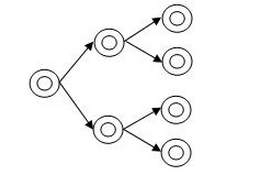
Exponential Non-Discriminative Snowball Sampling

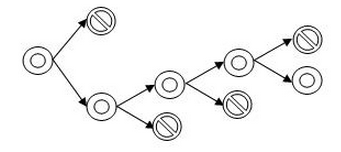
3. Exponential Discriminative Snowball Sampling. Participants again provide multiple referrals. However, researchers selectively recruit only those participants who best fit the study’s aims and objectives. This approach provides greater control over sample composition while still benefiting from referral networks.Exponential Discriminative Snowball Sampling
How Snowball Sampling Works

The application of snowball sampling generally involves several stages.

Stage 1: Identify Initial Participants. Researchers begin by recruiting one or more participants who possess characteristics relevant to the study. This is often the most challenging stage because suitable participants can be difficult to locate.

Stage 2: Request Referrals. Researchers ask the initial participants to identify additional individuals who meet the study requirements.

Stage 3: Recruit New Participants. The referred participants are contacted and invited to participate.

Stage 4: Continue the Referral Process. Each new participant may then identify further potential participants. The sample gradually expands through referral chains.

Stage 5: Stop Recruitment. Recruitment usually stops when:

  • the desired sample size is reached
  • data saturation occurs
  • no new referrals emerge
  • additional recruitment becomes impractical

Snowball Sampling in Business Research

Snowball sampling is widely used in business and management research when studying specialised professional groups. For example:

  • Researchers investigating startup founders may use referrals among entrepreneurial networks.
  • Studies involving venture capital investors often rely on industry contacts.
  • Research examining senior executives may recruit participants through professional introductions.
  • Studies of management consultants may use referrals within consulting firms.

Suppose a researcher wishes to examine leadership styles among senior managers at McKinsey & Company. Obtaining direct access to a large number of senior consultants may be difficult. However, after interviewing one senior manager, that participant may introduce the researcher to colleagues who also satisfy the study requirements.

Similarly, studies involving employees within a specific organisation often use snowball sampling because existing participants can help identify additional colleagues willing to participate.

Common Mistakes

One misunderstanding frequently encountered among students is assuming that snowball sampling automatically produces representative samples. Because participants recruit others from their own networks, certain viewpoints may become overrepresented. Researchers sometimes fail to recognise the influence of network bias. Individuals often refer people who share similar backgrounds, experiences, or perspectives, reducing diversity within the sample.

Another challenge occurs when researchers rely excessively on a single referral chain. This may produce a sample dominated by one particular subgroup while excluding others. Some students also neglect ethical considerations associated with referrals. Participants should never feel pressured to disclose personal contact information without consent.

Finally, snowball sampling is occasionally selected simply because participant recruitment appears easier, even when more appropriate sampling methods are available.

Advantages and Disadvantages of Snowball Sampling

One major advantage of snowball sampling is its ability to access hidden or difficult-to-reach populations. Researchers can often recruit participants who would otherwise remain inaccessible.

Another strength is cost-effectiveness. Existing participants help identify new participants, reducing recruitment effort and expense. The method is also relatively quick to implement and often requires limited administrative planning at the beginning of the study. Snowball sampling can be particularly valuable when trust plays an important role in participant recruitment because referrals from known contacts may increase participation rates.

However, snowball sampling also has important limitations. Sampling bias represents one of the most significant weaknesses because participants tend to recruit individuals from similar social or professional networks. As a result, findings may not represent the wider population accurately.

Another limitation is the inability to calculate sampling error or make strong statistical generalisations because participant selection is non-random. Researchers may also encounter ethical concerns when participants are asked to provide details of friends, colleagues, or professional contacts. Finally, the success of the sampling process depends heavily on participants’ willingness to provide referrals.

Snowball Sampling in the Age of AI and Digital Research

Digital technologies have significantly expanded opportunities for snowball sampling. Professional networking platforms such as LinkedIn, industry forums, online communities, startup ecosystems, and specialist social media groups make it easier than ever for researchers to identify and recruit participants through referral networks. Digital communication tools also allow referral chains to develop rapidly across geographical boundaries.

Researchers studying cryptocurrency investors, technology entrepreneurs, remote workers, AI specialists, or digital content creators frequently use online referral networks to recruit participants. AI-powered networking platforms can also help identify connections between individuals, organisations, and professional communities that may support participant recruitment.

At the same time, digital environments introduce new challenges. Online referral chains may become concentrated within algorithmically connected communities, creating echo chambers that reduce sample diversity. Researchers must also consider issues relating to privacy, informed consent, authenticity of online identities, and potential misuse of personal information.

Although digital technologies have made snowball sampling more efficient, researchers must continue to evaluate sample diversity carefully and acknowledge limitations relating to representativeness and network bias.

Need help justifying snowball sampling in your dissertation methodology chapter?

The Dudovskiy AI Research Assistant can explain when snowball sampling is appropriate, identify its limitations, and generate a dissertation-ready justification linked to your research objectives.

When to Use Snowball Sampling

Snowball sampling is most appropriate when:

  • the target population is difficult to identify
  • no complete sampling frame exists
  • participants possess specialised knowledge or experience
  • access depends on trust and personal connections
  • the population is relatively small or hidden
  • exploratory or qualitative research is being conducted

For example, snowball sampling may be suitable when studying startup founders, venture capital investors, senior executives, expatriate managers, luxury club members, cybersecurity specialists, or employees within restricted organisational environments.

Use snowball sampling when participants are difficult to locate directly and existing participants can help identify others who meet the study requirements.

Exam Tip

Many students justify snowball sampling simply by stating that participants are “difficult to find.” This justification is often incomplete. Examiners usually expect you to explain why a sampling frame is unavailable, why alternative sampling methods are impractical, and how referral-based recruitment helps achieve the research objectives. A strong justification also acknowledges limitations relating to representativeness and network bias.

Still not sure if snowball sampling is the right choice for your dissertation?

Get a clear, justified methodology for your research topic in minutes


My e-book, How to Write a Dissertation: A Step-by-Step System to Plan, Write and Defend Your Dissertation in the age of AI contains discussions of theory and application of research philosophy. The e-book also explains all stages of the research process starting from the selection of the research area to writing personal reflection. Important elements of dissertations such as research philosophyresearch approachresearch designmethods of data collection and data analysis are explained in this e-book in simple words.

How to Write a Dissertation: A Step-by-Step System to Plan, Write and Defend Your Dissertation in the age of AI

Download the e-book and start making progress today


Preparing to Defend Your Methodology?

Understanding research design is one thing. Defending it under examination is another.

If you would like structured guidance on how to justify your methodological choices, respond to challenging viva questions, address limitations confidently, and navigate academic integrity in the AI era, you may find the following resource helpful:

The Dissertation Methodology Defense Manual in the AI Era: Examiner-Proof Justification & Academic Integrity Framework

The manual provides a structured system for aligning your research design, strengthening your justifications, and preparing for defense scenarios with clarity and confidence.

The Dissertation Methodology Defense Manual in the AI Era

Download the manual and prepare to defend your methodology with confidence

John Dudovskiy


[]