

According to Reece et al. (2010), in order to be considered a viral marketing, marketing campaigns need to be associated with a value for sender and receiver, they need to be free and reproducible and marketing campaigns need to be spread exclusively via the internet. Zarella (2010) specifies the goals of viral marketing strategy as customer attraction, increasing the level of customer loyalty, and achieving a higher level of brand awareness. According to Waldow and Falls (2012) viral marketing is different from advertising in a way that it promotes products and services in an indirect manner. Carriers of viral marketing message have been specified by Middleton (2012) as satisfied customers, individuals that are aspiring to be customers, journalists, and experts in the field. These carriers can transmit the viral marketing message in active and passive ways. Active transmission of a viral marketing message involves carriers to be spreading the message in active ways, such as making direct recommendations via internet. Passive transmission of a viral marketing message, on the other hand, occurs in situations where a particular brand or product is promoted by carriers indirectly, such as through letting others know about the act of purchasing from a specific brand. Anjum (2011) divides the costs of engagement in viral marketing into three categories: free, indirect, and direct. Viral marketing can be automatically facilitated free of charge when the product is innovative or it offers competitive benefits that are appreciated by consumers. In such occasions innovative features of the product or its competitive benefits become a viral marketing message to be spread by internet users with no costs for the manufacturer. Wirtz (2012) mentions the promotion of Apple’s Iphone in online channels as a case study for free viral marketing. Indirect costs for viral marketing occur when marketing staff of a…

Sweeney (2006) divides viral marketing into three categories: a) word of mouth; b) ‘pass it on’ concept; and c) product or service based viral marketing. An alternative classification of viral marketing according to the degree of requiring the customer’s activity in forwarding the viral marketing message is offered by Clarke and Flaherty (2010). Specifically, the authors divide viral marketing strategies into two categories: low and high integration strategies. An example for a viral marketing strategy with low integration include ‘send this to friend’ icons that might be used for a wide range of products and services such as greeting card services, newsgroup readers, calendars etc. High integration viral marketing strategies, on the other hand, requires the participation of customers in an active manner. Such participation may include downloading new programs, and discussing the advantages of products and services in an active manner. Mueller (2010) specifies four main forms of viral marketing as e-mails, facilitated viral, incentive-based viral marketing, and web-linked viral marketing. E-mails are perceived to be a basic platform for viral marketing, where e-mail contents or message in attachments may encourage the receiver to pass the message. Facilitated viral, on the other hand, is explained by Mueller (2010) as a technique that involves companies to place ‘e-mail your friend’ link I their web-site, so that e-mail addresses of additional perspective customers can be obtained. Incentive-based viral marketing, as the name suggests, is associated with the provision of certain incentives, either tangible or intangible, for individuals to share viral marketing messages. Lastly, web-linked viral marketing involves sharing viral marketing links in online publications, internet chartrooms, and social networking websites. Mueller (2010) notes the increasing popularity of this last form of viral marketing compared to others. More comprehensive study on various forms of viral marketing messages is conducted by Beneke (2010).…

The theory of Achievement Motivation proposed by David McClelland (1965) envisages that individuals have three different types of needs – need for achievement, need for power, and need for affiliation, but there is a difference between people in terms of the extent of influence of each need on their behaviour. It is important to note that “although workers may possess all these needs to some degree, each individual is most strongly motivated by one” (Lewis et al., 2011, p.150). Therefore, organisational managers are responsible to identify the nature of the need for each individual member of staff, and motivate them accordingly. References McClelland, D. (1965) “Toward a Theory of Motive Acquisition” American Psychologist

The evolution of viral marketing as a separate discipline in the field of marketing has been discussed by Thorne (2008). It has been stated that while a word of mouth marketing has been practiced for as long as several thousands years (Thorne, 2008), viral marketing is a new concept enabled by internet. Specifically, Thorne (2008) relates the evolution of viral marketing to a marketing move initially initiated by in internet company, Hotmail. According to Thorne (2008), viral marketing has been introduced in a way that an offer of opening a free Hotmail account had been placed within the footer area of e-mails sent from Hotmail accounts. In addition to the initial Hotmail viral marketing campaign, Linkoln (2009) states, the movie ‘The Blair Witch Project’ can also be credited for the development of viral marketing as an effective marketing strategy. The following the defining stages can be marked in development of viral marketing: Hotmail attracting 12 million users in 18 months in mid 1990’s with digital media coming into prominence. Although, after the introduction of social networking websites such as Facebook and Google+ these websites have been able to attract more numbers of users in less period of time, the fact that Hotmail enlisted 12 million users in 18 months in the mid 1990’s were considered to be a phenomenon at that stage of the development of internet. The recognition of marketing potential through dot.com mainly starting from 2000’s. The dot.com boom that has started at the beginning of the 21st century can be specified as a new era in the development of viral marketing, as rapidly increasing level of interest on internet at that period of time has had a positive correlation with the level of interest on viral marketing. Online advertising entering a new stage from the…
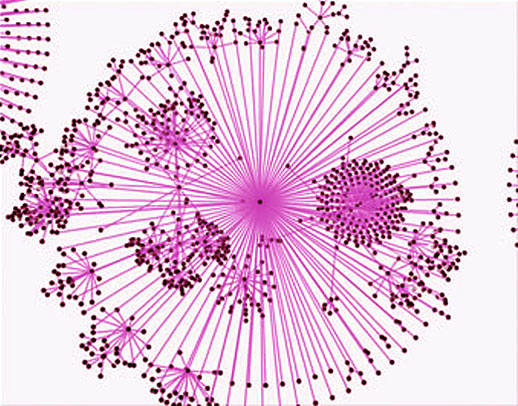
The most noted advantages of viral marketing include cost advantages, its non-interruptive manner, high level of scope, potential of reaching large numbers of customers, effective customer targeting, and high and rapid response rate. Cost Advantages The majority of authors addressing the topic of viral marketing praise the cost advantage benefits of viral marketing campaigns. It has been stressed that “a viral marketing campaign has a relatively low cost for development, depending on its sophistication, and is within budgetary constraints of many city marketing organisations” (Wober, 2002, p.294). Authors mention specific case studies where viral marketing campaigns with modest budgets were able to significantly contribute to the levels of brand recognition and brand loyalty. Specific viral marketing campaigns initiated by Mazda, Nike, Virgin Blue, and Old Spice can be mentioned to illustrate this point. Non-interruptive Marketing Absence or lack of intrusion and interruption has been noted in the literature as an additional substantial advantage of viral marketing. It has been noted that viral marketing campaigns “tend to be non-interruptive, so they enable consumers to choose to interact proactively with a communication, or not, rather than be passively dictated to” (Kirby, 2012, p.97). Lincoln (2009) specifies this aspect of viral marketing to be the major factor contributing to its success, and advises marketers to integrate elements of fun within viral marketing campaigns. High Level of Scope A high level of scope of the impact of viral marketing implies its potential to reach large numbers of customers in a global scale during a short period of time. This specific advantage of viral marketing has been stressed by Thorne (2008), Donovan and Henley (2010) and others. Due to the fact that it is facilitated through internet, viral marketing recognises no geographic boundaries and time restrictions in terms of reaching the target customer…

Strategic Human Resource Management (SHRM) can be explained as “a general approach to the strategic management of human resources in accordance with the intentions of the organisation on the future direction it wants to take” (Giri, 2008, p.21). In simple terms, SHRM attempts to achieve a high level of integration between corporate strategy and HRM. SHRM is perceived to be a much wider concept than traditional HRM in a way that SHRM addresses the impact of a range of factors on HR practices. Moreover, four major distinctive points of SHRM from traditional HRM can be specified in the following manner: a) SHRM concentrates on the level of efficiency of individual employee performances b) The importance of regularly introducing changes and organisational re-engineering is acknowledged within the framework of SHRM c) SHRM recognises the role of effective organisational leadership d) SHRM concentrates on team learning and sharing knowledge within organisations Evolution of HRM into SHRM, and its increasing role in organisational performance owes to intensifying level of competition in the marketplace. In other words, with the level of competition in the market becoming intense for almost all industries, businesses are actively striving to explore additional sources of competitive advantage. From this perspective, company human resources are proving to be an effective source of competitive edge through their creativity, and thus strategic approach to HRM is required in order to develop and sustain this important competitive edge. There are many examples in business world that illustrate positive implications of adopting strategic approach to HRM on organisational performance. For example, in UK based John Lewis plc 81,000 employees are called as Partners (Our Employees, 2012), and accordingly company human resources are treated as strategic partners in the achievement of long-term aims and objectives. Managers are recommended to approach HR aspect of the business…
By John Dudovskiy
Category: HRM

Employee recruitment can be explained as a process of finding and attracting job candidates that are suitable for the position to be filled. Once a number of candidates are short listed by the end of recruitment, the most suitable candidate(s) will be selected to be hired by the company. Employee recruitment process may comprise the following stages: Stage 1: Recruitment planning Recruitment process starts with recruitment planning with the analysis of the numbers and sufficiency of employees in order to achieve long-terms aims and objectives of the company. Importance of recruitment planning can be explained in a way that failure to deal with it appropriately can compromise long-term growth prospects for the company. Once the recruitment planning has identified the number of positions to be added in the company, job description and person specification for the position needs to be formulated in a clear and unambiguous manner. Stage 2: Identifying recruitment sources Recruitment sources can be divided into two groups: internal and external. To put it simply, internal recruitment involves recruiting candidates within the company, whereas external recruitment is recruitment of candidates not currently employed by the company. External sources of recruitment include educational institutions, data in job centres, job agencies, and even competitors. Internal sources of recruitment, on the other hand, include employee files and databases. Identifying a suitable recruitment source is important because the level of suitability of candidates for the job depends on the type of the recruitment source selected. Stage 3: Generating candidates Once a suitable recruitment source has been identified an adequate pool of candidates need to be generated. Candidates from external recruitment source can be generated through advertisements in the media, campus recruitment or with the assistance of relevant agencies. Generating candidates from internal recruitment source, on the other hand, can be…

Employee training and development can be specified as an important aspect of HRM and these importance further increases in times of global recession. To put it simply, times of global recessions and consequent challenges for businesses in many levels puts extra pressure for management at all levels to be more adaptive, flexible and focused. Accordingly, only highly qualified and motivated employees at all levels would be able to safeguard their company from becoming a history in times of economic uncertainties. Commitment to employee training and development in an effective manner can provide businesses a set of advantages such as high level of employee creativity, increased level of motivation to perform duties at work. In devising and implementing employee training and development programs individual learning styles of employees need to be taken into account and addressed in correct manner. Generally, learning styles are divided into seven catagories: visual, aural, verbal, physical, logical, social, and solitary. Furthermore, the provision of training and development programs for the workforce needs to include the principles of classical conditioning. Specifically, known as learning by association, conditioning theory highlights the role of stimuli and unconditioned response to it during the learning process. A high level of importance of investment in employee training and development in times of global economic recession is appropriately acknowledged by Emirates Airlines, one of the main players in the global airline industry. Specifically, amid growing challenges for the airline industry due to the global economic crisis, Emirates Airlines employee training and development programs and initiatives including Learning Resource Centres, My Learning Zone portal, and annual professional development courses were not impacted by company cost-saving programs. Organisational managers are recommended not to compromise the quality of employee training and development due to cost saving considerations in times of global economic recession. Such a practice…

Employee motivational tools can be divided into two categories: tangible and intangible. Tangible motivational tools include money, holidays, and other tangible perks and benefits in the workplace, whereas intangible tools of employee motivation include verbal and written acknowledgement of employee contribution, celebration of memorable dates such as birthdays, anniversaries and achievements, developing effective work environment etc. A major internet company, Google can be mentioned as a model workplace where design of workspaces and working environment has been developed in a way that they have positive impact on the level of employee motivation. Specifically, Google offices around the world are have many unique features in terms of design and decorations and these are aimed at increasing the level of employee motivation and creativeness. Organisational managers are recommended to recognise the level of employee motivation as one of the most crucial factors of competitive advantage in the market. Moreover, managers are recommended to use both; tangible, as well as, intangible motivational tools need to be used by management in an effectively integrated manner in order to benefit from highly motivated workforce.

Hertzberg’s (1959) Motivation and Hygiene factors represent a prominent model in the area of employee motivation. In this model employee motivation is found to be impacted by two major factors: motivators and hygiene. Hygiene factors such as company policies, compensation and working conditions do not necessarily motivate employees; however, their absence is most likely to cause dissatisfaction. Motivators, on the other hand, include the level of achievement recognition by management, career progress opportunities, and responsibilities associated with the position and these factors can be manipulated with in order to achieve higher level of employee motivation. Importantly, managers need to be able to distinguish between motivators and hygiene in their organisations, and they need to be able to achieve a positive impact of both factors. Intrinsic motivation- the self-generated factors that influence people to behave in a particular way or to move in a particular direction. These factors include responsibility (feeling that the work is important and that having control over one’s own resources), autonomy (freedom to act), scope to use and develop skills and abilities, interesting and challenging work and opportunities for advancement. Extrinsic motivation- what is done to or for people to motivate them. This includes rewards, such as increased pay, praise, or promotion, and punishments, such as disciplinary action, withholding pay, or criticism. McClelland’s theory (1961, p.214) assumes that people have three innate needs: the need for achievement, the need for affiliation, and the need for power. According to Adams’ theory (1965, p.82) employees always strive for equity between themselves and other workers. Equity is achieved when the ratio of employee outcomes over inputs are equal. Victor Vroom’s theory states, (1964, p.122) that employee effort will lead to performance and performance will lead to rewards. Rewards can be either positive or negative. Positive rewards will motivate employees, while negative rewards…
By John Dudovskiy
Category: HRM