

Kotler and Keller (2011) state that the importance of studying consumer buying behaviour as an area of marketing is increasing due to several factors. In order to offer any product or service to the customers businesses must understand their customers’ culture, social group and many other factors. Understanding these factors helps businesses to draw an effective marketing plan in order to satisfy the needs and wants of their customers in more efficient way. Another reason for increase the importance of the study of customer buying behaviour is intense pace globalization. According to Nargunkar (2008), globalization has changed the way the businesses operate and target their customers. As more and more businesses are operating in more than one country, they need to understand the different cultures and characteristics of their customers. As businesses grow geographically, their customer bases change and the needs of customers in one country varies from the needs of the customers in another country. Therefore, the study of consumer buying behaviour is essential in order to target all the customers in all different geographical areas. In addition, studying the consumer buying behaviour is essential especially in conditions of fierce competition in the market. As the number of companies in the same industry which offer the similar or even the same products or services to the customers, these businesses need to target the right segment. To make this happen, it is important to understand the buying behaviour of the customers Lancaster et al (2002). Another factor leading to the importance of learning customer buying behaviour is rapid advancements in the technology. Due to the development of information technologies and IT systems, learning the customer buying behaviour has become more practical and easier. It is also stated that the large and multinational businesses are investing significantly on improvements of their…
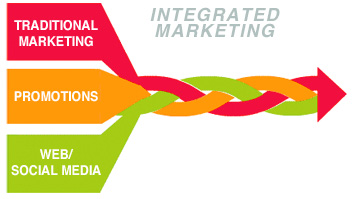
Integrated Marketing Communications can be defined as “a communication process that entails the planning, creation, integration and implementation of diverse forms of marketing communications that are delivered over time to a brand’s targeted customers and prospects” (Shimp, 2010, p.10). The integration of all marketing efforts is necessary, due to the fact that the core meaning of the brand need to be stressed by each individual marketing technique. The formulation of an effective brand core meaning has significant positive contribution to the growth of the business. It needs to be stressed that Integrated Marketing Communications is not just a buzzword or a management fashion. On the contrary, “Integrated Marketing Communications is not a fleeting but rather has become a permanent feature of the marketing communications landscape around the world” (Shimp, 2010, p.9). References Shimp, T.A. (2010) “Advertising, promotion, and other aspects of integrated marketing communications” Cengage Learning
Apkinstaller For Pc If the ACMarket app isn’t working for you, then try another app installer. Add-Ons – Customize your expertise even additional with free Add-Ons! Download and save regular pubg cyber week download information of varying measurement from the Web swiftly and successfully. GetJar is the world’s largest free app store with over 2 billion downloads thus far. The company distributes greater than 350,000 cellular functions throughout a variety of working systems together with Android, Blackberry, Java, Symbian and mobile net. 395,000 builders have registered with GetJar to distribute their apps. You can paste the Google Play retailer app ID to get the APK file in your desired apps. So open the location and have APK information of your favourite apps. Microsoft Edge is a new Internet browser that aims to unify the browsing experience for Android and Windows 10 users. Step 3 – Click on it and enable the immediate saying Unknown Sources to activate the third-party set up. How To Download The Apk Mod Of Youtube Premium? Of course, that depends on the user’s willingness to pay for the service. Despite its superb usability, some things may be improved. Ads, for instance, are the one thing that annoys YouTube customers essentially the most. The ad-free subscription, thus, is enticing if you want to save time and not to watch irrelevant propaganda. Yes, the ACMarket app is totally free to download and use. Simple and simple-to-use app with an interface just like the iOS app retailer on iPhone. So, tapping the display screen and avoiding the obstacle sounds simple. The essential feature of ThopTv is that it is utterly free. In 2011, GetJar was named as one of many ‘Ones To Watch’ by GigaOM Europe. GetJar is headquartered in Silicon Valley with places of work in the UK…

The term of ‘viral marketing’ has been coined by Steve Jurvetson in 1997 and it can be defined as “any marketing activity that accelerates and amplifies word of mouth in the digital domain” (Kirby, 2012, p.8). Alternatively, the following definitions of viral marketing have been proposed: “a marketing tactic relying upon the some aspects of the system to cause the promotion to propagate itself as initial targets pass the promotion onto others” (Investowords, 2013) “a process of encouraging honest communication among consumer networks” (Sickels, 2008, p.48) “any strategy that encourages subscribers to pass on marketing messages, thus creating the potential for exponential growth in the message’s exposure and influence” (Frith and Mueller, 2010, p.237) “an idea that spreads, and an idea that while it is spreading actually helps market your business or cause” (Godin, 2008, online). The rationale behind the wording of the term ‘viral marketing’ has been explained in a way that “the effects of this form of marketing is like a virus – one person does it, then another and another until the word has spread across entire communities” (Frith and Mueller, 2010, p.237). Practical advantages offered by viral marketing have been found to include lower expenses compared to many other marketing initiatives, possibility of reaching large numbers of customers during a short period of time, effectiveness because of the trust among members of a social group, and durability of viral marketing campaigns. Viral marketing campaigns often attempt to make an appeal to emotional aspects of consumers. This appeal can be based on a set of themes such as humour, compassion, motivation, achievement, sex and others. References Frith, K.T. & Mueller, B. (2010) “Advertising and Societies: Global Issues” Peter Lang Godin, S. (2008) “What is viral marketing?” Available at: www.sethgodin.typepad.com Kirby, J. (2012) “Viral…

Customer relationship management has been defined as “a business approach that integrates people, processes, and technology to maximise relationships with customers” Goldenberg (2008, p.3). Moreover, it has been stated that customer relationship management “characterises a management philosophy that is a complete orientation of the company toward existing and potential customer relationships” (Raab et al, 2008, p.6) Mueller (2010) characterises customer relationship management aspect of the business as a highly dynamic, and convincingly argues that businesses have to adopt a proactive approach in devising relevant programs and initiatives in order to remain competitive in their industries. Sinkovics and Ghauri (2009) relate the necessity for engaging in customer relationship management to high cost of direct sales, highly intensifying level of competition in the global level, and need for information about various aspects of the business in general, and consumer behaviour in particular, that can be used to increase the levels of sales. According to Peppers and Rogers (2011), there is global tendency in customer relationship management that relates to the shift from transactional model towards the relationship model. In other words, Peppers and Rogers (2011) argue that satisfying customer needs as a result of on-time transaction is not sufficient today in order to ensure the long-term growth of the businesses. Instead, businesses have to strive to maintain long-term relationships with their customers in order to maintain flexibility to adopt their increasing expectations and thus achieving their life-long loyalty. Peppers and Rogers (2011) further stress that, businesses that refuses to acknowledge this tendency in the global marketplace would be risking their market share and growth prospects in the future. One of the most critical sources for the research is the book “Relationship Marketing and Customer Relationship Management” authored by Brink and Berndt (2009). The book offers an in-depth discussion of the concept of…

Generally, views on CSR are divided into two categories: narrow and broad (Crane and Matten, 2007). Narrow view considers the only objective for business entities to consist of profit maximisation. On the contrary, according to the supporters of the broad view to CSR apart from their primary objective of maximising profits businesses are also responsible towards the society and community in which they operate in terms of addressing possible negative implications of their business practices. Urip (2010) convincingly argues that the numbers of supporters of narrow view to CSR have sharply declined in recent years due to the increasing level of focus CSR related issues are attracting from various organisational stakeholders. Amao (2011) further expands this point and associates the penalties for neglecting CSR aspect of business practice with damage to brand image and customer goodwill, and consequent threat to company’s long-term growth. References Amao, O. (2011) “Corporate Social Responsibility, Human Rights and the Law: Multinational Corporations in Developing Countries” Taylor & Francis Crane, A & Matten, D, 2007, “Business Ethics” second edition, Oxford University Press, Oxford, UK Urip, S. (2010) “CSR Strategies: Corporate Social Responsibility for a Competitive Edge in Emerging Markets” John Wiley & Sons

Convenience sampling is a non-probability sampling method where participants are selected based on their availability and ease of access. It is commonly used in exploratory research and pilot studies due to its simplicity, speed, and low cost. On this page: What is Convenience Sampling? How Convenience Sampling Works Examples of Convenience Sampling Advantages and Disadvantages When to Use Convenience Sampling Aspect Convenience Sampling Probability Sampling Selection method Based on availability Random selection Bias level High Low Representativeness Limited High Cost and time Low Higher Generalisation Not suitable Suitable Convenience sampling vs probability sampling What is Convenience Sampling? Convenience sampling (also known as availability sampling) is a specific type of non-probability sampling method that relies on data collection from population members who are conveniently available to participate in study. LinkedIn surveys can be mentioned as a popular example for convenience sampling. Convenience sampling is a type of sampling where the first available primary data source will be used for the research without additional requirements. In other words, this sampling method involves getting participants wherever you can find them and typically wherever is convenient. In convenience sampling no inclusion criteria identified prior to the selection of subjects. All subjects are invited to participate. In business studies this method can be applied in order to gain initial primary data regarding specific issues such as perception of image of a particular brand or collecting opinions of perspective customers in relation to a new design of a product. How Convenience Sampling Works In its basic form, convenience sampling method can be applied by stopping random people on the street and asking questionnaire questions. ‘Pepsi Challenge’ marketing campaign can be referred to as a relevant example for this sampling method. ‘Pepsi Challenge’ is occasionally held in large shopping centres and other crowded locations…
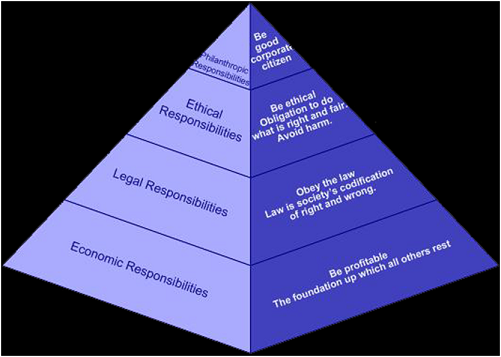
According to Blowfield and Murray (2008, p.21), as taken from Carroll (1979), company CSR activities can be classified into the following four groups: Economic responsibility. The responsibility of private entities of offering products and services to the marketplace according to the needs of society in order to make a profit. Legal responsibility. Companies have to operate within the boundaries of law in order to achieve their aims and objectives. Ethical responsibility. Ethical responsibilities of businesses include the types of responsibilities that are important, but at the same time they are not covered by law e.g. fair-trade. Discretionary responsibilities. Company responsibilities in this form, like philanthropy initiatives are not necessarily expected by societies, but they are usually welcomed by societies and create positive image for the business. This classification is also known as Carrol’s Pyramid of CSR and is best illustrated on the following figure: Source: Global Integration Business Consultants (2011, online) Alternatively, CSR initiatives are classified by Kotler and Lee (2005) into six broad categories that can are illustrated on the following table: Type of CSR activity Descriptions Cause promotions Resources spent by companies to promote a specific cause that benefits society in many levels such as eliminating poverty or fighting against child abuse Cause –related marketing A marketing campaign initiated by a business that highlights positive correlation between the amount of sales for the business and the amount of contribution to support a specific cause. Corporate Social Marketing Businesses promoting social causes such as healthy eating, caring about parents, quit smoking etc. Corporate Philanthropy This form of CSR involves businesses donating money or products of the company in substantial amounts in order to support specific causes. Community volunteering Businesses engaging their employees to work in a community sector for a specified number of hours on a voluntary basis Socially…
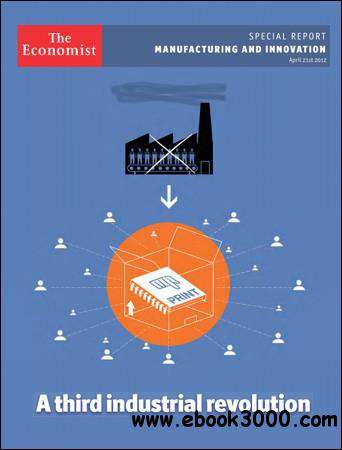
Intensifying forces of economic globalisation have facilitated the shift of production from highly developed countries such as the US and European countries to emerging superpowers like China, India, and Vietnam during the last several decades (Jacques, 2012). However, there is an argument that a set of technological breakthroughs such as introduction of 3D printing may reverse this shift. This article represents a critical analysis of the boomerang effect of competitive advantage in manufacturing in relation to developed countries as discussed in The Economist Special Report entitled Manufacturing and Innovation: A Third Industrial Revolution by Paul Markillie (2012). The article starts with a brief discussion about the rise of China as a world’s largest manufacturer. This is followed by discussing the likelihood of boomerang effect, i.e. shift of production back to rich countries. Moreover, the article contains a discussion of an alternative scenario analysing the chances for China to retain its current manufacturing leadership position in the global scale. Rise of China as a World’s Largest Manufacturer Cheap costs of human resources are widely believed to be one of the main reasons behind the emergence of China as the largest manufacturer in the world. According to the US Bureau of Labour Statistics only several years ago the cost of labour in Chinese factories was as low as 64 cent per hour whereas, hourly pay rate in the US factories amounted to $21.11 (Businessweek Magazine, 2004). Accordingly, this vast difference in employee pay rates has motivated many multinational businesses based in the US and Europe to outsource and offshore their manufacturing to China in an attempt to gain cost advantages. Moreover, highly increasing level of effectiveness of human resources in China can be specified as another factor that has contributed to its status of the largest manufacturer in the world. It has been…

Strategy can be defined as “a method or plan chosen to bring about a desired future, such as achievement of a goal or solution to a problem” (Business Dictionary, 2013, online). Selection of an appropriate business strategy and its effective execution plays a critical role on long-term growth prospects of any business regardless of the industry and geographical location. This first part of the article represents an assessment of strategic options for Eurofreeze, a global manufacturer of frozen food. The article starts with specifying the current strategic position of Eurofreeze. This is followed by development and application of scoring criteria for Eurofreeze. The first part of the article is completed by formulation of strategic statement for specific strategic option that has been selected for Eurofreeze. The current strategic position of Eurofreeze involves market leadership in branded meat and fish dishes. This position has been achieved through effective utilisation of a range of company core competencies such as sophisticated freezer technology, regular development of new frozen dishes recipes, effective organisation of distribution channels and focus on own branded products. Moreover, compared to its main rival – Refrigor, Eurofreeze possesses additional competitive advantages such as leadership in European market and stronger brand name. Today massive changes are taking place in frozen food industry fuelled by further increasing bargaining power of large supermarkets, extension of supermarket own brand ranges of frozen food, and the desire of supermarkets to sell only one leading frozen food brand along with supermarket own brand products. In order to address these changes in an appropriate manner Eurofreeze has to select a strategy option from the following five broad options available: The first option for Eurofreeze involves stop selling branded frozen food, as well as, own label vegetables and fruit, but this is going to result in reduction in…