
Search results for: Marketing Communication Mix

Red Bull GmbH is a multinational beverage company based in Austria that sells a famous Red Bull energy drink. The company sells its products in 162 countries, and 4,204 billion cans of Red Bull were sold during the year of 2010 alone (Company Figures, 2011, online). The company product range consists of Red Bull drink, Red Bull sugar free, Red Bull Cola and Red Bull energy shots. Its mission statement is: “We are dedicated to upholding Red Bull standards, while maintaining the leadership position in the energy drinks category when delivering superior customer service in a highly efficient and profitable manner” (Mission/Values, 2011, online) This article represents a report that presents analysis of marketing communication strategies of Red Bull in two countries – UK and China. The article comprises the review Red Bull’s current marketing communication strategy in UK and China and formulates recommendations for improvement and change for the company. Red Bull GmbH Report contains the application of the major analytical strategic frameworks in business studies such as SWOT, PESTEL, Porter’s Five Forces, Value Chain analysis and McKinsey 7S Model on Red Bull GmbH. Moreover, the report contains analyses of Red Bull’s business strategy, leadership and organizational structure and its marketing strategy. The report also discusses the issues of corporate social responsibility. Review of the Current Practice Red Bull’s Marketing Communication Strategy Usage of Marketing Communication Strategies by Red Bull Marketing has been identified as one of the most crucial aspects of the business by Red Bull along with many other businesses. Red Bull relies in marketing communication in order to conduct its marketing strategy. Marketing communication can be defined as “all communication activities an organisation undertakes to promote its agenda to its audiences” (Gillis, 2006, p.392). Marketing communication mix, on the other hand, has been defined as “a number…

The classical business concept of Aldi that had proved to be successful in Germany and many other countries had to be altered in UK and Switzerland due to a set of reasons. As we know the main business model Aldi practiced consisted of offering low priced limited range of products that was achieved by compromising the quality of customer service and shop premises. However, this strategy did not prove to be successful in UK and Switzerland and Aldi management had to change its strategy in these countries by increasing the prices of their products and invest extra financial resources that were created in this way in increasing the number of product range, improving the quality of the customer services, and increasing the spending on marketing communication mix. Taylor and Lee (2007) stress the importance of cultural differences in international buyer behaviour. Culture itself, can be defined as shared values and mindsets and methods of doing things within a specific group (Holden, 2002). Therefore, local cultural differences in UK and Switzerland were the main reasons behind the change of strategy practiced by Aldi. To be more specific, in Germany and many other countries value of the product is usually associated with cheap price of the product. In other words, if the product is cheap it is perceived as value by customers in Germany and a range of other countries. And this fact has ensured the success of traditional strategy of low pricing practiced by Aldi in Germany and many other countries. However, culture in UK and Switzerland is different in a way that if the price of the product is very cheap, consumers tend to form low opinions about the quality of these products. Value in UK and Switzerland is mainly associated with the quality of the product, not necessarily with…

Gap Inc. is a San Francisco based American retailer which sells clothing and accessories. The company was founded in 1969 by Donald and Dorris Fisher. The aim of the company is to help people to express their personal style throughout their life. The company comprises five brands: Gap, Banana Republic, Old Navy, Piperlime and Athleta. The company has 3465 stores worldwide with spores in Canada, France, Ireland, Japan, UK and US owned by the company and stores in other companies are operated by franchisers. Advertising Print and broadcast ads. Gap uses print and broadcast ads intensively both in UK and USA placing advertisements in newspapers and broadcasting its ads in some TV channels in both continents. Along with traditional print and broadcast advertising, sometimes original marketing campaigns are launched, which proved to be memorable and highly efficient in numerous occasions. For instance, Gap launched a print and television advertising campaign, “Favourites” in 2005 with the participation of acclaimed musicians, including Brandon Boyd, Alanis Morisette, Liz Phair, Joss Stone, Keith Urban and others, where each musician performed an original remake of their favourite song wearing their favourite Gap jeans. Packaging outer. The outer packaging for the products of the company is being used as efficient advertising medium by Gap with the eye-catching company logo displayed in large font in it. Billboards. Being one of the most efficient advertising tools, billboards are used by Gap Inc. both in UK and USA. However it is more intensively used in US cities than in UK. Point-of-purchase displays. This advertising tool refers to products being displayed within the point of purchase area in a way that it is convenient to add them to their shopping basket for the people who are already paying for other items. These are usually items that are small in…
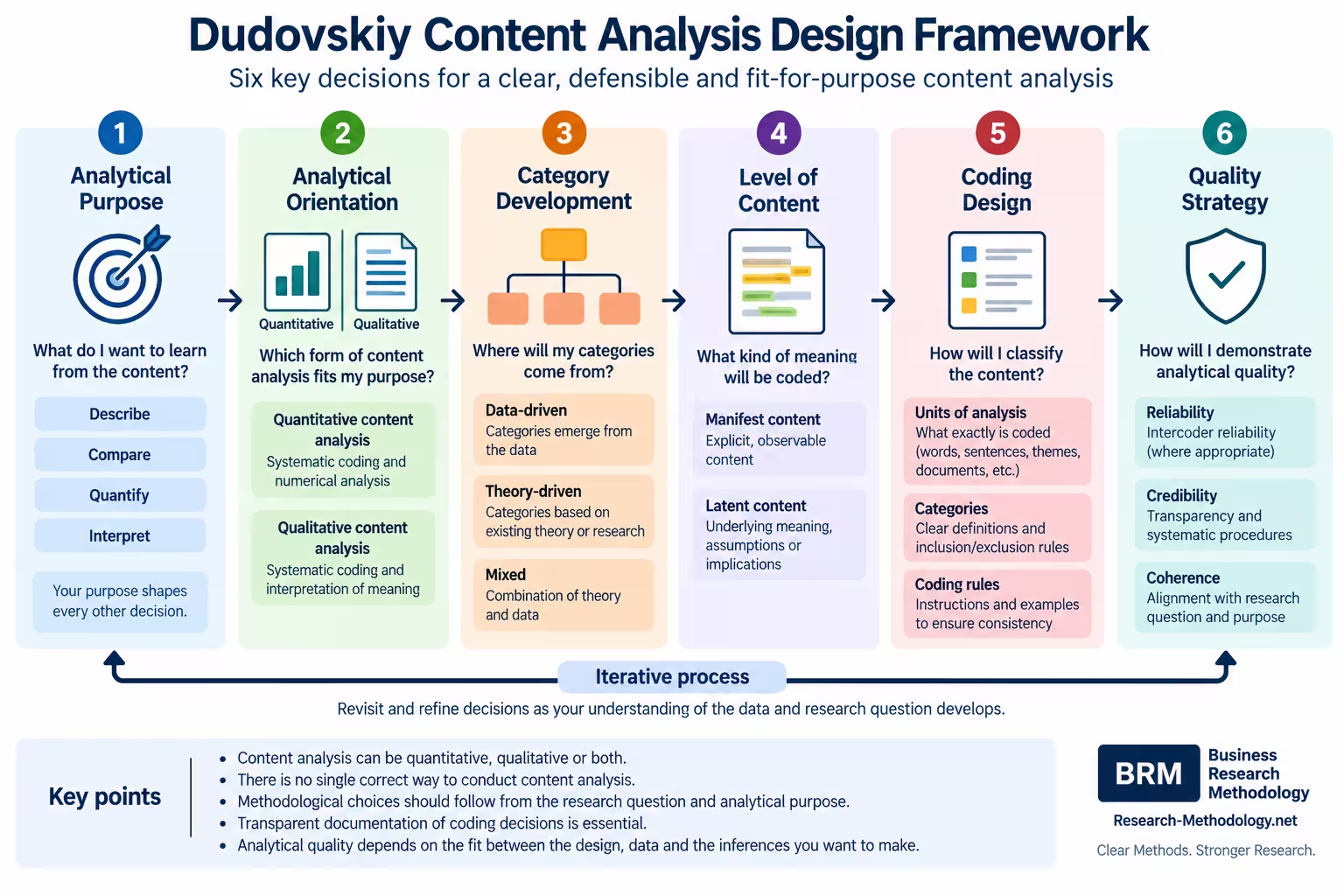
Content analysis is a systematic research method used to classify, analyse and interpret recorded communication such as documents, interview transcripts, websites, advertisements, social-media posts, annual reports and other textual or visual materials. It can be quantitative, where predefined categories are coded and their occurrence examined numerically, or qualitative, where systematic categorisation is used to interpret meanings and patterns within the material. The appropriate form of content analysis therefore depends on the research question, the nature of the data and what the researcher ultimately wants the analysis to explain. On this page Content analysis explained simply What content analysis is Qualitative vs quantitative content analysis Conventional, directed and summative content analysis Manifest vs latent content Dudovskiy Content Analysis Design Framework Units of analysis Developing a coding frame The content analysis process Intercoder reliability and quality Content analysis vs thematic analysis Reporting content analysis in a dissertation Application example Advantages and limitations Common mistakes Content analysis in business research Content analysis in the age of AI When to use content analysis Dissertation example Exam tip Content Analysis at a Glance Methodological decision Key question Main possibilities Analytical purpose What should the analysis reveal? Description, comparison, quantification, interpretation Analytical orientation What form of content analysis fits the purpose? Quantitative, qualitative Category development Where will categories come from? Data-driven, theory-driven, mixed Level of content What kind of meaning will be coded? Manifest, latent Coding system How will material be classified consistently? Units, categories, coding rules Quality How will analytical quality be demonstrated? Reliability, credibility, transparency, methodological coherence Content Analysis Explained Simply Imagine a company receives 2,000 online customer complaints. Management wants to understand what customers complain about most frequently. A researcher develops categories such as delivery, product quality, pricing, customer service and refunds, and systematically assigns relevant complaints to these categories. The analysis might…
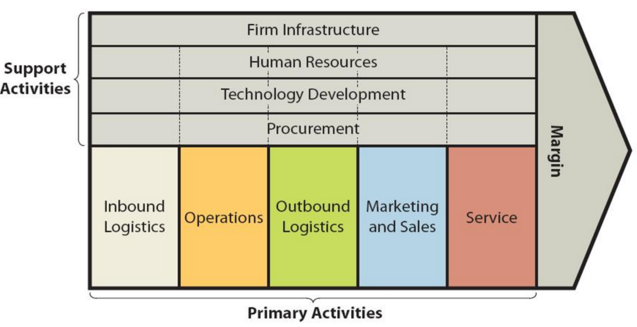
BYD value chain analysis is an analytical framework that assists in identifying business activities that can create value and competitive advantage to the business. Figure below illustrates the essence of BYD value chain analysis. BYD Primary Activities BYD Inbound logistics BYD inbound logistics is one of the key sources for value creation for the EV behemoth. BYD has more than 11,000 cooperative suppliers, 41% of which are located in Southern China, 34% in Eastern China, 9% in Northern China.[1] The electric automaker aims to produce as many spare parts in-house as possible, thus decreasing dependence on external vendors, at the same time increasing profit margins. For example, for BYD Dolphin only tyres and windows are delivered by suppliers and all other components are produced by the company itself.[2] BYD prioritizes long-term partnerships with reliable suppliers, securing stable access to critical materials and components like lithium, cobalt, and semiconductors. This reduces procurement risks and price fluctuations. The company leverages cutting-edge technologies like digital supply chain management systems, artificial intelligence for demand forecasting, and automated warehouse robots. BYD Operations In the operations stage, BYD engages in the manufacturing and assembly of its products. This includes the production of EVs, batteries, solar panels, and energy storage systems. Efficient production processes and quality control measures are crucial in this stage. BYD operations can be divided into the following four segments. Automobile. BYD delivered a total of 1,802,000 vehicles in 2022, with a year-on- year growth of 149.9%, including around 1,788,000 new energy vehicles, with a year-on-year growth of 217,6%.[3] Rail Transit. The company produces medium-capacity “SkyRail” and low-capacity “SkyShuttle” filling the technological and industrial gap in rail transit and providing effective solutions to traffic jams in cities all over the world. Renewable energy. As a provider of integrated renewable energy solutions, BYD produces relevant products like batteries, solar energy…
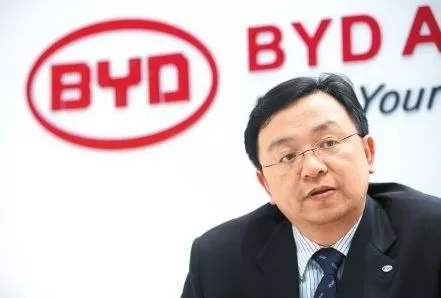
Effective BYD leadership is one of the main factors behind the phenomenal growth of the electric automaker. In April 2022, Wang Chuanfu, founder, Chairman and President of BYD, was listed on The 50 Most Influential Business Leaders in China 2022 by Fortune. Described as “a mix of Thomas Edison and Jack Welch, the former General Electric chief” by Charlie Munger in 2008[1], Wang Chuanfu is a charismatic and passionate leader known for his long-term vision and relentless work ethic. Transformational leadership principles prevail at BYD. Wang Chuanfu’s audacious vision for a sustainable future through EV and renewable energy motivates employees and stakeholders alike. He articulates a clear picture of BYD’s potential impact on the world, transcending mere financial goals. This inspires employees to see their work as contributing to a larger purpose. It is important to note that maintaining a transformational leadership style as the company scales can be challenging. Effective communication and delegation become crucial to keep everyone aligned with the vision and empowered to act. BYD Company Limited Report contains the above analysis of BYD leadership. The report illustrates the application of the major analytical strategic frameworks in business studies such as SWOT, PESTEL, Porter’s Five Forces, Value Chain analysis, Ansoff Matrix and McKinsey 7S Model on BYD. Moreover, the report contains analyses of BYD business strategy, organizational structure and organizational culture. The report also comprises discussions of BYD marketing strategy, ecosystem and addresses issues of corporate social responsibility. [1] White, E. & Campbell, P. (2024) “Wang Chuanfu, the driving force behind BYD’s rise” Financial Times, Available at: https://www.ft.com/content/22527628-733e-4188-9678-ab3210fdb1ba
Case studies are a widely used research method in business and management research. A case study involves an in-depth investigation of a specific individual, organisation, event, process, industry, or situation within its real-life context. Rather than attempting to study a large population, case study research focuses on gaining detailed insights into a particular case and understanding the complexities surrounding it. On this page: Case Study Research Explained Simply What is Case Study Research? Types of Case Studies Application of Case Study Research: an Example Advantages and Limitations of Case Study Research Common Mistakes When Using Case Studies Case Study Research in Business Research Case Study Research in the Age of AI and Digital Research When to Use Case Study Research Dissertation Example Exam Tip Aspect Case Study Research Survey Research Main focus In-depth understanding of a specific case Broad understanding of a larger population Sample size Small Usually large Data type Qualitative or mixed Often quantitative Context Real-life setting Less contextual detail Objective Depth of understanding Breadth of understanding Generalisability Limited Higher Case study vs survey research (comparative table) Case studies prioritise depth over breadth. They aim to understand a phenomenon in detail rather than generate findings that can be generalised to a large population. Case Study Research Explained Simply Imagine a researcher wants to understand how Netflix successfully transformed from a DVD rental company into a global streaming platform. Instead of surveying thousands of companies, the researcher focuses entirely on Netflix. Annual reports, interviews, strategic decisions, market conditions, and organisational changes are analysed in detail. By examining one organisation closely, the researcher gains deep insights that would be difficult to obtain through broader research methods. This is the essence of case study research: investigating a specific case in depth within its real-world context. What is Case Study Research?…
Focus groups are a qualitative data collection method that involves guided discussions with a small group of participants to explore their opinions, experiences, perceptions, and attitudes regarding a specific topic. Focus groups are particularly useful when researchers need to obtain multiple perspectives on the same issue and understand how participants interact with each other’s views. On this page: Focus Groups Explained Simply What are Focus Groups? Types of Focus Groups Application of Focus Groups: an Example Advantages and Limitations of Focus Groups Common Mistakes When Using Focus Groups Focus Groups in Business Research Focus Groups in the Age of AI and Digital Research When to Use Focus Groups Dissertation Example Exam Tip Aspect Focus Groups Interviews Number of participants Usually 6–12 participants One participant Interaction between participants High None Data richness High High Time per participant Efficient Less efficient Group influence Possible Minimal Depth of individual responses Moderate Very high Focus groups vs interviews (comparative table) Focus groups generate data through participant interaction, whereas interviews focus on individual experiences and perspectives. Focus Groups Explained Simply Imagine a company wants to understand why young consumers prefer one smartphone brand over another. Instead of interviewing customers individually, the researcher brings together eight smartphone users and asks them to discuss their preferences, experiences, and purchasing decisions. As participants respond to each other, new opinions emerge, disagreements appear, and ideas develop that might never arise during individual interviews. This is the essence of a focus group: collecting data through structured group discussion. What are Focus Groups? Focus groups are moderated group discussions conducted with a small number of participants, typically between six and twelve individuals. The purpose is to explore participants’ views, experiences, beliefs, attitudes, and perceptions regarding a specific issue relevant to the research objectives. The discussion is led by a moderator…

Samsung segmentation, targeting and positioning involves a set of activities performed in a sequence. These activities constitute the essence of Samsung marketing strategy. Segmentation involves dividing population into different groups on the basis of their common characteristics. Targeting is associated with selecting specific group(s) as consumers of products and services. Lastly, positioning refers to the selection of the marketing mix the most suitable for the target customer segment. Samsung uses the following types of positioning: Multi-segment positioning. Samsung targets more than one segments at the same time through offering several packages of products and services. For example, there are several variations of Samsung SMART Signage professional displays with different sizes, screen resolutions and functionalities and ultimately with different price tags. Thus, Samsung appeals to the needs and wants of consumers with varying financial capabilities. Imitative positioning. Samsung is known to imitative its main competitor Apple in product in design, functionalities, as well, as marketing strategy. Anticipatory positioning. Certain Samsung products such as mobile image sensors currently have low turnover. However, these product have been developed with the anticipation that the turnover will increase in the future. The following table illustrates Samsung segmentation, targeting and positioning: Type of segmentation Segmen-tation criteria Samsung target customer segment Samsung IT & Mobile Communications Samsung Consumer Electronics Samsung Device Solutions Geog-raphic Region 80 countries worldwide 80 countries worldwide 80 countries worldwide Density Urban/rural Urban/rural Urban/rural Demo-graphic Age 18-65 25-65 25-60 Gender Males & Females Males & Females Males & Females Life-cycle stage Bachelor Stage Newly Married Couples Full Nest I Full Nest II Full Nest III Empty Nest I Empty Nest II Solitary Survivor I Solitary Survivor II Bachelor Stage Newly Married Couples Full Nest I Full Nest II Full Nest III Empty Nest I Empty Nest II Bachelor Stage Newly Married…

Facebook Inc. segmentation, targeting and positioning comprises a set of activities directed at identifying specific groups among the population as potential customers (site users) and developing products and services according to the needs and wants of this specific group. Segmentation involves dividing population into groups according to certain characteristics, whereas targeting implies choosing specific groups identified as a result of segmentation to sell products to. Since its launch in 2004 as a social networking site exclusively for Harvard students, Facebook’s target customer segment has been consistently expanding. Nowadays, the social media giant targets a wide range of customers aged from 13 years old and older. Positioning refers to the selection of the marketing mix the most suitable for the target customer segment. Facebook uses multi-segment type of positioning and accordingly, it targets multiple customer segments at the same time with different social media platforms. For example, Facebook social media site targets individuals interested in a full range of social media services such as pages, news feed events etc., whereas Instagram targets customer segment who are interested exclusively on photo sharing. Facebook Inc. also uses adaptive positioning strategy across its brands, repositioning products and services according to changes in preferences of the target customer segment. The following table 2 illustrates Facebook segmentation, targeting and positioning: Type of segmentation Segmentation criteria Facebook Inc. target customer segment Facebook Messenger Instagram What’s Up Oculus Geographic Region International International International International International Density Urban & rural Urban & rural Urban & rural Urban & rural Urban Demographic Age 13 and upwards 13 and upwards 13 – 40 16 – 45 13 – 40 Gender Males & Females Males & Females Males & Females Males & Females Males & Females Life-cycle stage Bachelor Stage Newly Married Couples Full Nest I Full Nest II Full Nest…