
Get your dissertation methodology in minutes — fully structured and justified Most students spend days on this. You can get it in minutes. Get Your Methodology in 2 minutes Refine your methodology up to 5 times. One-time payment of $19. No subscription. Note: This tool runs inside ChatGPT. You may need a ChatGPT account to access it. Example Output Title: Employee Motivation in Startups Your Research at a Glance Based on your topic, your research should follow this structure: Research philosophy: Interpretivism Research approach: Inductive Research design: Exploratory Data collection method: Semi-structured interviews Data analysis method: Thematic analysis 1. Research Philosophy This study adopts an interpretivist research philosophy…. 🔒 Full methodology continues after generation What You Get ✔ Fully structured methodology tailored to your topic ✔ Clear justification for every research choice ✔ Ready-to-use questionnaire or interview questions ✔ Practical implementation guidance ✔ Step-by-step next actions for your dissertation ✔ Refine your methodology up to 5 times How It Works 1. Enter your research topic 2. Get a structured methodology instantly 3. Refine it up to 5 times 4. Copy and adapt it to your dissertation requirements Who This Is For ✔ Undergraduate and postgraduate students ✔ Business and management dissertations ✔ Students unsure about methodology choices ✔ Anyone who wants a clear, justified research structure How to Use This This tool provides a structured methodology that you can adapt to your specific research context and university requirements. It is designed to guide your writing and help you justify your methodological choices. FAQ Can I submit this directly? No — this is a structured methodology you should adapt to your specific research context and university requirements. It is designed to guide your writing and help you justify your methodological choices. Is this…

Why Methodology Defense Has Become Harder in the AI Era — Not Easier? Artificial intelligence tools like ChatGPT, Gemini, and Deepseek have transformed how students write literature reviews, generate research questions, and structure dissertations. But here is the paradox: AI made writing easier. It made defending harder. Today, examiners assume: You may have used AI. You may not fully understand your own methodology. You may not grasp the philosophical foundations behind your choices. And during the viva or proposal defense, this becomes obvious within minutes. There is a manual to prevent that. The Dissertation Methodology Defense Manual in the AI Era Examiner-Proof Justification & Academic Integrity Framework by John Dudovskiy You will receive a link on your email to download the manual shortly after the payment. $19,99 Launch Edition - $19.99 Proceed to Checkout What This Manual Solves Most methodology textbooks teach theory. This manual teaches defense. It prepares you to answer questions like: Why did you choose interpretivism instead of positivism? Why qualitative and not quantitative? Why is your sampling method justified? How do you defend validity and reliability? What are the limitations of your chosen design? In the AI era, the real test is not writing the chapter. It is defending it under pressure. What Makes This Different Unlike traditional guides, this manual: Focuses on oral defense strategy Anticipates examiner traps Breaks down philosophical positioning clearly Shows how to respond confidently without sounding rehearsed Explains how to ethically use AI without undermining credibility It bridges academic rigor with practical defense performance. Who This Is For Undergraduate and MBA students DBA candidates PhD researchers Master’s thesis writers Supervisors preparing students for viva International students facing unfamiliar academic systems Core Sections Inside the Manual Research Philosophy — What You Must Truly Understand Research Approach — Inductive vs Deductive under scrutiny…
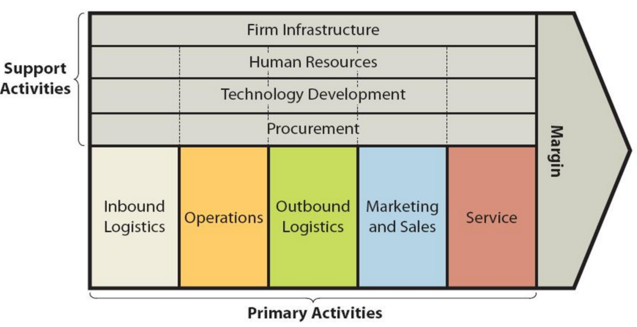
Value chain analysis is a strategic analytical and decision-support tool that highlights the bases where businesses can create value for their customers. The framework can also be applied to identify sources of competitive advantage for businesses. Value chain is a set of consequent activities that businesses perform in order to achieve their primary objective of profit maximization. Most sources explain the essence and application of value chain analysis assuming their audience is businesses aiming to increase the level of their competitiveness. Here, we adopt an alternative approach. Below is an explanation of value chain analysis for business students who have been assigned to apply this strategic analytical tool as part of assignment given by their educational institution. Theory of Value Chain Analysis The concept value chain analysis was introduced by Michael Porter in 1985[1] and its significance and relevance to strategic management and marketing has not diminished during 30 years of its existence. The framework divides activities that generate value into two categories – primary activities and support activities. Primary activities comprise a set of activities that contribute to the creation of value in a direct manner. Support activities consist of functions and tasks that are intended to support primary activities. It is important to clarify that the relevance of value chain analysis is not limited to manufacturing businesses and the framework can be applied towards service firms as well. Primary Activities Inbound logistics involve receiving and storing raw materials and their usage in manufacturing as the necessity arises. Operations relate to the processes of transforming raw materials into finished goods. For businesses operating in services sector operations relate to the process of providing the service. Outbound logistics is associated with warehousing and distribution of finished products. Marketing and sales refer to the choice and implementation of…
The evolution of online research methods has transformed multiple industries, including the dating scene. With digital tools and data-driven approaches becoming increasingly sophisticated, people now have access to precise, targeted ways of finding potential partners. For those interested in dating mature women, understanding how to effectively research and meet local milfs can make all the difference in navigating today’s online dating landscape. The Role of Research Methodology in Modern Online Dating Research methodologies play a crucial role in digital dating, helping users refine their approach and increase their chances of successful connections. The methods used in online dating closely mirror those found in academic and business research, including: Qualitative Research: Understanding the behavioral patterns of potential partners by analyzing their profiles, posts, and interactions. Quantitative Research: Using statistical data from dating sites and social media to determine the most active times, preferred interests, and compatibility scores. Content Analysis: Reviewing dating platform algorithms, user testimonials, and expert insights to refine dating strategies. Applying these research methodologies can help daters approach online interactions with a structured, informed perspective, ultimately improving their success rates. Data-Driven Strategies to Meet Local MILFs Finding and connecting with local MILFs is not just about swiping right—it requires a well-researched approach to increase your chances of meaningful interactions. Below are research-backed methods to optimize your online dating experience: 1. Identifying the Best Platforms Different dating platforms cater to different demographics, and choosing the right one is crucial. Research studies show that niche dating sites often yield higher success rates for specific preferences. For those interested in meeting local MILFs, selecting platforms that cater to mature dating or casual encounters can significantly improve results. 2. Optimizing Profile for Engagement Research indicates that profiles with detailed descriptions, high-quality images, and clear intent statements tend to perform better. Structuring your profile…
By Raj Krishnamurthy
Category: Luxury
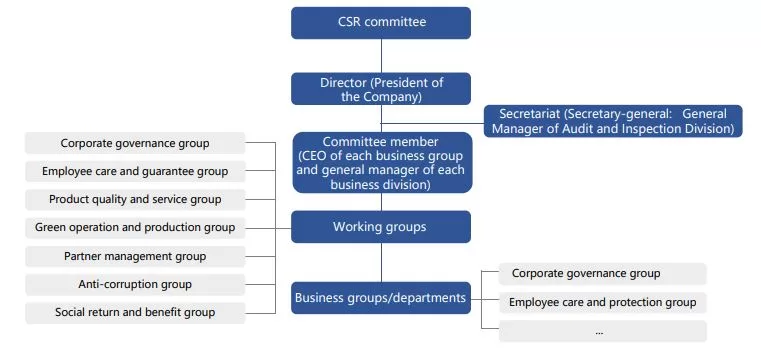
In today’s socially conscious world, consumers increasingly associate their purchases with values. BYD’s commitment to environmental sustainability, ethical labour practices, and community engagement resonates with eco-conscious buyers, fostering trust and brand loyalty. This translates to positive word-of-mouth, enhanced brand image, and ultimately, increased sales. BYD received a range of accolades for its CSR efforts such as such as the Zayed Sustainability Prize, the UN Powering the Future We Want Energy Grant, and featuring on Fortune magazine’s “Companies that Change the World” list.[1] CSR Organization of BYD BYD Supporting Local Communities BYD Charity Foundation donated a total of RMB240 million to charities in 2022 alone The company contributed over RMB59.1 million worth of epidemic prevention and control fundings and supplies in 2022 and donated RMB5 million to Luding County, Sichuan Province for emergency relief and post-disaste Waste Reduction and Recycling by BYD The electric automaker has gradually replaced the cartons, wooden packaging boxes and iron frames used in the transportation of battery pack products with the recyclable blister box with a service life cycle of more than 3 years and an annual recycling cycle of over 900 times, greatly reducing resource consumption Carbon Emissions by BYD In 2022, BYD was the first manufacturer in the world suspended the production of fuel-engine vehicle and build the first zero-carbon headquarters of automobile brand in China[2] The EV giant has established a green traffic system by popularizing EVs to control pollution and launching the SkyShuttle to relieve traffic jam The company claims that until October 11, 2022, it has avoided the emission of 14,672,117,797 kg of carbon.[3] BYD and Sustainable Sourcing Suppliers are required to ensure that they do not use any form of forced labour, bonded labour (including debt mortgage) or indentured labour. They shall not use child labour…
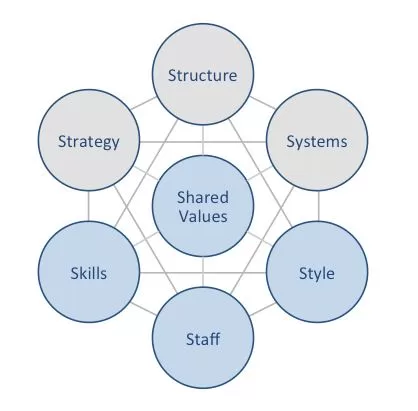
BYD McKinsey 7S model illustrates the ways in which seven elements of businesses can be aligned to increase effectiveness. According to the framework strategy, structure and systems represent hard elements, whereas shared values, skills, style and staff are soft elements. McKinsey 7S model stresses the presence of strong links between elements in a way that a change in one element causes changes in others. As it is illustrated in Figure 7 below, shared values are positioned at the core of BYD McKinsey 7S model, since shared values guide employee behaviour with implications on their performance. McKinsey 7S model Hard Elements in BYD McKinsey 7S Model Strategy. BYD business strategy integrates cost leadership and extensive vertical integration. This strategy allows lowering dependence on external vendors and optimizing resources within the company and having tighter control over the entire production process ensures consistent quality standards. Moreover, one of the leading rechargeable battery manufacturers in the global arena maintains an accelerated pace of new model development as one of its core competitive advantages. Structure. Organizational structure of BYD is complex and it is difficult to classify it according to conventional categorizations. Nevertheless, it is closer to matrix structure combining functional departments (e.g., R&D, Sales) with product-based divisions (e.g., Dynasty, Ocean, Commercial Vehicles) than alternative structures. Systems. The electric automaker depends on a wide range of systems for its business operations. These include manufacturing systems such as vertical integration, lean manufacturing, robotics and automation, as well as, R&D systems. Moreover, supply-chain management, information, quality management, financial and HR systems are also critrically important for the EV giant. BYD Company Limited Report contains a full analysis of BYD McKinsey 7S Model. The report illustrates the application of the major analytical strategic frameworks in business studies such as SWOT, PESTEL, Porter’s Five Forces, Ansoff Matrix and Value Chain analysis on…
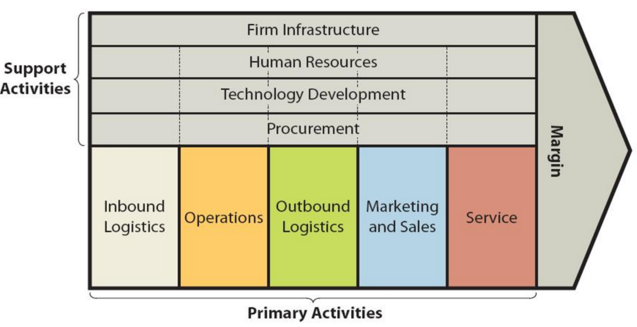
BYD value chain analysis is an analytical framework that assists in identifying business activities that can create value and competitive advantage to the business. Figure below illustrates the essence of BYD value chain analysis. BYD Primary Activities BYD Inbound logistics BYD inbound logistics is one of the key sources for value creation for the EV behemoth. BYD has more than 11,000 cooperative suppliers, 41% of which are located in Southern China, 34% in Eastern China, 9% in Northern China.[1] The electric automaker aims to produce as many spare parts in-house as possible, thus decreasing dependence on external vendors, at the same time increasing profit margins. For example, for BYD Dolphin only tyres and windows are delivered by suppliers and all other components are produced by the company itself.[2] BYD prioritizes long-term partnerships with reliable suppliers, securing stable access to critical materials and components like lithium, cobalt, and semiconductors. This reduces procurement risks and price fluctuations. The company leverages cutting-edge technologies like digital supply chain management systems, artificial intelligence for demand forecasting, and automated warehouse robots. BYD Operations In the operations stage, BYD engages in the manufacturing and assembly of its products. This includes the production of EVs, batteries, solar panels, and energy storage systems. Efficient production processes and quality control measures are crucial in this stage. BYD operations can be divided into the following four segments. Automobile. BYD delivered a total of 1,802,000 vehicles in 2022, with a year-on- year growth of 149.9%, including around 1,788,000 new energy vehicles, with a year-on-year growth of 217,6%.[3] Rail Transit. The company produces medium-capacity “SkyRail” and low-capacity “SkyShuttle” filling the technological and industrial gap in rail transit and providing effective solutions to traffic jams in cities all over the world. Renewable energy. As a provider of integrated renewable energy solutions, BYD produces relevant products like batteries, solar energy…
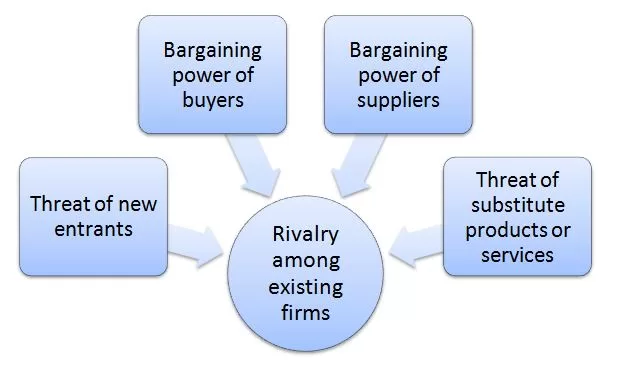
Porter’s Five Forces analytical framework developed by Michael Porter (1979)[1] represents five individual forces that shape an overall extent of competition in the industry. BYD Porter’s Five Forces are illustrated in figure below. Porter’s Five Forces Threat of new entrants in BYD Porter’s Five Forces Analysis Threat of new entrants into EV sector is low to moderate. The following are the main factors that determine the intensity of this threat. Massive capital investments Requirement for huge capital investments is a significant entry barrier for potential entrants into the EV market. In order to succeed new players would have to introduce improvements in battery range and life, charging speeds, efficiency or vehicle performance. Any of these achievements would necessitate investments in research and development and it would be hard for new market players to compete with deep-pocketed existing market players in this front. For example, Volkswagen plans to invest €35 billion in EV R&D by 2025[2], while Ford has allocated USD50 billion by 2026 for the same purposes[3]. Possible retaliation from current market players New entrants in the EV EV market can expect varying degrees of retaliation from existing businesses, depending on several factors. For example, established automakers such as Tesla and BYD can reduce prices on their own EVs to undercut new players, increase marketing and advertising efforts to maintain brand awareness or lobby against government policies favouring new entrants. Moreover, oil and gas companies feeling threatened by the shift away from fossil fuel may spread misinformation about the environmental benefits of EVs or pressure lawmakers to delay or limit EV incentives Customer switching costs These are the expenses, efforts, and time involved for customers to switch from their current EV brand to a new one. They can be tangible (financial) or intangible (psychological and time-related). For tangible expenses,…
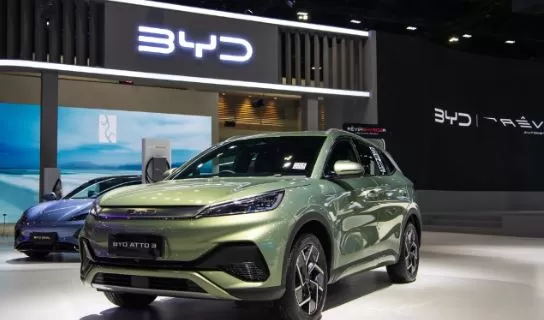
BYD marketing communication mix consists of various channels to communicate the marketing message to the target customer segment. These channels are print and media advertising, sales promotions, events and experiences, public relations and direct marketing. BYD Print and Media Advertising Print and media advertising includes various traditional forms of paid communication used to promote a product, service, or brand through printed or broadcasted media channels. While BYD primarily focuses on digital marketing due to its reach and engagement potential, it still strategically utilizes print and media advertising for several reasons such as: Reaching specific audiences. Print and media offer access to demographics less active on digital platforms, like older generations or local communities. Building brand awareness. High-profile magazine spreads or television commercials can significantly increase brand recognition and visibility. Complementary storytelling. Print and media formats allow for longer narratives and deeper dives into BYD’s values, technology, and environmental commitment, complementing the quick bites of digital marketing. BYD Sales Promotions Sales promotions refer to short-term incentives, activities, or offers designed to encourage the purchase or sale of a product or service. BYD uses the following sales promotions techniques, among others: New Year Pre-Owned Event. Offering discounts on used BYD EVs alongside free extended warranties and test drives, targeting budget-conscious buyers and promoting their pre-owned program. Summer EV Road Trip Bonus. Providing bonus miles on charging networks alongside travel vouchers and roadside assistance packages, encouraging summer travel and showcasing their partnership with charging infrastructure providers. Back-to-School Family Fleet Package. Offering special discounts and financing options for purchasing multiple BYD EVs for families, catering to the larger vehicle needs of families with children. Tech Upgrade Bonus. For buyers of top-tier models with advanced features, including free software upgrades or subscriptions to connected services, highlighting their technological innovations. Earth Day Sustainability Drive. Offering discounts on models with longer ranges or lower emissions alongside tree-planting initiatives, emphasizing their…