
1. Introduction The level of competition in the global marketplace has become highly intensive and this fact is resulting in mergers and acquisitions between companies across countries and continents. There is no dispute that “mergers and acquisitions are a vital part of any healthy economy and importantly, the primary way that companies are able to provide returns to owners and investors” (Sherman and Hart, 2006, p. 1). However, in reality a range of issues may arise in mergers caused by cross-cultural differences, differences in management style, clash of personalities within senior level management and other reasons. This report attempts to analyse issues associated with Alcatel-Lucent merger failure. The report contains analysis of factors that enabled the merger to take place and the analysis of performance of company in present. Moreover, discussions are provided about cross-cultural issues at Alcatel-Lucent and new challenges for the company in an international area are described. 2. Factors that Allowed Merger in 2006 There were previous negotiation talks between Alcatel and Lucent in 2001 regarding the merger of the two companies. However, negotiations had failed due to suspicions of Lucent management that Alcatel was approaching the proposal like a takeover of Lucent, rather than ‘merger of equals’. The concept of “merger of equals” has been described as “a merger framework usually applied whenever the merger participants are comparable in size, competitive position, profitability, and market capitalisation” (DePamphilis, 2009, p.18). However, some circumstances have changed by 2006 that resulted in renewed merger talks between Alcatel and Lucent. First, the level of competition in mobile telecommunication and internet industry has intensified and the two companies needed to merge in order to be able to compete with Chinese manufacturers and other industry leaders. Second, as a result of numerous negotiations between the two companies on top level Lucent senior…
1. Introduction Rapid and dramatic changes in consumer technology market in the global scale are compromising the effectiveness of competitive advantage for many players in the marketplace. Hewlett-Packard Company (HP) can be specified as one of the giants in the industry and the company is finding difficult to address modern challenges in its market in an effective manner. HP is experiencing loss of sales and profitability due to a combination of certain factors discussed in this paper. Behind the overall 7% sales decline in the third quarter of 2012 lay 25% decline of sales of PCs and 15% decline of consumer printers (Walters, 2012). The public acknowledgement of the issue of declining profitability and pessimistic sales growth forecast made by HP President and CEO Ms. Meg Whitman on October 3, 2012 has caused the fall of HP share prices by 11% on the same day. Moreover, according to estimations of a global research agency, Millward Brown (2012), HP brand value has declined 35% in 2012 compared to 2011, and the company has moved down from 18th place to 26th in the list of Top 100 Most Valuable Global Brands within the same period. This article represents a critical analysis of declining profitability of HP using an analytical method. The article starts with introducing HP corporate profile and relevant background information. This is followed by a critical analysis of major factors contributing to the loss of profitability at HP. Namely, factors discussed in a detailed manner include increasing popularity of computer tablets, economic uncertainties in Europe, and leadership challenges. Moreover, this article proposes recommendations for HP senior level management in dealing with its current problem of declining profitability and contributing to long-term growth of the company. 2. HP: Corporate Profile Founded in 1939 by W.R. Hewlett and D. Packard, HP has been…
1. Introduction Once the largest provider of internet-based communication services and the second largest long-distance telephone company in the US, WorldCom became one of the most popular case studies for corporate ethics, financial frauds and senior management irresponsibility along with Enron. This article contains analysis of the fall of WorldCom employing four-stage fundamental analysis. The article starts with discussions of business strategy in general and analysis of strategies that exposed WorldCom to major risks in particular. This is followed by analysis of analysis of accounting practices used at WorldCom. Moreover, the article contains discussions devoted to financial analysis and the role of auditors in relation to WorldCom case study, as well as, prospective analysis that addresses valuation models employed by WorldCom accountants. This article is completed by reflecting upon important lessons to be gained from this particular case study for international business practices. 2. Business Strategy Analysis: Strategies and Practices that Exposed WorldCom to Major Risks Business strategy analysis is the first stage of the four-stage fundamental analysis of the business entity. Business strategy analysis associated with in-depth study of effectiveness and sustainability of competitive advantage of the company. Business strategy is a broad topic with multiple facets with varying levels of impacts on firms’ competitiveness and long-term growth. займ на карту мгновенно круглосуточно без отказа According to the framework of Porter’s Generic strategies (1985) businesses can base their competitive advantage on differentiating products and services or offering products and services for competitive prices. Importantly, the choice between is faced by overall businesses entity, as well as, separate segments within the entity. Primarily, WorldCom’s business strategy was most related to cost advantage, offering discount long-distance telephone services, according to the former name of the company Long Distance Discount Services Inc. (LDDS). However, as the company entered the phase of massive expansion…
Introduction Described as the greatest geopolitical catastrophe of the 20th century by the current president of Russia Vladimir Putin (BBC, 2005, online), the collapse of the Soviet Union has caused profound changes in global political and economic affairs, impacting the lives of hundreds of millions of people. Union of Soviet Socialist Republics (USSR) has been formed in 1922 and it has enjoyed the culmination of its influence in the global scale following its victory in World War Two within the period from mid 1960s to mid 1980s being able to send the first man to the outer space in 1961 and achieving relative stability in the standard of life of member state citizens. Initially, Soviet Union comprised only six member states in 1922 – Russian, Ukrainian, Byelorussian, Azerbaijan, Georgian and Armenian Soviet Socialist Republics; however its size has been gradually increased during the following two decades until 1941 to reach the numbers of member states to 15 through expanding into Central Asia and Balkan states. Nevertheless, due to the range of reasons discussed below the existence of USSR came to its end officially in 1991. Although more than two decades have passed since the collapse of the USSR this topic is regularly explored in academic levels due to its importance and impact to the formation of present geo-political situation. This essay attempts to analyse the major reasons and implications of the collapse of the Soviet Union. Economic, cultural, social and political factors contributing to the collapse of the Soviet Union are discussed in this essay and implications of this event on regional level for former USSR blog countries, as well as, on the global landscape are assessed. Economic factors contributing to the collapse of the Soviet Union Assessment of economic factors that led to the collapse of the Soviet Union…

1. Introduction Elecdyne is a Tokyo-based manufacturer of consumer electronics products that has been operating in local market in Japan for over three decades. Currently employing 100 members of workforce, Elecdyne strategic level management is keen to explore the potentials of revenue maximisation through internationalisation. This article represents a critical analysis of Elecdyne international market expansion opportunities. The article starts with a brief analysis of Elecdyne current situation and an overview of business environment for the company with the application of STEEP framework. This is followed by analysis of country profiles of UK, Russia and Turkey as a potential new market for Elecdyne using a weighted scaling system. The article is completed by specifying strategic direction for Elecdyne and providing rationale for the choice of direction being offered. 2. Current/Future Business Environment It has been noted that “an organisation does not exist in isolation but is part of a broader business environment, making it an open system” (Amos et al., 2008, p.3). Accordingly, Elecdyne is faced with a set of challenges caused by external factors that need to be addressed in timely and effective ways. Challenges imposed to Elecdyne by external environment can be effectively illustrated through STEEP table where the abbreviation stands for social, technological, economic, ecological and political factors affecting the business. Social Ø Intensifying level of cultural globalisation Ø Ageing of population in developed countries (Blakemore and Warwick-Booth, 2013) Ø Changing patterns of families (single parents, same sex parents etc.) Technological Ø Declining duration of life cycle for consumer electronics products Ø Increasing frequency of technological innovations Ø Technological breakthroughs in the area of electronics products recycling Economic Ø Declining profit margins for consumer electronics products due to intensifying competition Ø Likelihood of economic crises such as global recession of 2007 – 2009 Ø Rising costs of operations…

Introduction Increasing forces of globalisation have altered the terms and nature of conducting business considerably and irreversibly. As a result of globalisation businesses have been presented with a range of opportunities to contribute to the level of their revenues and these opportunities primarily include outsourcing various business processes abroad and exporting products to other countries. General Electric Company (GE) is a globally diversified technology and financial services company and its products and services include aircraft engines, power generation, water processing, and household appliances to medical imaging, business and consumer financing and industrial products (General Electric Co, Bloomberg, 2013). GE has achieved an international growth of 18% during 2011 which has contributed to company consolidated revenues of $147 billions during the same period of time. Moreover, 13,000 jobs were created by GE in US during 2011, and international sales of American-made products by GE had amounted to $18 billion during that year (GE Annual Report, 2011). This report evaluates the impact that globalisation has had on the policies of GE and specifies changes needed to be implemented taking into account the recent economic crisis in the USA and the global financial recession. The report addresses GE policy changes impacted by globalisation in an individual manner by referring to other relevant publications, and changes proposed for GE in the report have been justified in a detailed manner. Impact of Globalisation on GE Policies GE has attempted to take full advantage of possibilities provided by globalisation by formulating relevant policies mainly during the last decade under the leadership of its CEO Jeff Immelt. Financial Time’s Crooks (2012) recites the following words from Immelt: “When I became CEO [in 2001] we were 70 per cent inside the US industrially. Now we are 60 per cent outside the US”. The specific impacts of globalisation…
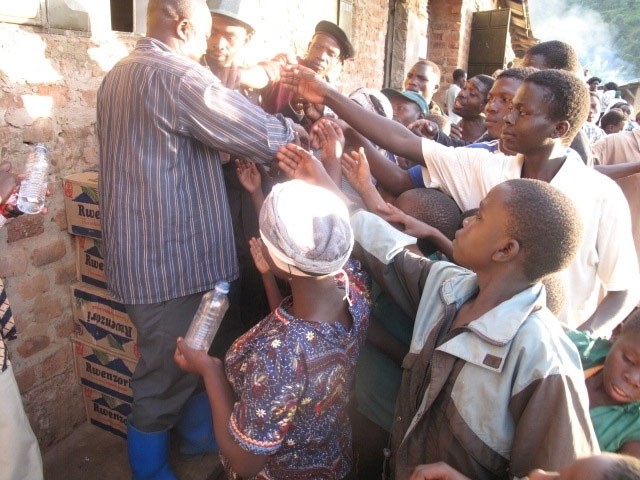
Introduction Foreign aid can be defined as “any action by a government or citizen of one country, which helps to promote economic development in another country” (Kazimbazi and Alexander, 2011, p.28). Many countries situated in Africa do receive substantial amount of foreign aids from other countries, international organisations and private philanthropists. Foreign aid is mainly provided in the forms of financial aid, technical support and food aid. According to Wall Street Journal (2009), over the past 60 years the amount of foreign aid provided to Africa has exceeded USD 1 trillion and foreign aid has been provided to deal with a wide range of serious problems such as extreme poverty, fighting with HIV/AIDS, malaria and other diseases, internal conflicts and abuse of human rights, child labour and human trafficking etc. This essay critically analyses the topic of foreign aid and growth in Africa in general and in Uganda in particular. The essay starts with discussions of means and methods of delivery of foreign aid to Uganda. This is followed by analysing the benefits of foreign aids and level of dependency of Uganda on foreign aid. быстрые микрозаймы онлайн Moreover, the opposite viewpoint addressing the disadvantages of foreign aid to Uganda and an overview of popular arguments of sceptics of foreign aid have been included in this essay. The essay is concluded by discussing a range of alternatives to foreign aid in order to achieve economic development in Uganda. Republic of Uganda has more than 34,5 million population with the life expectancy of 54 years for men and 55 years for women (BBC Uganda Profile, 2013). Comprising 241,038 square kilometres, Uganda is bordered with Kenya in the east, Tanzania and Rwanda in the south, and the Democratic Republic of the Congo in the west (Barlas and Yong, 2010). Today Uganda is faced…
Tesco CSR programs and initiatives are developed and implemented by Corporate Responsibility Committee led by Chairman John Allan. The importance of CSR for Tesco maybe greater nowadays than ever before due to a series of ethics-related scandals the supermarket chain had to deal with recently such as inappropriate profit reporting and poor supplier treatment cases. In other words, it is important for the supermarket chain to restore the trust of its towards the brand and engagement in CSR programs and initiatives is an effective tool to achieve this objective. The company releases Corporate Responsibility Update regularly and it includes the details of CSR programs and initiatives engaged by the company. The table below illustrates the highlights from the latest report for the financial year of 2014/15: Categories of CSR activities Tesco Performance Supporting local communities The company donated GBP 55 million, which accounts to 3.96 per cent of its pre-tax profit to various charities and good causesIn total, GBP 37.9 million has been raised from Tesco employees and via customer fundraising Educating and empowering workers 70% of employees stated they would recommend Tesco as a great place to workAs much as 77 per cent of managers, directors and business leaders within the company made career progresses Labor and human rights The supermarket chain declares its commitment to UN Universal Declaration of Human Rights and the International Labour Organization Core ConventionsIn 2010, Tesco’s USA stores, Fresh & Easy was accused by Human Rights Watch for allegedly exploiting weak labour laws in the US and bullying employees to prevent them from joining unions[1] Employee health and safety In 2015 a total of 1539 employees in retail and distribution were injured at work that resulted in fractures or lost time of more than three days Gender equality and minorities The percentage gap in payment…

Tesco McKinsey 7S model illustrates the linkage between seven separate elements of the business to increase the overall effectiveness. According to this model, businesses have hard and soft elements and shared values as soft element are the result of interaction of all elements with direct and huge effects on employee behavior and performance. Tesco McKinsey 7S Framework Hard Elements Strategy. Tesco pursues cost leadership business strategy according to its marketing communication message Every Little Helps. The supermarket chain has been able to sustain this strategy due to the extensive exploitation of the economies of scale and the exercise of bargaining power in dealing with suppliers to secure low purchasing costs. Currently, Tesco is dealing with a set of complex challenges such as restoring customer trust following profit accounts scandal, supplier payment delays scandal and dramatic decline of sales as a result of these incidents. Tesco strategy to deal with these issues as announced by its new CEO Dave Lewis include the reduction of capital expenditure to GBP 1 billion, replacement of the benefit pension scheme for all employees and the review of property portfolio with the aim of cost reduction. Moreover, a focus on availability, service and selectively on price emerged as a strategic priority for the new management. Structure. Tesco’s organizational structure is highly hierarchical and comprises many layers of management from store sales assistant to the CEO. The new CEO Dave Lewis eliminated the roles of deputy store managers in 2015 as part of attempts to simplify the organizational structure. There are 10 members in The Board of Directors and the company’s Executive Committee comprises 11 members. Systems. The supermarket chain relies on a wide range of systems on a daily basis to sustain its operations. New management led by CEO Dave Lewis announced plans to simplify organizational…

Value chain analysis is an analytical framework that assists in identifying business activities that can create value and competitive advantage to the business. The figure below illustrates the essence of value chain analysis. Tesco value chain analysis Primary Activities Inbound logistics Tesco inbound logistics operations are complex and involve the supply of hundreds of product categories to 7817 Tesco stores around the world[1]. Economies of scale due to the large scope of its operations is a major source of value creation for Tesco. The company makes regular investments to increase the capacity of logistics so that the economies of scales can be exploited to a greater extent. For example, in 2013 as a part of a government-backed trial program testing the efficacy of longer trailers, Tesco received 25 new 51-foot Gray & Adams refrigerated units. New trailers can carry 51 cages (UK shipping units), six more than a standard 45-foot trailer. This change resulted in 13 per cent increase in logistics productivity[2]. The company has a history of poor supplier treatment under the previous leadership that involved the cases of payment delays to improve Tesco’s operational profit margins[3] and unnecessary and unjustified fines being imposed to suppliers[4] with negative implications on various aspects of supply chain practices. However, the new management led by new CEO Dave Lewis announced its commitment to form strategic relationships with suppliers. Operations Tesco operations can be divided into three large segments: 1. Retail. This segment represents the core business of Tesco PLC. With more than 80 million shopping trips made thousands of Tesco shops in 11 countries around the world[5], the scope of Tesco’s retail operations is extensive. The company operates stores in the following format: Metro. Metro stores sell wide range of food and a smaller selection of general items such as cook ware…