

The role of women in media advertising has been discussed by many authors from various angles. According to Ross and Byerly (2008) traditionally media advertisements have positioned women as passive and submissive. At the same time, Ross and Byerly (2008) state that this prescribed role for women in media is being changed at the moment, however certain limitations still exist. Cheng and Chang (2009) relate to the role of women in media advertising to sex appeal. Moreover, Cheng and Chang (2009) argue that this situation is not likely to change for a foreseeable future and authors attempt to justify this viewpoint by referring the basic human nature. Accoring to Abel et al. (2010) the integration of female body images in advertisement in various forms has increased significantly during the last two decades. It has been noted that women in advertisements are represented thinner and well below their average weight. Mogel (2010) addresses the issues of media stereotyping in relation to woman. Specifically, according to Mogel (2010) media stereotyping perceives the role of women as intimate objects with submissive characters. Biermann (2011) addresses the same issue and argues that the role of women in many parts of the world is stereotyped by the media as housewives with the main concerns for house cleaning. According to Saad (2012) the significance of the nature of female representation in TV and radios are greater compared to the print media. Saad (2012) explains his stand in a way that while TV media and radio force their advertising on their viewers, in print media generally advertisement are less interruptive, in a way that people can skip them if they want to do so. McAllister and West (2013), on the other hand, relate the reasons of images of women being used more frequently than images of men…

Media can be defined as “communication channels through which news, entertainment, education, data, or promotional messages are disseminated” (Business Dictionary, 2013). Katz (2012) divides media into two categories: lean forward and lean back. The following table illustrates the major differences between lean forward and lean back media. Lean forward Lean back Magazines Newspapers Direct Main Yellow Pages Television (via DVRs, Video on Demand) Internet Television (other) Radio Outdoor The main differences between lean forward and lean back media Source: Katz (2010) In simple terms, lean forward media is a type of media where receivers lean forward to interact and control the flow of information in an active manner. In lean back form of media, on the other hand, viewers can lean back and do receive the information in a passive manner. According to categorisations provided above print media can be specified as lean forward media. References Katz, H. (2010) “The Media Handbook: A Complete Guide to Advertising Media Selection, Planning, Research, and Buying” 4th edition, Taylor & Francis Media (2013) Business Dictionary, Available at: http://www.businessdictionary.com/definition/media.html

The term advertising can be defined as “communication of a message to the public, that message being designed to achieve an objective; the objective will vary, depending on whether the advertisement serves a business or a public purpose” (Firestone, 1968, p.1). References Firestone, O.J. (1968) “The Economic Implications of Advertising” Institute of Canadian Advertising

The structure of an organisation is a formal framework for making decision through which division; coordination and grouping of tasks are done. It defines the organization units and policies explicitly and states the procedures and objectives of the organization. A representation of the organisational structure can be done using a chart which shows relationship between different jobs, departments and leaders. The structure of an organization shows the hierarchy in responsibility and management of the organisation. It is essential for management during implementation of changes to an organization and acts as a guide to new recruits in the organization.

The routines of adoption have been the conservative and the formats to be prescribed in detail in valuation of assets. The differences under IFRS and GAAP have been seen in the example of Telofonica Company, as its balance sheet showed two different figures in valuation of assets. The financial statement prepared under IFRS showed higher result of assets compared to GAAP mainly because the IFRS lets the companies revalue their assets. Moreover, the strict control of compliance with the Directives (Fourth and Seventh) when using IFRS has also been mentioned as one of the main factors to be taken into consideration. Furthermore, according to one of the respondents, the requirement under the Fourth Directive that annual accounts should present a true and fair view of a company’s assets, liabilities, financial position has also been mentioned as a key factor while adopting IFRS. The findings regarding the adoption of IFRS by EU listed companies are that majority of EU listed companies have adopted the IFRS for more than just for consolidation purposes and their answers have been categorised below according to their level of importance: The process of adoption is complex, burdensome and at the sae time expensive Companies do not think that they can lower the cost of capital even if they apply IFRS Key challenges as mentioned during the interview are lack of guidance while converting and implementing IFRS, lack of uniform interpretation even though IFRS tends to be more flexible and informative And majority of EU companies would not adopt IFRS if it was not required by EU regulation. Moreover, conversion to IFRS will also improve the shareholder orientation in countries such as France and Germany as they used to emphasize on tax regulations and stakeholder orientation, therefore, these country’s investors benefit greatly due to them being as…

1. Advantages of IFRS compared to GAAP reporting standards 1.1 Focus on investors One of the significant advantages of IFRS compared to GAAP is its focus on investors in the following ways: The first factor is that IFRS promise more accurate, timely and comprehensive financial statement information that is relevant to the national standards. And the information provided by financial statements prepared under IFRS tends to be more understandable for investors as they can understand the financial statement without the necessity of other sources which makes investors more informed This also helps new or small investors by making the reporting standards simpler and better quality as it puts small and new investors in the same position with other professional investors as it was impossible under the previous reporting standards. This also helps to reduce the risk for new or small investors while trading as professional investors can not take advantage due to the simple to understand nature of financial statements. Due to harmonization and standardization of reporting standards under IFRS, the investors do not need to pay for processing and adjusting the financial statements to be able to understand them, thus eliminating the fees of analysts. Therefore, IFRS reduces the cost for investors. Reducing international differences in reporting standards by applying IFRS, in a sense removes a cross border takeovers and acquisitions by investors. Based on information mentioned above, it can be assumed that because higher information quality reduces both the risk to investors from buying and owning shares and the risk to less informed investors due to wrong selection due to lack of understanding, it should lead to reduction in firms cost of equity capital. This on one hand should increase the share prices, and on the other should make new investments by firms more attractive. Moreover, the following…

The main differences between GAAP and IFRS, are mainly that IFRS has wider rules and less specific guidance which gives more room to interpretation of the financial statements. Because the IFRS incorporates the value of judgement by the accountant, it tends to be less detailed, more flexible and more informative. The differences between GAAP and IFRS have been analysed in terms of their financial statement presentation, technicalities, and their importance for users of financial statements. 1. The statement of financial position The changes in the layout of the statement of financial position as it is more concise and less detailed compared to the layout of the statement of the financial statement prepared under GAAP. An example for this can be the layout of the financial statements. US GAAP requires its public companies to follow Regulation S-X where it specifically shows the detailed list of elements to be included in the financial statements. However, IFRS also requires what to include in the financial statements, but it is far less detailed than the US GAAP. Moreover, the guidance on offsetting of assets and liabilities can be indicated as another difference, thus, US GAAP gives limited guidance on offsetting of assets and liabilities whereas IFRS gives specific guidance. And another difference is the exclusion of long term debt being refinanced under GAAP whereas under IFRS, the exclusion of long term debt from current liabilities. And the similarities is the same components of financial statements under both IFRS and GAAP as both financial standards require to have balance sheet, income statement, cash flow and the accompanying notes to the financial statements. 2. Financial periods required Firstly, US GAAP requires the last two years of balance sheet to be presented, and other statements are required to be for the last 3 years. However, IFRS…

Globalisation has been one of the factors that has played great role in accelerating the harmonization of IFRS to improve the transparency and comparability. As more and more countries are opening their domestic markets to join international trade, the access to international financial markets has also been very crucial. Therefore, the implementation of IFRS as a single set of reporting standards has been fast tracked with the help of globalisation. Moreover, the improved information and communication technologies have changed the way financial statements are reported and at the same time, removed the barriers of physical distance and making information available globally. This has brought new investors into the capital markets who needed more than usual information so that they can base their decision on. The GAAP reporting standards produced financial statements which were complicated to understand by investors, therefore, they had to hire a financial analyst to interpret the financial statements which was both time consuming and cost more. Moreover, investors had to make decisions based on the interpretation of financial analysts. However, the new International Financial Reporting Standards focused on investors more, unlike GAAP by making it easy to understand. Under IFRS, investors can understand the financial statements rather than hiring a third party. Therefore, investors can save both time and money due to simplistic nature of financial statements under IFRS. ). The demand for international financial reporting standards that cross national borders is set to fulfil this role. Adopting a financial reporting language will enable the company to be better understood in the international marketplace. If a single set of reporting standard is achieved, this helps the companies to access world market. New IFRS also helps to reduce the costs. Moreover, adopting IFRS lets its people apply common accounting across their subsidiaries which in turn can improve internal communications,…
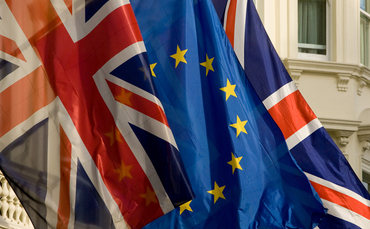
“The decision of the Commission of the European Union (EU) to oblige listed European companies…to establish their consolidated financial statements according to IFRS (IAS) represents a preliminary peak in the internationalisation process of financial accounting in Europe” (Haller and Kepler, 2002). The need for Harmonization: The activities of companies extend beyond national frontiers and shareholders and other stakeholders need protection throughout the EU. And in order to achieve this and to encourage the movement of capital, it is necessary to create a flow of reliable homogeneous financial information about companies from all parts of the EU. And they further argue that since companies in different EU countries exist in the same form and are in competition with each other, they should be subject to the same laws and taxation. Obstacles for harmonization in the EU: The obstacles for harmonization are the fundamental differences between the contexts and purposes of the various national accounting systems in the EU. And the main differences are: Differences between creditor/secrecy in the traditional Franco-German systems and investor/disclosure in the Anglo-Dutch systems Differences between law/tax-based rules and private sector standards These difference shave contributed towards the great variations in the size and strength of the accountancy profession. Here are some social-cultural related problems that IFRS can encounter by its implementation in various countries: One of the most crucial issues is the lack of strong professional bodies in some countries to promote the harmonization. The bodies such as IASC (International Accounting Standards Committee). Due to lack of these professional bodies, there will be less guidance to follow and support available. Another point is the degree of professional education and training systems for accounting. Education and training systems in developed and western countries are more professional than in developing countries. Therefore, the accountants in these countries will be sooner…

As a “group of European countries that participates in the world economy as one economic unit and operates under one official currency, the euro” (Investopedia, 2013) European Union (EU) has specific measures, rules and regulations that govern employment relations and human resources management aspect of businesses in its territory. The most significant themes related to employment issues in EU include specific characteristics of Euro HRM, EU social charter, employment issues and rights within EU, and European employment law. Specific characteristics of Euro HRM relate to legislative framework, trade union and consultation, and pattern of ownership among other issues and these points need to be taken into account by expatriates with assignments within the EU. Moreover, there are certain differences in HRM practices within the among the EU countries as well. It has to be stressed that “the differences in HRM within European countries stem from national factors, namely cultural values and norms, societal structure and language, from company factors, including size, ownership and geographical scope of companies and also from regional factors, such as north/south or east/west divide” (Nikandrou et al., 2006, p.178). European Social Charter as an important treaty adopted in 1961 deals with human rights and freedom issues associated with employment relations. The Charter has been revised in 1996 and it has been ratified by all members of EU. The fundamental employee rights have been specified in the Charter and the most significant points include the freedom of movement, freedom of association, protection of health, equal treatment of both genders, social protection etc. European Social Charter as an international labour law within EU has made significant contribution to dealings with expatriates not only within EU but also to a global scale to a certain extent. This contribution relates to the fact that expatriates coming to EU countries are…