

Presence of world’s leading retailers such as Tesco, Sainsbury’s and Marks & Spenser, fierce competition in pricing and in other terms and difficulties of market entry are the main characteristics of UK retail industry. Despite such complexities, some retailers could manage to do better during the recession achieving even higher revenues and profits. Although lack of financial resources and higher risk aversion by investors caused many difficulties for the retailers, some of the retailers introduced new strategies such as price cut downs and reinforcing their current positions rather than expanding, which helped them sustain the temporary difficulties and overcome the recession. Two types of factors, direct and indirect impacts of recent financial recession on consumer spending during and after crisis have been discussed in the report of Office for National Statistics. Direct impacts are said to be uncertainty of income and high rates of unemployment with scarcity of finance to support public spending by the governments. Indirect impacts on the other hand are credit crunch of financial organizations which makes them unable to process their businesses of providing loans the businesses. The research by Burt et al (2009) analyse and examine the impacts of financial crisis on the consumer buying behaviour in the UK and lists the following factors that had direct impact on the consumer spending: job uncertainty, declining savings, increased risk aversion and lower disposable income. Due to these factor consumers restrained themselves from excessive spending as they used to and focused mostly on important things. Respondents who participated in the study expressed their opinions saying that due to uncertainty in their future income or at least decline in the income they no longer can afford to spend excessively as previously. As it has been stated earlier, disposable income is considered to be one of the main effects…

It is important to mention the value and importance of the retail industry to the economy of the UK. According to Mintel Report (2009), retail industry of the UK is considered to be highly important and contributing factor to the UK economy as it generates 16% of UK Gross Domestic Product. In addition, every third pound is generated through retailers and almost 11% of the UK workforce is employed in this industry. UK has some retail companies that are internationally recognized and growing rapidly. For example, only Tesco has more than 1100 stores within the UK and overseas and planning to expand towards emerging markets such as Hong Kong and India. It is also worth stating that according to Mintel Report (2009) despite high importance and value, UK retailers are considered to be low employee payers although senior level managers are paid relatively well. The period of recent financial crisis in the UK was from the second quarter of 2008 to the third quarter of 2009. It started with 6.4% decline in Gross Domestic Product of UK in the beginning of the period and started increasing by 0.4% only at the end of the period. During the recession, UK economy deteriorated continuously leading to high rates of unemployment which is about 5% at the end of the period. This accounted to 800,000 people out of job (Gooberman, 2010). Another aspect of UK economy and its vulnerability to the financial recession has been discussed in the study conducted by LSE (2008). According to the research, UK economy is vulnerable to the financial crisis due to its reliance and specialization mostly on financial services and trading activities. Decline of the importance of the financial sectors had more negative effect on overall UK economy as a result of higher unemployment rate in the…

There is more than one way of fostering ethical behaviour within an organisation. Establishing formal structures and systems is one of them and considered to be very effective in accomplishing this task. However, strong ethical leadership is vital in shaping long-term ethical behaviour in organizations and any other formal structure’s or system’s effectiveness diminishes dramatically without it. Strong ethical leadership is the factor which introduces, sustains and protects the process of ethical change in an organization. In this essay relative merit of code of ethics, ethics training and strong ethical leadership will be determined in the process of shaping long-term behaviour within an organisation and attempt will be made to identify the most effective one. It should be remembered though, in the field of management and ethics definitive and clear-cut answers are a rare thing. ‘Ethics is the code of moral principles and values that governs the behaviours of a person or group with respect to what is right or wrong’ (Daft, 2007, p.252). The role of ethics in the last decade increased and big corporate scandals were probably the main reasons behind this trend. Names like Enron, WorldCom, Arthur Anderson, BP remind us of how proper conduct in ethical matters can save jobs, money and do less harm to the environment. As organizations are trying to find the best ways and methods to introduce and shape ethical behaviour within them, several ideas emerged on how to do it. Most of them involve active involvement of organizations’ leadership. One of them is establishing formal structures and systems in the organization to introduce and facilitate change in ethical behaviour of employees. Written code of ethics is a good example of such formal structure. ‘A code of ethics is a formal statement of the company’s values concerning ethics and social responsibility; it…
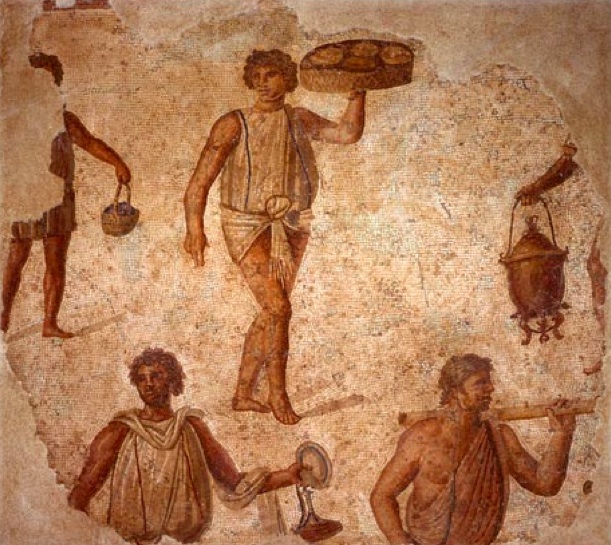
The evolution of selling had several distinct phases of development during the course of late 19th and 20th centuries. Industrial revolution of late 19th century caused a tremendous amount of exchange of goods between people and nations all over the world. Strategic resources at this time were capital and resources companies controlled. Therefore sales success was defined by meeting sales quotas. This period can be roughly defined from 1860s – 1960s. However from 1960s a new age in the area of selling has started. It was an Information Age. From 1960s till now information has radically changed how selling is being conducted, methods and attitudes towards selling. In this age, strategic resource of the business is information and it is defined by customer relationships. Adding value is the primary success criteria of the selling process. Of course these are generalised notions of the evolution in selling. There are exceptions and plenty of businesses who are doing things old school and don’t want to adjust to modern reality. Moreover there are businesses which are following century old techniques and methods used by their founders and finding themselves niches in the market where they are successfully operating. One of them is Avon – direct and door to door seller of women’s cosmetics. In this part of the essay professional selling which gained momentum during the industrial revolution and kept serving business well until post-WWII times will be discussed in detail. Major advances in manufacturing and transportation made possessing resources and capital a major aim for business. This naturally required skilled people with talents in persuading and providing goods to a broad range of customers. As selling and exchange goods at this scale were unknown to humankind up until this point, buyers were relatively unsophisticated and could have been easily manipulated towards making…
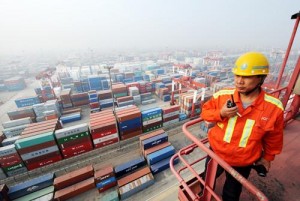
The “Open Doors Policy” or the economic reformations of the late 1970s in China enormously changed the entire economy of the country. The trade reformation which focused on liberalizing the trade which shifted the country a step closer to free market attracted huge foreign capital into the country in the form of FDI since 1978. The huge scarce resources of China had to be utilized soon after the reformations which indeed required huge capital. However,China heavily relied on the external funds in order to promote its manufacturing industry and the financing of newly privatized formerly state-owned companies. Therefore,China’s government issued series of policies which favoured the foreign investors. The inflows of foreign capital in the form of FDI brought in advanced technology, knowledge, management know-how which accelerated the economic growth in China in the last three decades. Since the “Open Doors” policy and trade reformations in the country in 1978, the country has been consistently achieving significant economic growth which averages at 10% of GDP. When the growth rate of China is compared to other developed economies such as USA which has an average of 3% GDP growth in the 100 years and Germany which has an average growth rate of 1.3% of GDP and Japan at 3.85% of GDP in the few decades, China is far ahead (IMF, 2009). However, many western policy makers and commentators believe that the main source of growth of China has been mainly due to FDI inflows which have been encouraged by fixed exchange rate. The source of economic growth of China is derived from three phases of development which are broken down into three periods of years. The first phase of development lasted from 1952-1978 where the Chinese government prioritized the development of heavy industries such as steel, chemicals and machinery. The second…

The term of brand can be defined as “a physical labelling of products, so that consumers are able to identify which firm produces which goods or services” (Soto, 2008, p.8). Alternatively, brand can be defined as “a seller’s promise to deliver a specific set of features, benefits and services consistent to the buyers” (Kotler et al., 2001, p.188). References Kotler, P., Armstrong, G., Saunders, J. and Wong, V. (2001) “Principal of Marketing”, (3rd ed.) Harlow Pearson Education Limited. Soto, T.J. (2008) “Methods for Assessing Brand Value: A Comparison Between the Interbrand Model and the BBDO’s Brand Equity Evaluator Model” Diplomica Verlag

Marketing can be explained as a “set of instructions, and processes for creating, communicating, delivering, and exchanging offerings that have value for customers, clients, partners, and society at large” (Boone and Kurtz, 2013, p.7). The following alternatives of marketing definition have been offered by various authors: “the management process responsible for identifying, anticipating and satisfying customer requirements profitably” (Shaw, 2007, p.1) “an organisational function and a set of processes for creating, communicating, and delivering value to customers and for managing customer relationships in ways that benefit the organisation and its stakeholders” (Ferrell and Hartline, 2010, p.8). References Boone, L.E. & Kurtz, D.L. (2013) “Contemporary Marketing” Cengage Learning Ferrell, O.C. & Hartline, M. (2010) “Marketing Strategy” Cengage Learning Shaw, S. (2007) “Airline Marketing and Management”, Ashgate Publishing

The completion of the Research Report as a part of degree requirements has involved my engagement in a highly challenging and motivating research experience. The following texts represent the skill and learning statement that reflect the implications of the research experience on my personal and professional development. The skill and learning statement includes the implications of interactions with mentor, an analysis of the extent to which research questions have been answered, a brief analysis of interpersonal and communication skills and their relevance to the research, as well as the contribution of the research experience to my professional and personal development. 1. Experiences of interactions with mentor I had chances of meeting my project mentor three times and obtained practical support regarding various aspects of the work during these meetings. Our first meeting was mainly dedicated to clarifying our expectations from the research experience and the discussions took place related to the issues of selection of the research approach and formulation of research questions and objectives. By the time I had a meeting with my mentor for the second time Introduction and Information gathering chapters of the work have been completed and I received detailed feedback for these chapters of the research. Also, discussions were held about data analysis and presentation associated with the project. During the final meeting with my mentor the overall work has been scrutinised and a set of specific points have been mentioned by my mentor. Specifically, my mentor raised a point that my discussions of research findings lacked depth and scale. Then, these points have been addressed and the final draft of the Research Report was completed. I found advices given by my mentor very helpful in terms of increasing the quality of my Research Report and equipping me with knowledge of effectively conducting similar…

This article illustrates a sample personal reflection of the author upon the learning experience and presents critical analysis of the development of the author as a researcher and scholar as a result of conducting this study. The content of the article is divided into three main themes: the development of secondary research skills, the development of primary research skills, improvement of time-management skills, increasing the level of self-confidence. The Development of Secondary Research Skills The author had some basic secondary research skills before engaging in this research; however those skills were greatly improved as a result of conducting the current study. The 21st century has been characterised as the information age, and in this age companies can obtain competitive advantage through analysing information about various aspects of the marketplace, as well as, information related to internal and external factors affecting the company. However, dealing with information from such a perspective requires secondary research skills. Therefore it can be said that the secondary research skills gained by the author during the course of conducting this research will contribute immensely to his career progression in the near future. Specifically, the author gained competency in the following two directions of secondary research: First, prioritising the secondary data. Nowadays a large amount of data is available regarding any business or other subjects in various secondary data sources including books, journals, magazines, newspapers, internet etc. The current research experience has taught the author that it is not physically possible to analyse all the available data related to the research question for obvious reasons. Accordingly, during the literature review stage of the research the author had learned to prioritise the secondary data related to the research questions according to a set of important criteria such as the authority and credentials of the author, date of…

Team life cycle to consist of the following stages: forming, storming, norming, performing, adjourning. All of these stages were passed by the team during the course of preparing the presentation and presenting it. 1.Forming. Five team members were identified. All of the members of the team had known each-other before the team project, however, team presentation had given team members a chance to know each other closer. 2. Storming. There were some arguments within the team at the beginning of the project when the team members were dividing the project into parts and distributing these parts to the team members. Moreover, opinions within the team differed about what company needed to be selected. However, disagreements were not serious, without any emotions attached, and came as a natural part of the project. 3. Norming. Towards the end of the first group meeting major points of argument were settled, company for the presentation was selected, and roles and responsibilities were divided among team members with everybody’s consent. 4. Performing. The team had several meetings and during each meeting a specific part of the work was completed according to the plan that has been formulated during the first meeting. Specifically, in this stage areas within the practice of Viva managers were formulated that needed to be improved as a result of the training and development program. Also, various training and development methods were reviewed to identify which of them were the most suitable to be integrated into Viva training and development program. As a result of the analysis and heated discussions within the team, it was identified that time management and team working were the skills that needed to be developed in Viva supervisors and managers. Accordingly, relevant training and development elements were selected presentation materials have been prepared. Roles within the…