

Viva is a leading provider of risk, savings and investment management products based in UK, with operations also in France, Germany, Netherlands, USA, Gulf and India. Being established in 1836, the company serves nearly seven million customers worldwide. Viva has organised its foreign operations efficiently, taking into account local specifications. For example, the company offers Takaful products in Gulf countries, that is financial products that have been devised according to Sharia Islamic laws, due to the fact that local customers are very sensitive about these issues. Also, Viva has engaged in joint-ventures in India with Bank of Baroda, and Andhra Bank. This article briefly introduces Viva Company and discusses the various elements of development scheme that group has proposed for the company in the form of presentation. Moreover, additional development elements are included in the article, and the rationale behind the choice of each element is explained in detail, listing their advantages, as well as disadvantages. Training and Development Schemes for Viva Initially the purpose of training and development scheme for Viva managers have been identified. The primary purpose for the scheme has been found as equipping Viva managers with necessary skills and knowledge so that they can manage the business globally in the most efficient manner. Moreover, the following purposes of training development as proposed by Beardwell et al (2004) were planned to be achieved for Viva as a result of the project: a) Maximising productivity and service provision for the company b) Developing the adaptability for the workforce c) Developing the Viva as an organisation as a whole d) Increasing job satisfaction, motivation and morale of Viva workforce e) Improving standards and safety at work f) Promoting the Better utilisation of other resources g) Standardisation of work practices and procedures Wood (2009) divides trainings methods into two categories: traditional…

The European Business Environment module coursework was a good learning experience for me in many aspects. Among many positive benefits it positively contributed to my secondary data research techniques, improved my time-management skills and made me a more industrious student. However, I encountered with a range of issues at various stages of completing the assignment. Specifically, there was a problem with the lack of trustworthy secondary data resources, since most of the materials found on-line arose my suspicion regarding their validity as references. The issue was dealt with through more visits to the library than was initially planned. If I were to complete the same assignment one more time I would definitely start my visits to libraries weeks earlier than I did. This would have enabled me to avoid last-minute hassles, and would ensure the greater scope and depth for my research. During completion of the assignment I found easier to perform at argument and application learning outcome due to my practicability and an analytical mindset towards various issues. Moreover, I think I did well in communication learning outcome as well, because the whole text was revised many times in order to increase its standard. The achievement of learning outcome I was not satisfied with is a research. Specifically, my references include only ten books and one internet web-site. If I had started my research process earlier references could have included relevant magazines and journals as well, and thus the overall validity of the research could have been increased. I cannot state that I have performed to the best of my ability for this specific assignment. The primary reason was that I had started to write the assignment much later than I have should and this had affected many aspects of the work. But the most important point is that …
By John Dudovskiy
Category: Personal reflection & development

Intensifying level of competition in job markets due to the increasing forces of globalisation has increased demand for the population of employable age in general, and university graduates in particular (Armstrong, 2010). Therefore, today employees have to be more proactive towards their careers fully utilising a range of available tools such as career mapping, career plan, and personal development plan. This article illustrates a personal career management plan for the author of the report. The report starts with discussing the dream position of the author and highlighting the main skills and qualities needed to be successful in this position. This is followed by a brief explanation of career mapping and planning methodology. Detailed explanations of chosen career path to reach the dream job have also been provided within the report, as well as, relevant career plan and personal development plan has been supplied. Moreover, analysis of major obstacles and challenges the author is likely face in the way of progressing towards the dream job has been included with a particular focus on challenges related to dealing with an international team. The article is concluded by drafting recommendations to future graduates on a different career they could have in a given field after they graduate. Dream Position: HRM Executive with a Multinational Corporation Human resources management (HRM) is a field of professional interest for the author because being employed in this field involves working and interacting with people different character and various backgrounds. Moreover, career in HR can be rewarding in many other ways, such as great influence on various aspects of organisation, assistance in personal and professional development of the workforce, and influence and participation in strategic level decision making. However, operating as a successful HRM executive for a multinational corporation requires a certain set of skills and competencies.…
By John Dudovskiy
Category: HRM

a) What learning have you gained from the study of international marketing and how this learning has enabled the development of your analytical and behavioural skills. Support with actual examples. The study of subject of international marketing has positively contributed to my knowledge in many ways, as well as it has increased a range of my skills and capabilities. To be more specific, my knowledge was increased in a way that I was able to analyse a wide range of marketing issues not only on the scope of a single market or country, but also from a global perspective. My skills and capabilities that were developed and improved during international marketing classes and seminars include communication skills, global viewpoint, analytical skills, cross-cultural skills and others. First of all, from the beginning of the classes I became able to distinguish between traditional marketing within a specific market or a country and a form of new marketing that did not recognise borders between countries i.e. I came to appreciate the scope and depth of international marketing. Moreover, various factors affecting international marketing such as global cultural environment, global business customs, international political and legal environment were taught during classes in detail that updated my knowledge about marketing, and as a result I also became aware with a range of new issues affecting businesses in general, and marketing in particular that were resulted from globalisation. One of the important factors, in my opinion, that positively contributed to the learning process was the high level of professionalism of lecturer whose teaching style was efficient in a way that each and every concept and idea was explained by referring to real-life business examples. I personally found global marketing research more challenging than marketing research that is conducted within a particular market. Because in case of…

It is acknowledged by secondary data authors that online retailing in its various forms, including retailing of food and grocery products is considered to be a component of e-commerce. E-Commerce can be defined as “conducting business transactions – generally financial transactions – via communications technology” (Morley and Parker, 2010, p.431) Laudon and Traver (2009) inform that internet boom in general, and e-commerce in particular that has started towards the end of the last century had transformed the various aspects of lives of people significantly in a global scale. Authors offer different viewpoints about the nature of that affect but agree on the idea that “with the introduction of e-commerce, we have come to expect 24-hour delivery of products from across the world, and home delivery of groceries from the local Tesco at a time of our choosing” (Gustafsson, 2006, p.39) Hall (2008) mentions a survey conducted in 2008, which revealed that sixty-five percent of food companies were engaged in selling specialty food via internet. The following table illustrates the findings of the survey in a more detailed way: Internet Sales as Percent of Gross Sales Internet Sales as Percent of Total Sales in 2007 Internet Sales as Percent of Total Sales in 2008 Less than 10% 40.0 37.5 11-20% 10.0 10.0 21-30% 1.0 10.0 31-40% 2.0 2.5 41-50% 0.0 0.0 51-60% 2.5 0.0 More than 60% 2.5 2.5 No response 22.5 27.5 However, some authors (May, 2000, Kozami, 2002, Ashley, 2004, and others) dismiss the idea that purchasing food and grocery products through internet is an entirely new thing. They justify their stand by stating that “we should be suspicious of claims that internet provisioning is something entirely new. There are obvious continuities with existing telephone and television shopping, even if the service has become widespread and notionally democratized”…

For the last two or three decades, the principal target of economy has been the control of inflation (Delong, 2002). Both politicians and economists say that this is the first economic duty of any government. And they tend to assume that other economic goals such as economic growth and low unemployment will be achieved only if the inflation is held under control. According to Frank and Bernanke (2001), as economic growth and low unemployment is achieved through successful controlling of inflation, then there is a relationship between inflation and economic growth. There were many researches and investigations to identify and analyse the relationship between inflation and economic growth which were carried out by Barro (1995) Li (2000), Gokal and Hanif (2004), and they all identified the relationship between two variables. They all tend to conclude that a consistent economic growth can be achieved with low consistent inflation rates; however, higher inflation rates distort the economic growth consistency of any country. Like many other developing and emerging groups, CIS countries also aim to achieve low sustainable inflation together with high economic growth which is of great importance for any country. Malik, (2005), indicates that one of the determinants of macro-economic stability is inflation, and long term economic growth requires macroeconomic stability which will be achieved through low inflation along with sustainable budget deficits, realistic exchange rates and appropriate real interest rates. He points out that the stability of inflation rates has an enormous impact on the economic growth of the country. Khan and Senhadji (2001) state that first researchers to study and detect the nonlinear inflation and economic growth relationship were Fischer (1993). Later, Sarel (1996) examined the data of 87 countries and covered the period of 1970-1990. He actually found structural break point of the relationship between inflation and economic…

The nature and level of utilisation of marketing strategy by Illy in general and ‘Illy’s and Boos Cupcakery’ in Bristol in particular can be effectively explained by utilising the concept of marketing communications mix. Kotler and Keller (2006) divide elements of marketing communication mix into large six groups that consist of advertising, sales promotion, events and experiences, public relations and publicity, direct marketing and personal selling. Marketing strategy developed by Illy aims to communicate Italian origins of the brand and perceived high quality of products through integration of various marketing communication channels as explained below in a greater details. Advertising Generally, any form of external communication of a business entity can be categorised as advertising. Indoor and outdoor posters, and attractive displays at the point of purchase are the most popular advertising methods used by ‘Illy’s and Boos Cupcakery’ in Bristol. Illy advertising strategy makes an extensive use of print and broadcast advertising in a global scale. Popular social networking site YouTube is one of the main platforms for Illy media advertisements. Sales Promotions The main objectives behind sales promotions can be specified as offering short-term price incentives to customers in order to increase the volume of sales. ‘Illy’s and Boos Cupcakery’ in Bristol engages in sales promotions in a regular manner through temporarily reducing prices for different products. Moreover, Illy engages in occasional sales promotion campaigns through sending promotion offers to customers’ e-mails, including complimentary item with the purchase of specific range of products. Also, unlike many other coffee chains, barristers at Illy are taught to welcome occasions when they are asked for a coffee sample for free. Events and Experiences ‘Illy’s and Boos Cupcakery’ in Bristol does not engage in events and experiences due to the small size of the venue and budget limitations. However,…

Gap Model of Service Quality consists of the following gaps: Gap 1: customer expectation – management perception gap: the difference between the service the customer expects and the service level the supplier thinks that customer wants. Gap 2: management perception-service standard gap: the difference between the service specification that is set and the supplier management assessment of customer service requirements. Gap 3: service standard-service delivery gap: the difference between the actual service that is provided and the planned level of service based on the service specification that has been set. Gap 4: service delivery-external communication gap: the difference between the actual service that is provided and the promised level of service that was communicated to the customer. Gap 5: actual service – perceived service gap: the difference between the service that the supplier is providing and the service that the customer thinks is being received.
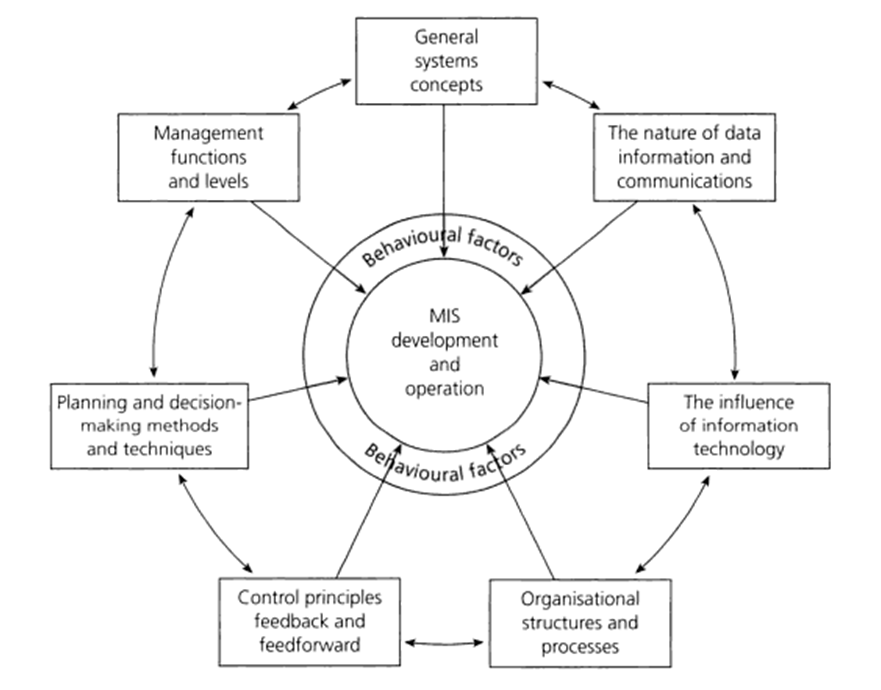
Management Information System can be defined as “a system to convert data from internal and external sources into information and to communicate that information, in an appropriate form, to managers at all levels in all functions to enable them to make timely and effective decisions for planning, directing and controlling the activities for which they are responsible” (Lucey, 2004, p.2). Alternatively, Management Information System can be defined as “a computer-based system that provides information and support for managerial decision making” (Daft et al, 2010). In simple terms, Management Information System represents a system used by managers to collect updated and comprehensive data in order to engage in informed and effective decision making. Management Information System is a much broader concept than just handling data in a way that Management Information System stands for data analysis in accordance with a range of important factors such as organisational culture, relevant policies and procedures and wider business environment. Adoption of Management Information System principles in an appropriate manner is going to provide Company the advantages of engaging in informed planning, mini Management Information Systeming the level of information overload, and increasing the level of coordination between various departments of the company. Moreover, Management Information System can have a positive contribution on employee performance evaluation and improvement at Company and it can also serve as a valuable tool for identifying current position of the company in the marketplace and formulating growth strategies. The five important functions of management information systems have been identified by Pride et al (2009) to consist of the following points: Collecting data. The collection of data that is necessary for decision making in short-term and long-term perspectives. Storing data. Keeping the data in an effective format in order to ensure that they can be the right of data can be…

Porter’s (1985) value chain analysis illustrates the manner in which various business activities relate to the competitive advantage of firms. The model divides business activities in primary and support activities. Primary activities deal with the delivery of products in a direct manner, whereas the main aim of support activities relate to increasing the levels of effectiveness of various business processes. Primary Activities Inbound logistics include activities associated with bringing and storing of all external materials. For Illy, this comprises harvesting, parchmenting, quality control and purchasing within countries where the coffee beans are grown, shipping the beans in bags to company plant in Trieste, Italy. Expenses associated with inbound logistics account for significant amount due to the large distance between operations plant in Trieste and purchasing plants in Africa, Asia and Latin America continents and this can be specified as one of the major factors causing the levels of overall costs to increase. Within the scale of ‘Illy’s and Boos Cupcakery’ specific branch, on the other hand, inbound logistics involve the delivery of necessary products and ingredients on a daily basis, according to the order sent by the shift manager on the previous day. Operations relate to the ways in which outputs are created out of inputs. Illy operations mainly include blending, roasting and packaging coffee beans in company plant in Trieste. Basically, internal operations consist of a set of consequent processes as a result of which coffee beans in bags are turned into packaged products in paper packages and metal cans depending on the nature of each individual product. In case of ‘Illy’s and Boos Cupcakery’ in Bristol operations involve physical preparation of coffee and other beverages and food within the store. Outbound logistics activities include all activities involved in sending ready products to consumers. Illy products…