
Search results for: Segmentation, Targeting

Executive summary This is an innovative marketing plan devised for a new business that involves selling herbal teas online. The business involves importing three ranges of herbal tea – Rugose Rose flower tea, Carnatation flower tea, and Jasmine Bud flower tea would be from China to UK and selling over the website healthy-herbal.co.uk. The main competitive advantages associated with the business proposal include innovative marketing plan, competitive prices and high quality of products. A comprehensive situation analysis conducted on the basis of formulating key assumptions and conducting SWOT analysis has preceded the choice of marketing tools and techniques in order to well healthy-herbal.co.uk herbal teas. Marketing strategy formulated for healthy-herbal.co.uk consist of specific marketing techniques belonging to advertising, sales promotion, and direct marketing communication mix components. Moreover, the innovative marketing plan relies on viral marketing techniques due to their high level of cost effectiveness and speed. Namely, viral marketing techniques to be used by healthy-herbal.co.uk include e-mail marketing, Facebook marketing and marketing through YouTube. The marketing plan focuses on integration of all individual programs and initiatives in order to communicate the brand value proposal of healthy-herbal.co.uk which is associated with adopting a proactive approach in leading healthy lifestyle. The plan also contains provisions for the measurement of results. 1. Introduction This is an innovative marketing plan for a new online business that would be selling a range of herbal teas – Rugose Rose flower tea, Carnatation flower tea, and Jasmine Bud flower tea over a website, healthy-herbal.co.uk. Focusing on integrated marketing communications, the marketing plan addresses each component of marketing communication mix an individual manner. The range of herbal teas offered by healthy-herbal.co.uk – Rugose Rose flower tea, Carnatation flower tea, and Jasmine Bud flower tea and others have significant health benefits and they are also very delicious, and…
John Lewis Partnership plc is UK partnership company that owns 37 John Lewis department stores, and 277 Waitrose supermarkets across the UK and a set of other businesses. The partnership employs 81,000 permanent staff that is referred to as Partners, who contribute to the annual gross sales of over £8.7 billion (About Us, 2012, online). Dedicated to the vision of its founder John Spedan Lewis ‘to create a company dedicated to the happiness of the staff through their worthwhile and satisfying employment in a successful business, John Lewis has been able to provide all its Partners with 18% bonus on their share profit for the financial year of 2010/2011 at a total cost of £194.5m. (Annual Reports and Account, 2011) It is important to note that “John Lewis’s strategy is remarkably clear and straightforward: partners should gain satisfaction from their works and status; customers should be recruited for the long term and profit is essential to enable growth and returns to all” (Isles, 2010, p.120). This strategy has enabled the company to charge customers premium prices for products and services it offers. John Lewis Environmental Trends Analysis The necessity for John Lewis to engage in international market expansion is justified by following factors and environmental trends: 1. Retail market saturation in UK. Retail market in UK is becoming highly saturated (Perrey and Spillecke, 2011) and this situation makes long-term growth prospects for John Lewis in local market obscure. Therefore, engagement in international market expansion is an appropriate strategy to be adopted by senior level management in current situation. 2. Attractive opportunities in Chine market. China is being perceived by many as a rapidly emerging superpower. Moreover, it has been estimated that “sales of luxury goods in the country reached 212 billion yuan in 2010 and probably grew 25 to…
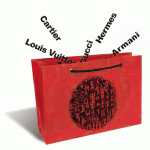
The positioning of the products, namely the luxury brand fashion products which are designed and aimed at upmarket customers in the form of differentiated products may have several forms and varieties. This is to say that the luxury brand fashion products can be positioned in the market based on the usage or function of the product, price of the product, being a substitute product and many more. According to Callen (2009) luxury brand fashion products may be positioned in the market as a substitute product to products. This is to say that even if there is already a product which is targeting the same upmarket segment, the new substitute product may be offered that adds some twists and changes to the product that may also create another niche market within the concentrated and niche market. Even though this marjet segment tends to smaller than the original market segment, it still can be profitable and worth positioning by luxury brand fashion products as the prices for the products will be too high compared to other market segments. Alternatively, Hackley (2009) states that the price may be another focus when positioning the luxury brand fashion products. In the high street clothing industry, the top designer brands usually create their designs first, which is usually copied and launched to the market market by other mid-to-low market focusing companies. However, in some cases, a company in the mid-to-low market may launch a product that may trigger the luxury brand fashion company to launch the similar product to the upmarket as exclusive and unique product as some customers are willing to pay extra for the extra add-ons on the products. The author calls this as copying from midmarket and introducing it to the upmarket which usually have been successful in the high street fashion sector…