

BYD marketing strategy is constantly evolving as the EV market landscape changes. They are adapting to new customer demands, emerging technologies, and competition from established and new EV players. BYD marketing strategy is attempts to communicate the brand’s unique selling proposition (UPS) to the target customer segment. BYD’s USP isn’t just a single thing, but rather a powerful combination of several key factors that set it apart from other EV manufacturers. Here are some of the most prominent elements: 1. Vertically Integrated Powerhouse. BYD controls almost every aspect of its EV production, from mining raw materials to assembling the final vehicle. This gives them a significant advantage in controlling costs, ensuring quality, and driving innovation throughout the entire process. 2. Blade Battery Advantage. Their proprietary Blade Battery technology is a game-changer. It offers higher range, faster charging, and enhanced safety compared to traditional lithium-ion batteries. This technology is a major competitive advantage and a key selling point for BYD customers. 3. Technology for Everyone. BYD strikes a unique balance between offering technologically advanced EVs at competitive prices. This makes them appealing to a wider range of consumers, not just those with deep pockets. Their price competitiveness often puts them at the forefront of accessible EV options. 4. Sustainability Champion. BYD is fully committed to promoting sustainable transportation solutions. Their entire focus is on EVs, unlike traditional car manufacturers offering both EV and gas-powered options. This clear commitment to clean energy resonates with environmentally conscious consumers. 5. Beyond Cars. BYD doesn’t limit itself to cars. They offer a diverse product portfolio including buses, trucks, taxis, and even forklifts. This caters to various transportation needs and allows them to tap into different market segments. 6. Innovation Engine. BYD constantly invests in research and development, pushing the boundaries of EV technology.…

PESTEL is a strategic analytical tool and the acronym stands for political, economic, social, technological, environmental and legal factors. BYD PESTEL analysis involves the analysis of potential impact of these factors on the bottom line and long-term growth prospects of the electric automaker. Political Factors in BYD PESTEL Analysis Favourable government policies for EV and renewable energy In 2022, global EV sales soared by 68%, reaching a record 10.6 million units. This meteoric rise coincides with a wave of supportive government policies. China, the world’s largest car market, offers generous purchase subsidies and tax breaks for EV buyers. These incentives have propelled China to become the undisputed leader in EVs, accounting for over half of global sales. Likewise, European countries like Norway and the United Kingdom have implemented ambitious carbon reduction targets, coupled with EV purchase incentives and charging infrastructure investments, contributing to their impressive EV uptake rates. The impact of favourable policies extends beyond the realm of personal transportation. Renewable energy sources, once relegated to the fringe, are now experiencing a golden age thanks to supportive government initiatives. In the United States, the Inflation Reduction Act of 2022 offers tax credits for renewable energy projects and EV manufacturing, a move projected to inject USD370 billion into clean energy over the next decade. Similarly, India, the world’s third-largest carbon emitter, has set a goal of achieving 50% renewable energy capacity by 2030, backed by ambitious solar power targets and financial incentives for renewable energy developers. These policy shifts are not driven solely by environmental concerns. Governments are increasingly recognizing the economic benefits of a green transition. EVs create new jobs in manufacturing, installation, and maintenance, with estimates suggesting that the global EV industry could create 30 million jobs by 2030. Renewable energy is also attracting substantial…
SWOT is an acronym for strengths, weaknesses, opportunities and threats related to organizations. The following table illustrates BYD SWOT analysis Strengths 1. Vertical integration and cost advantage 2. Market leadership at the global scale 3. Leadership in technological capabilities 4. Massive manufacturing scale Weaknesses 1. Brand image associated with the perception Chinese quality being low 2. Overdependence on domestic market 3. Too broad range of business 4. Dependence on Chinese government EV subsidies Opportunities 1. International market expansion 2. Formation of strategic partnerships 3. Increasing relevance and popularity of EV 4. Technological advancements Threats 1. Intensifying competition 2. Trade conflicts between China and USA 3. Issues in sourcing key components 4. Global economic slowdown BYD SWOT Analysis Strengths in BYD SWOT Analysis Vertical integration and cost advantage The bedrock of BYD’s cost leadership lies in its deep vertical integration. Unlike traditional automakers who rely on a constellation of external suppliers, BYD owns and operates its entire supply chain, from battery production to semiconductors, electric motors, and even key vehicle components. This single-source approach empowers BYD with several advantages. Firstly, it eliminates the markups and negotiation complexities associated with external suppliers, offering greater cost optimization. Secondly, it enables streamlined communication and collaboration across the entire production chain, allowing for quicker problem-solving and flexibility in adapting to market demands. Analysts estimate this vertical integration translates to a 25-30% cost advantage over competitors, a significant edge in the fiercely competitive EV market. But vertical integration goes beyond mere cost-cutting. It empowers BYD with unparalleled control over quality and consistency. By managing every stage of production, BYD can ensure strict adherence to its own exacting standards. This reduces the risk of defective components or production bottlenecks, further contributing to lower overall costs. The Blade Battery, a BYD innovation, exemplifies this. Its unique design…
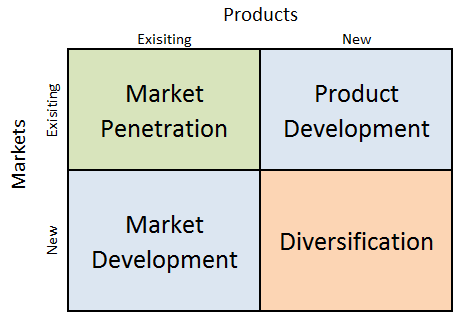
BYD Ansoff Matrix is a marketing planning model that helps the electric automaker to determine its product and market strategy. Ansoff Matrix illustrates four different strategy options available for businesses. These are market penetration, product development, market development and diversification. Ansoff Growth Matrix Within the scope of Ansoff Matrix, BYD uses all four growth strategies in an integrated manner: 1. Market penetration. Market penetration refers to selling existing products to existing markets and BYD uses this strategy extensively. The company offers EVs at competitive price points, particularly catering to budget-conscious consumers. This attracts new customers and makes EVs more accessible in price-sensitive markets like China. Moreover, the EV giant offers special discounts and promotional packages for specific customer segments, such as first-time buyers, government fleets, or ride-sharing companies. Such moves incentivize purchase and boost sales within defined target groups. 2. Product development. This involves developing new products to sell to existing markets. Product development sits at the heart of BYD’s long-term success, not just as a growth strategy but as a core pillar of their competitive advantage. The company consistently expands its EV portfolio developing new models across various segments (cars, buses, trucks) alongside enhancing existing models with improved range, performance, and features. Furthermore, BYD invests heavily in R&D for autonomous driving, battery improvements, intelligent connected vehicles, and alternative energy solutions like hydrogen fuel cells. 3. Market development. Market development strategy is associated with finding new markets for existing products and it is also a key growth strategy for BYD. Starting to produce EVs in 2003, BYD today sells EVs to more than 400 cities in over 70 countries and regions across the six continents of the world.[1] The company is expected to further intensify its focus on international market development strategy. 4. Diversification. Diversification involves developing new products to…
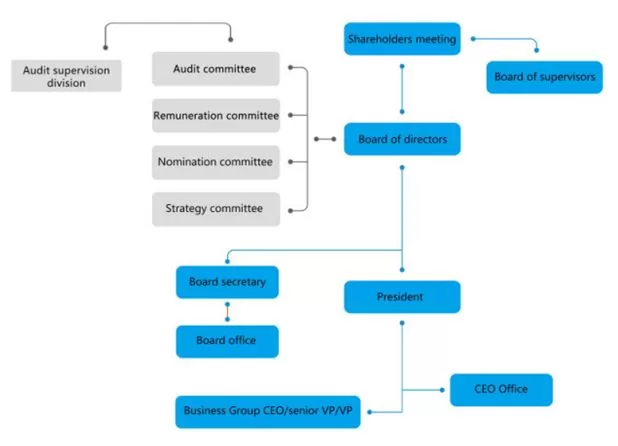
BYD organizational structure has the following characteristics: – Matrix Structure. BYD corporate structure is matrix, combining functional departments (e.g., R&D, Sales) with product-based divisions (e.g., Dynasty, Ocean, Commercial Vehicles). This fosters collaboration and flexibility while maintaining focus on specific product lines. The matrix structure enables quick decision-making and adjustments to market dynamics – Independent Brands. Recent moves towards independent operations for brands like Dynasty and Ocean indicate a strategy to cater to distinct market segments with tailored brand identities and marketing efforts. In other words, independent brands allow for targeted approaches. – Emphasis in R&D. BYD prioritizes internal R&D, with dedicated institutes for each brand and separate units for core technologies like DM-i hybrids and intelligent driving. This fosters innovation and control over key components. – Vertical Integration. The EV behemoth vertically integrates key aspects of its supply chain, including battery production and some vehicle components. Such an approach enhances cost control and quality assurance. Vertical integration expands BYD organizational structure. – Regional Variations. The electric automaker’s structure adjusts to regional needs, with separate sales divisions and local leadership teams managing specific markets. Regular variations approach ensures responsiveness to diverse customer preferences and regulations. The Figure below illustrates BYD corporate structure at the senior level. BYD Company Limited Organizational Chart BYD Company Limited Report contains the above analysis of BYD organizational structure. The report illustrates the application of the major analytical strategic frameworks in business studies such as SWOT, PESTEL, Porter’s Five Forces, Value Chain analysis, Ansoff Matrix and McKinsey 7S Model on BYD. Moreover, the report contains analyses of BYD leadership, business strategy and organizational culture. The report also comprises discussions of BYD marketing strategy, ecosystem and addresses issues of corporate social responsibility.
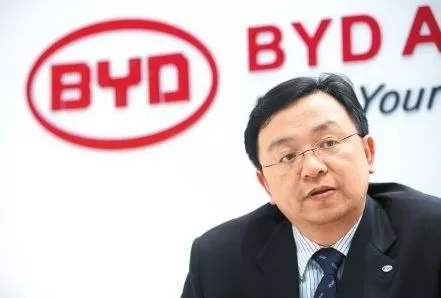
Effective BYD leadership is one of the main factors behind the phenomenal growth of the electric automaker. In April 2022, Wang Chuanfu, founder, Chairman and President of BYD, was listed on The 50 Most Influential Business Leaders in China 2022 by Fortune. Described as “a mix of Thomas Edison and Jack Welch, the former General Electric chief” by Charlie Munger in 2008[1], Wang Chuanfu is a charismatic and passionate leader known for his long-term vision and relentless work ethic. Transformational leadership principles prevail at BYD. Wang Chuanfu’s audacious vision for a sustainable future through EV and renewable energy motivates employees and stakeholders alike. He articulates a clear picture of BYD’s potential impact on the world, transcending mere financial goals. This inspires employees to see their work as contributing to a larger purpose. It is important to note that maintaining a transformational leadership style as the company scales can be challenging. Effective communication and delegation become crucial to keep everyone aligned with the vision and empowered to act. BYD Company Limited Report contains the above analysis of BYD leadership. The report illustrates the application of the major analytical strategic frameworks in business studies such as SWOT, PESTEL, Porter’s Five Forces, Value Chain analysis, Ansoff Matrix and McKinsey 7S Model on BYD. Moreover, the report contains analyses of BYD business strategy, organizational structure and organizational culture. The report also comprises discussions of BYD marketing strategy, ecosystem and addresses issues of corporate social responsibility. [1] White, E. & Campbell, P. (2024) “Wang Chuanfu, the driving force behind BYD’s rise” Financial Times, Available at: https://www.ft.com/content/22527628-733e-4188-9678-ab3210fdb1ba

BYD business strategy consists of the following three pillars: 1. Cost leadership. Cost efficiency compared to its main competitor, Tesla is one of the key competitive advantages for BYD. Cost leadership has been a crucial component of BYD’s success, helping them establish themselves as a competitive contender in the EV market. BYD is able to maintain cost leadership business strategy in the global marketplace due to a number of factors such as lower cost of human resources in China, the extensive support by Chinese government to EV makers and an extensive vertical integration. Competitive pricing makes BYD’s EVs accessible to a wider range of consumers, particularly in cost-sensitive markets. This can drive market share gains and boost overall sales. Moreover, efficient cost management helps BYD maintain healthy profit margins even with lower prices, enhancing financial stability and fuelling further investments. 2. Extensive vertical integration. The electric automaker produces the majority of its spare parts in-house. For example, for BYD Dolphin only tyres and windows are delivered by suppliers and all other components are produced by the company itself. Vertical integration to such an extent allows the EV behemoth to maintain its cost leadership business strategy along with reducing the dependence on external vendors for spare parts. Moreover, controlling critical components minimizes dependence on external suppliers, mitigating risks of disruptions and shortages. Vertical integration also creates unique capabilities and intellectual property, setting BYD apart from competitors and bolstering brand differentiation. 3. Accelerated pace of new model development. While it takes about four years for an average automaker to develop a new car from scratch to design, for BYD it takes only 18 months. The electric automaker has adapted an accelerated pace of new model development to reflect changes in customer tastes and preferences as a cornerstone of its business…
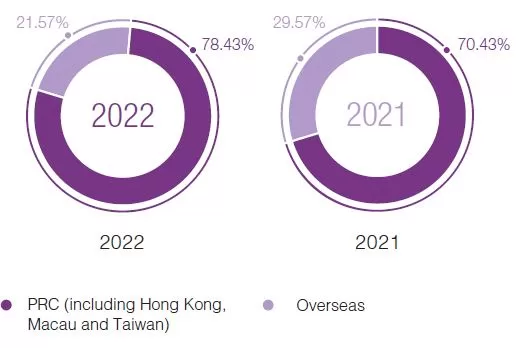
Founded in 1995, BYD Company Limited is a leading technology company that has established itself as an industry leader in electronics, automotives, renewable energy, and rail transit. As a global leader with more than 30 industrial parks across 6 continents, BYD’s zero-emission solutions, focused on energy generation and storage, are expansive and widely applicable. The electric automaker sold 26,864 million units of cars in 2022 , generating operating revenue of RMB 424,061 million, an increase of 96.20% compared to the previous year. The company delivered a record high of 1,788,000 new energy vehicles in 2022, representing a year-on-year growth over 217.6% . The electric vehicle (EV) giant pursues a business strategy of cost leadership fuelled with extensive vertical integration and an accelerated pace of new model development. BYD organizational structure integrates the elements of matrix structure, independent brands, emphasis on R&D and regional variations. Organizational culture of the EV behemoth, on the other hand, is associated with meritocracy, focus on cost-cutting and prioritizing company values. As one of the leading rechargeable battery manufacturers in the global arena BYD possesses certain strengths such as vertical integration and cost advantage, leadership in technological capabilities and economies of scale advantage from massive manufacturing. At the same time, the company has certain weaknesses. These include overdependence on domestic market, too broad range of businesses and dependence on subsidies by Chinese government to sustain cost advantage. BYD Company Limited Report contains the application of the major analytical strategic frameworks in business studies such as SWOT, PESTEL, Porter’s Five Forces, Value Chain analysis, Ansoff Matrix and McKinsey 7S Model on BYD. Moreover, the report contains analyses of BYD’s business strategy, leadership and organizational structure and ecosystem. The report also analysis marketing strategy, ecosystem and discusses the issues of corporate social responsibility. 1. Executive Summary 2. Business…
BYD Company Limited Report contains the application of the major analytical strategic frameworks in business studies such as SWOT, PESTEL, Porter’s Five Forces, Value Chain analysis, Ansoff Matrix and McKinsey 7S Model on BYD. Moreover, the report contains analyses of BYD’s business strategy, leadership and organizational structure and ecosystem. The report also analysis marketing strategy, ecosystem and discusses the issues of corporate social responsibility.
Research Methodology Privacy Policy (GDPR Compliant) Introduction This Privacy Policy explains how Research Methodology (“we”, “us”, or “our”) collects, uses, and discloses your personal information when you visit and use our educational portal (“Portal”). What personal information do we collect? The personal information we collect may vary depending on your interaction with the Portal. We may collect the following: Contact information: such as your name, email address, and phone number (optional). User information: such as username, password, and language preferences. Usage data: such as information about your browsing activity on the Portal, including pages viewed, links clicked, and time spent on each page. Technical data: such as your IP address, device type, and browser information. How do we use your personal information? We use your personal information for the following purposes: To provide and operate the Portal and deliver the educational content. To personalize your experience on the Portal. To send you important information about the Portal and its features. To respond to your inquiries and requests. To improve the Portal and our services. To comply with legal and regulatory obligations. Legal basis for processing your personal information We will only process your personal information where we have a lawful basis to do so. The legal basis will depend on the specific type of personal information and the purpose for which it is being processed. In most cases, the legal basis for processing your personal information will be: Your consent: We will ask for your consent to process your personal information for certain purposes, such as sending you marketing emails. Our legitimate interests: We may process your personal information for our legitimate interests, such as improving the Portal and our services. However, we will only do this if your interests and fundamental rights are not overridden. Legal obligations: We may be required to process your personal information to comply with legal or regulatory obligations. Data retention We…