
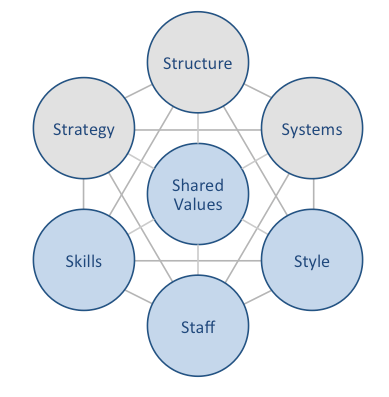
Uber McKinsey 7S model illustrates the ways in which seven elements of businesses can be aligned to increase effectiveness. According to the framework strategy, structure and systems represent hard elements, whereas shared values, skills, style and staff are soft elements. McKinsey 7S model stresses the presence of strong links between elements in a way that a change in one element causes changes in others. As illustrated in figure below, shared values are positioned at the core of Uber McKinsey 7S model, since shared values guide employee behaviour with implications on their performance. McKinsey 7S model Hard Elements Strategy Uber pursues cost leadership business strategy. The ride-hailing giant gains cost advantage thanks to internet-based nature of its business model that disrupted traditional taxi industry in the global scale. The international transportation technology company increases range of its services regularly to cater for the needs of greater numbers of customers. Moreover, Uber business strategy places a great emphasis on a high level of user convenience. Growing the business through acquiring adjacent businesses is another important aspect of Uber business strategy. Structure Uber organizational structure can be classified as hierarchical. Accordingly, the company is disadvantaged by the shortcomings of hierarchical structure such as ineffective communication across various departments, rivalry between departments that may compromise long-term growth prospects and high level of bureaucracy. Following the failed IPO in 2019, the CEO Mr. Khosrowshahi changed Uber organizational structure to increase his role in operational day-to-day management. As part of these changes, the positions of chief operating officer (COO) and chief marketing officer (CMO) were also eliminated. Systems Systems within McKinsey 7S model refer to daily activities and procedures that Uber staff use to provide ride-haling services to millions of customers worldwide. There is a wide range of various systems that are important for Uber’s long-term…
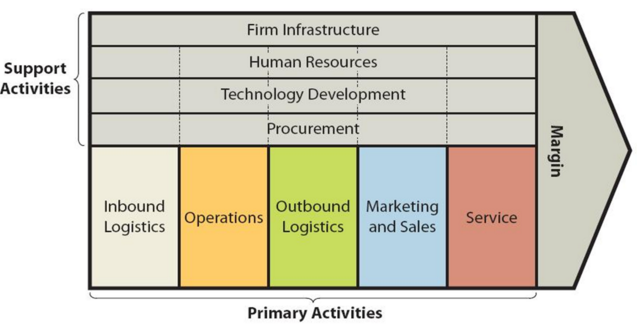
Uber Value chain analysis is a strategic analytical tool that helps to identify the sources of value and competitive advantage for the global transportation technology company. Figure below illustrates the essence of Uber value chain analysis. Uber Value Chain Analysis Uber Primary Activities Uber Inbound logistics Generally, inbound logistics involves receiving and storing raw materials. Uber, the largest taxi technology company in the world, does not own the vehicles it uses to serve customers. The vehicles are owned or rented by Uber drivers, who are not employees, but independent contractors. Uber drivers need to possess smartphones to use Uber app software. Uber users, i.e. customers also must have access to a smartphone or mobile website to be able to use the service. Accordingly, value addition in Uber inbound logistics relates to internet-based nature of business operations and the business model of the company. Specifically, thanks to its business model, despite the large size of the business, Uber inbound logistics is only limited to mainly hardware and office equipment needed to sustain the business. The global transportation technology company does not need to procure any raw material for provide its services. Uber Operations Uber operations are highly sophisticated and customer-centric thanks to its app equipped with advanced functions and capabilities. Therefore, it can be argued that Uber app is one of the main sources of value in Uber operations. Uber operates in approximately 10000 cities worldwide. Business operations are divided into four reportable segments: 1. Mobility. In Mobility segment Uber operations consist of connecting consumers with independent providers of ride services. The usage of Uber mobility services involves the following stages: a) Requesting the ride. Customers can use Uber app to tap each ride option to see wait time, driver’s rating, and price. Customers can enter their pickup location and…
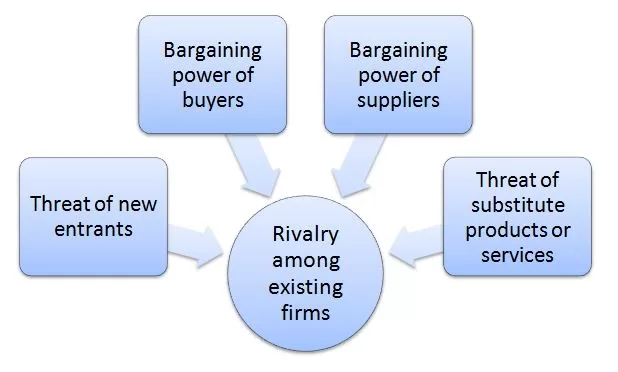
Uber Porter’s Five Forces analytical framework analyses five individual forces that shape an overall extent of competition in the industry. These forces are illustrated in figure below: Uber Porter’s Five Forces Threat of new entrants in Uber Porter’s Five Forces analysis Threat of new entrants into internet-based ride-hailing sector is significant. The following factors play role in the formation and extent of the threat of new entrants into mobility platform sector: 1. Simplicity of the business model. Nothing about Uber business model or its app is secret. In other words, Uber business model and its app can be replicated by any other company without massive amounts of capital requirements. Thanks to internet-based nature of the business model, new entrants to the market will not have issue to access distribution channels. Furthermore, due to low entry barriers into the ride-hailing industry, the numbers of local and global competitors for Uber have been consistently increasing during the past few years. 2. Scaling issues. While addressing technical aspects of the business such as developing ride-haling app and website may not be difficult, achieving necessary scale in operations is challenging for new entrants. In other words, mobility platform has to attract substantial amount of drivers in order to be successful and this requires time and massive capital investments. 3. Expected retaliation from existing market players. Current market leaders such as Uber, Lyft and Curb defend their territories fiercely and they are expected to retaliate against new entrants to the market. Bargaining power of buyers in Uber Porter’s Five Forces analysis The bargaining power of buyers in taxi industry is great. Buyer bargaining power depends on the following: 1. Abundance of offers. Buyer bargaining power is mainly fuelled by the abundance of competition in the industry. Uber customers are highly price sensitive. If…
Uber marketing mix (Uber 7Ps of marketing) comprises elements of the marketing mix that consists of product, place, price, promotion, process, people and physical evidence. Product Element in Uber Marketing Mix (Uber 7PS of Marketing) Uber is a service company and it does not sell products. Uber has clear advantages over regular taxi. These include clear overview of pricing prior to booking, one-tap rides, following drivers on map, cashless convenience and fare splitting, as well as feedback options. The range of services offered by Uber with brief descriptions is illustrated in table below: Service Descrption X Low cost option for the passengers looking for low cost rides for up to 4 riders XL Low cost option for the passengers looking for low cost rides for up to 6 riders Pool Car sharing: riders can bring one other person with them, thus saving on travel costs GO Ride in a hatchback Comfort Newer cars with extra legroom Flash Match with closest Uber Taxi or UberX AUTO Ride in Auto rickshaws, currently available in Bangalore and Pune only Access Taxi service with wheelchair access to cater to the need of elderly and people with disabilities. MOTO Booking bike rides around the city Premium A fleet of stylish vehicles to choose from. Uber Premium comprises Uber SELECT, Uber BLACK, Uber SUV and Uber LUX Green Sustainable rides in electric vehicles Scooters Electric scooters to help people to get around a city Transit Real-time public transit information in the Uber app WAV Rides in wheelchair-accessible vehicles RUSH Courier Package Service EATS Allows customers to order food on the go Uber services and descriptions Place Element in Uber Marketing Mix (Uber 7PS of Marketing) Uber is available in 71 countries around the globe.[1] The service has a high level of geographic concentration. In…
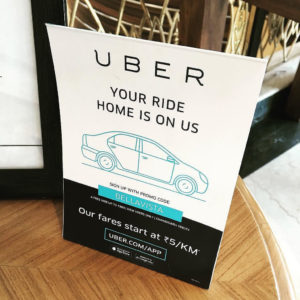
Uber marketing communication mix comprises print and media advertising, sales promotions, events and experiences, public relations and direct marketing. Uber marketing communication mix is aimed to associate using Uber services with cost-efficiency, effectiveness and convenience. Uber Print and Media Advertising Uber uses traditional print and media advertising sparingly, mainly concentrating on social media and word-of-mouth marketing channels. Nevertheless, the global taxi technology company still uses TV ads, newspapers and magazine ads, posters and banners in selected locations. The ride-hailing giant is known for unconventional advertising techniques. These include putting ads on drones and having them taunt drivers stuck in traffic in Mexico City.[1] Marketing campaign “Boxes” as metaphor for excessive traffic jams in Asian cities, where the ad proposes ridesharing as a key part of the solution has been praised as innovative and appealing.[2] At the same time, Uber’s use of advertising has proved to be controversial in several instances. For example, a billboard in Egypt which says “I escaped from driving my mother-in-law home 64 times” was found to be offensive by local people[3]. In France, campaign offering men free rides with ‘incredibly hot chicks’ has been criticized as sexist, resulting in an apology from Uber France.[4] Recently, the largest mobility platform in the world started advertising Uber Eats services through selected radio channels in selected locations promoting earning potential through the service. Uber also uses celebrity endorsement in print and media advertising in an occasional manner. For instance, in 2018 the company signed an endorsement deal with Virat Kohli, captain of India’s cricket team to serve as Uber brand ambassador in India.[5] Uber Sales Promotions Uber uses various sales promotions techniques in an integrated manner. For the largest mobility platform in the world discounts, loyalty programs, promotions, refunds, and credits provided to end-users who are not customers totalled USD…
Uber segmentation, targeting and positioning can be specified as the essence of Uber marketing strategy. Segmentation involves dividing population into groups according to shared characteristics, whereas targeting implies choosing specific groups identified as a result of segmentation to sell products. Positioning refers to the selection of the marketing mix the most suitable for the target customer segment. Uber uses the following positioning methods: 1. Multi-segment positioning. Uber uses multi-segment type of positioning and accordingly, targets several customer segments with different levels of service. The ride-hailing giant offers economy services such as Uber X, Uber XI and Uber Pool for cost-conscious customers. At the same time, Uber PREMIUM consisting of fleet of stylish vehicles is available for customers who don’t mind to pay more. 2. Stop-gap positioning. Stop-gap positioning involves investing in currently unprofitable brands with profitability expectations in long term-perspective. Uber used this positioning method for its Advanced Technologies Group (ATG) business unit. Specifically, the ride-hailing giant invested hundreds of millions of USD in the development of autonomous self-driving cars. However, the project did not generate expected results and ATG unit was sold to Aurora Innovation Inc. in January 2021. The following table illustrates Uber segmentation, targeting and positioning: Type of segmentation Segmentation criteria Uber target customer segment Uber X, Uber XI, Uber pool, Uber-MOTO, Uber AUTO Uber Premium, Uber Go, UberEATS, Uber BOAT, UberRUSH Uber Access Geog-raphic Region North & South America, Asia, & New Zealand Australia, Europe, Africa Uber AUTO – Bangalore and Pune Only North & South America, Asia, & New Zealand Australia, Europe, Africa North & South America, Asia, & New Zealand Australia, Europe, Africa Density Urban/rural Urban/rural Urban/rural Demog-raphic Age 18+ 25-65 45-65 Gender Males & Females Males & Females Males & Females …

Uber marketing strategy integrates print and media advertising, sales promotions, events and experiences, public relations and others. Particularly, Uber marketing strategy is mainly based on the word-of-mouth. Moreover, media in general and social media in particular play instrumental roles in terms of increasing the levels of Uber brand awareness in the global scale. At the same time, it is important to note that during the past few years, Uber-related messages communicated by the media have been mainly focused on scandals involving Uber, thus damaging the company’s brand image. Uber sales and marketing costs amounted to USD 3,58 USD 4,63 and USD 3,15 billions in 2020, 2019 and 2018 respectively.[1] Uber’s “rider-focused ad spend has increased twentyfold in the last year and a half.”[2] However, Chief Operating Officer Barney Harford has announced his plans to decrease marketing expenses as part of his attempts “bring a dose of financial discipline.”[3] Uber 7ps of marketing focuses on product and price elements of the marketing mix to a greater extent compared to other elements. Specifically, the global transportation technology company is increasing the range of its services to target greater numbers of customer segments. At the same time, the majority of Uber services are cheaper than traditional taxi, illustrating company’s focus on cost element of the marketing mix. Uber’s unique selling proposition is associated with cost efficiency, increasing service range and high level of customer convenience. Particularly, customers greatly appreciate convenience aspect of Uber value proposition. Accordingly, the global transportation technology company targets wide customer segment in terms of geographical location, age, social status and other criteria. Uber Technologies Inc. Report contains the above analysis of Uber marketing strategy. The report illustrates the application of the major analytical strategic frameworks in business studies such as SWOT, PESTEL, Porter’s Five Forces, Value Chain…
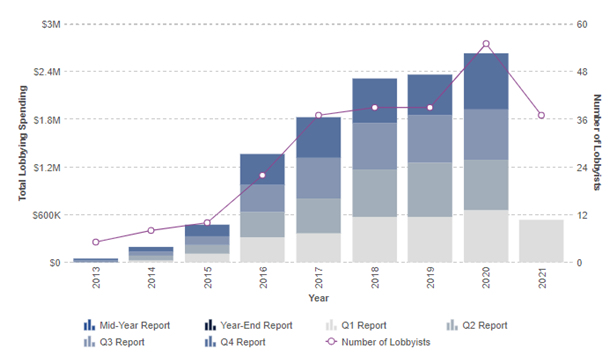
PESTEL is a strategic analytical tool and the acronym stands for political, economic, social, technological, environmental and legal factors. Uber PESTEL analysis refers to the analysis of potential impact of these external factors on the performance of the ride-hailing giant and its long-term growth prospects. Political Factors in Uber PESTEL Analysis Generally, political factors affecting businesses include government stability, bureaucracy, levels of corruption, impacts of home market lobbying groups and others. When Uber started its operations in 2009, there was no other ride-hailing taxi app. Accordingly, legislations related to the regulations of such services did not exist. Global disruption of taxi services: political implications With the advent of Uber, the following and other questions needed to be answered by local governments and authorities: Who is responsible in case of car accident: Uber or the driver? Does it need to be compulsory for Uber drivers to have taxi licences? Can Uber list thousands of its drivers as contractors, but not employees? Does Uber have to comply with minimum wage requirements? Dealing with above and other related questions in different countries and regions have caused charged political debates. Moreover, it can be argued that Uber has caused political debates in the global scale in a way that few companies have done. Different stance by local governments While some local governments have been favourable towards Uber taking into account its modern business model, others demanded strict adherence to the rules and regulations making no difference between Uber and regular taxi companies. As a result, Uber has been banned in a number of countries and such as Bulgaria, Hong Kong and Germany and certain cities such as London and Brno. Lobbying as attempts to affect political factors Uber engages in lobbying activities to try to impact legislations in the US and worldwide to…
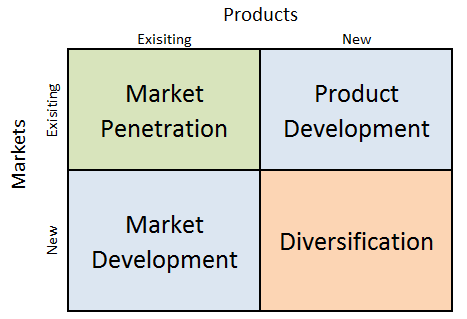
Uber Ansoff Matrix is a marketing planning model that helps the ride-hailing giant to determine its product and market strategy. Uber Ansoff Matrix illustrates four different strategy options available for the business. These are market penetration, product development, market development and diversification. Uber Ansoff Growth Matrix Within the scope of Ansoff Matrix, Uber uses all four growth strategies in an integrated manner: 1. Market penetration. Market penetration refers to selling existing products to existing markets. Uber engages in market penetration via application of various sales promotions techniques. These include distributing promo codes to allow users to have a discount for their next ride and “Uber VIP” loyalty program that rewards riders with special access to highest-rated drivers. Moreover, users can earn free rides by inviting their friends to sign up and ride with Uber. 2. Product development. This involves developing new products to sell to existing markets. The global transportation technology company consistently increases its service range. Currently, its extensive range of services include Uber X, Uber XI, Uber Pool, UberGO, Uber AUTO, Uber Access, Uber MOTO, Uber Premium and Uber Rush. Importantly, each new service introduced by the ride-hailing giant utilizes the same technological platform and competitive advantage of the business. 3. Market development. Market development strategy is associated with finding new markets for existing products. Launched only in San Francisco in 2009, the company currently operates in approximately 10000 cities worldwide. The global transportation technology company takes into account important aspects local culture when pursuing expansion strategy. The largest mobility platform in the world is expected to further engage in new market development business strategy. 4. Diversification. Diversification involves developing new products to sell to new markets. This is considered to be the riskiest strategy. Initially launched only as a taxi company, the ride-hailing giant has entered takeaway…

SWOT is an acronym for strengths, weaknesses, opportunities and threats related to organizations. The following table illustrates Uber SWOT analysis: Strengths 1. First mover advantage and global market leadership 2. Low operational costs 3. Effective implementation of ‘Think Global, Act Local’ strategy 4. Uber ecosystem 5. High levels of user convenience Weaknesses 1. Damaged brand image due to a series of various scandals 2. Increasing losses of the business 3. Uber business model is easy to imitate 4. Only technically savvy individuals can use Uber services 5. Low earnings by Uber drivers Opportunities 1. Increasing popularity of sharing economy 2. Self-driving cars 3. Improving brand image through CSR programs and initiatives 4. Increasing internet penetration in the global scale 5. Increasing service range Threats 1. More legal actions in certain countries to ban Uber from operating 2. Further intensification of competition 3. The risk of new scandals and ethical issues 4. Growing protests and retaliations from traditional taxi services 5. Drivers leaving Uber due to low earnings Uber SWOT analysis Strengths in Uber SWOT Analysis 1. Uber is the largest global taxi technology company in the world and it has a first mover advantage in the ride-hailing segment in the global scale. The company has effectively utilised its fist mover advantage to build momentum and achieve global expansion in a short period of time. Moreover, thanks to first-mover advantage, the word Uber has become synonym for ride-haling internationally and the new term uberisation has emerged describing commodisation of various services. Uber is an undisputed market leader in ride-haling the global scale. The largest mobility platform in the world has more than 93 million monthly active riders in approximately 10000 cities worldwide. As illustrated in figure below, Uber is much more popular than its closest rival Lyft in the largest…