
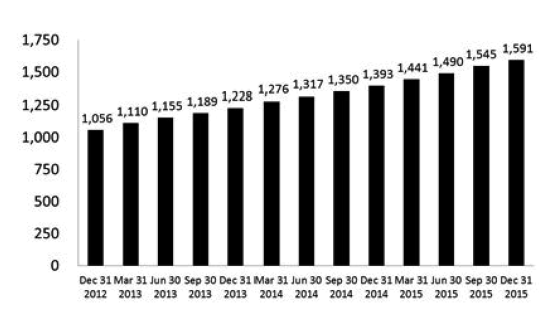
SWOT is an acronym for strengths, weaknesses, opportunities and threats related to business organizations. The following table illustrates Facebook SWOT analysis Strengths 1. Market leadership in the global scale 2. Effective leadership by Mark Zuckerberg 3. Efficient capitalization on mobile advertising 4. Evolving role as a news source Weaknesses 1. Dependence of revenues only on advertising 2. Challenges to sustain the revenue growth rate 3. Dependence of the business on a few key personnel 4. Difficulty to sustain competitive advantage Opportunities 1. Diversification of revenue sources 2. Investments in data protection and user privacy protection 3. Entering Chinese market via negotiations with the government 4. Formation of strategic alliances Threats 1. Cyber attacks, phishing and threats to online security 2. Facebook may not be able to successfully integrate new business it acquires 3. Increasing popularity and sophistication of ad-block extensions 4. The threat of being banned in developing countries Facebook SWOT analysis Strengths 1. Facebook is an undisputed market leader in the global scale in online social networking segment. Facebook has more than 1.13 billion daily active users and 1.03 billion mobile daily active users and about 84.5 per cent of daily active users are outside the US and Canada.[1] As it is illustrated in Figure 2 below, the numbers of active users of the social networking sites has been consistently increasing during the past three years to reach more than 1.59 billion by the end of 2015. The current market leadership of the company is a considerable strength from multiple points of view. Facebook monthly active users (in millions)[2] 2. Despite his much younger age compared to many other CEOs, Mark Zuckerberg is a proven and effective business leader who exercises visionary leadership style in an efficient manner. Mr. Zuckerberg has been able to exercises exceptional decisiveness and beat…
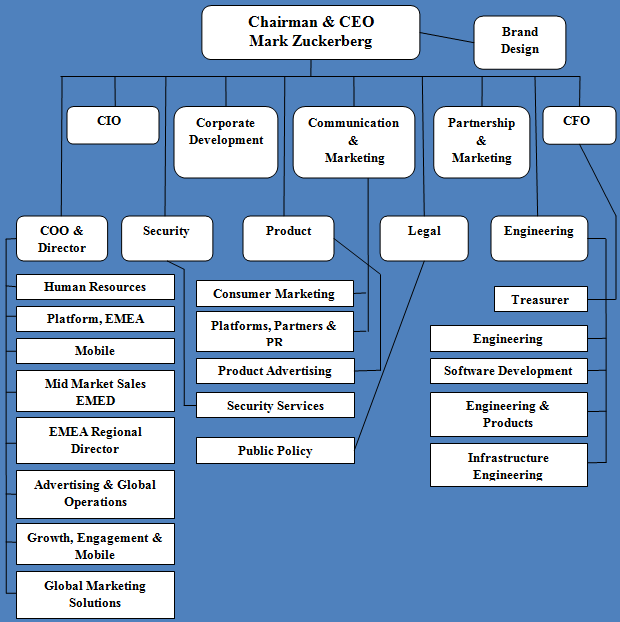
Facebook Inc. organizational structure can be described as hybrid and combines certain elements of hierarchical and divisional organizational structures. On one hand, with more than 12600 employees worldwide, Facebook Inc. maintains a hierarchical organizational structure integrating multiple levels of commands from CEO Mark Zuckerberg to ordinary programmers and designers. On the other hand, there are product-based divisions and global teams that focus specific products such as Facebook, Instagram, Messenger, WhatsApp and Oculus. Product-based teams also engage in the development and improvement of a wide range of services offered by the company. For example, services such as Profile, Newsfeed, Messenger, Groups and Events offered within Facebook social networking site is the result of work done by product-based divisions. Figure 1 below illustrates Facebook Inc. organizational structure In 2016 it has been found that the company was planning “to restructure its shares to give Mark Zuckerberg ultimate control even as the social network’s founder plans to sell most of his stake in the company”[1]. Earlier that year, Mark Zuckerberg had announced his pledge to donate 99 per cent of his fortune to charitable efforts including combating various diseases and climate change via selling his Facebook stocks. Accordingly, the new share structure to be introduced by Facebook Inc. is intended to ensure that Mr. Zuckerberg retains his 60 per cent voting power even after he departs with 99 per cent of his Facebook shares. A similar initiative had been introduced in Facebook’s main rival company, Google, where founders Larry Page and Sergey Brin were able to retain control of the company through introducing stock restructuring… Facebook Inc. Report comprises a comprehensive analysis of Facebook. The report illustrates the application of the major analytical strategic frameworks in business studies such as SWOT, PESTEL, Porter’s Five Forces, Value Chain analysis and McKinsey 7S Model on Facebook…

Facebook Inc. leadership is headed by its founder Mark Zuckerberg in the position of CEO and Chairman of the Board. Despite his relatively younger age among CEOs, Mr. Zuckerberg is renowned for his visionary leadership style and he is justly credited for the impressive growth rate of the company since it was founded in 2004. Mr. Zuckerberg’s initial business card read “I’m CEO, Bitch.” reflecting his aggressive leadership style at the earliest stages of business development. Moreover, named as one of the most influential personalities in the world in 2010 by Time Magazine, Mark Zuckerberg plays a dominant role in every aspect of the business and he is famous for his micro-management style. Mark Zuckerberg, as the founder, Chairman, and CEO, is able to exercise voting rights with respect to a majority of the voting power. Therefore, Zuckerberg is in the position to control a wide range of strategic matters including the election of directors and any merger, consolidation, or sale of Facebook’s assets. As of 2016, Mark Zuckerberg is only 32 years old and the youngest member of the Board of Directors. Facebook Chief operating officer, Sheryl Sandberg is also a strong and proven business leader who made impressive career in two large tech companies – Google and Facebook. She is also the author of a bestseller book ‘Lean In: Women, Work and the Will to Lead’ about female leadership in corporations. At the same time, Facebook senior leadership team has been criticised for a lack of diversity having only 3 per cent of black members in executive team.[1]… Facebook Inc. Report constitutes a comprehensive analysis of Facebook business strategy. The report illustrates the application of the major analytical strategic frameworks in business studies such as SWOT, PESTEL, Porter’s Five Forces, Value Chain analysis and McKinsey 7S Model on Facebook…

Facebook business strategy integrates the following four principles: 1. Extensive and continuous focus on user experience. Facebook did not have a first mover advantage in online social networking segment, as it was launched after Friendster and MySpace. Nevertheless, an uncompromised approach on user experience and an adequate balance between standardisation and customization of the website resulted Facebook becoming the most popular social networking site within a matter of a couple of years. 2. Growth via acquisitions. Facebook business strategy focuses on establishing presence in various branches of e-commerce via acquiring relevant businesses. In 2014, the company purchased Oculus VR, Inc. (Oculus), a company developing virtual reality technology and WhatsApp Inc. (WhatsApp) messenger application for mobile devices. Earlier in 2012, Facebook bought Instagram a popular photo-sharing application for USD 1 billion cash and stock.[1] In 2015 the company generated revenues of USD17.93 billion, which is an increase of 44% year-over-year and ad revenue was of USD17.08 billion, which is an increase of 49% compared to the previous year.[2] Solid financial position that can enable more strategic acquisitions in the future is one of the key sources of Facebook competitive advantage. 3. New product development. Development of new products and services is placed at the core of Facebook business strategy with positive implications on the numbers of its user base. Currently, Facebook product portfolio includes Profile, News Feed, Messenger, Groups, Events, Video, Photos, Search, Pages, Instagram and others. The ability to develop new products and services according to its mission statement “to give people the power to share and make the world more open and connected”[3] is one of the key competitive advantages of Facebook. 4. Continuously exploring new ways of monetization. Facebook constantly experiments with different strategies finding and utilizing news ways of monetization in a regular manner. Recently, mobile user…
Facebook Inc. is a social media giant that owns Facebook, Instagram, WhatsApp, Oculus and a range of other e-commerce businesses. Founded in 2004 in Harvard University dormitory by Mark Zuckerberg and several of his classmates, Facebook emerged to become the most popular social media site in the world attracting more than 1.13 billion daily active users and 1.03 billion mobile daily active users (Stats, 2016). Facebook’s mission statement is “to give people the power to share and make the world more open and connected” (Annual Report, 2015) and the company generates revenues from selling advertising placements to marketers. Facebook business strategy is associated with an extensive and continuous focus on user experience, growth via acquisitions, new product development and continuously exploring the new ways of monetization. The social media company employs more than 12600 people globally and in 2015 the company generated revenues of USD17.93 billion, which is an increase of 44% year-over-year and ad revenue was of USD17.08 billion, which is an increase of 49% compared to the previous year (Annual Report, 2015). Facebook has been successful in efficient capitalization on mobile advertising and its evolving role as a news source for increasing numbers of its users has positive implications on the long-term growth prospects of the business. At the same time, the social media company is not free of weaknesses and its major weaknesses include the dependence of revenues only on advertising, challenges in sustaining the growth rate of revenues and the dependence of the business on a few key personnel such as Mark Zuckerberg and Sheryl Sandberg. Facebook Inc. Report contains the application of the major analytical strategic frameworks in business studies such as SWOT, PESTEL, Porter’s Five Forces, Value Chain analysis and McKinsey 7S Model on Facebook. Moreover, the report contains analyses of Facebook’s business strategy,…
This essay critically analyses the level of destructive impact of colonialism on China’s growth output between the 1840s and the 1940s. The essay contains the contrast of opposite arguments regarding the topic and supports the argument confirming destructive impact of colonialism on China’s growth output between the 1840s and the 1940s by providing relevant and valid justifications. A study of economic history can provide valuable knowledge to economic theorists and practitioners in terms of dealing with economic challenges of present and the future. An in-depth analysis of factors causing the level of economic growth to slow down in particular is necessary so that these factors can be dealt with to fuel economic prosperity in any given region. Colonialism can be defined as “the control or governing influence of a nation over a dependent country, territory, or people” (Colonialism, online, 2016). While forming new colonies may prove to be a profitable strategy for powerful countries in many levels, economies that become victim to colonialism experience a set of substantial economic and social setbacks such as loss of sovereignty in terms of using economic resources, and negative impact upon cultural identity. The essay starts with assessing the level of China’s economic growth between the 1840s and the 1940s providing evidences why it was slow for this specific period. This is followed by discussions of colonialism and its negative impacts on the level of China’s economic growth between the 1840s and the 1940s. In order to adhere to the specified word limit for this essay political implications of colonialism are not addressed in this essay, and the main focus have been made on effects of colonialism on national economics using the case study of China. Moreover, an alterative viewpoint on the issue is also explored in this essay by assessing the impact of…
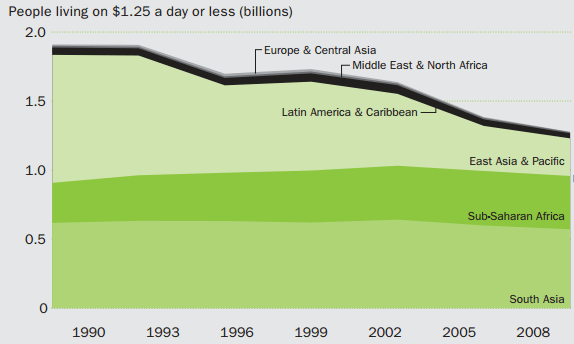
Rapid technological development during the last several decades coupled with a series of breakthroughs in information technology has immensely contributed to the development of national economies for a wide range of countries with positive implications on standards of life of people. At the same time, global poverty still remains one the most pressing issues with almost half of the world – more than 3 billion people living on less than $2.50 a day (Shah, 2016, online). The issue of global poverty is periodically addressed by a set of organisations such as World Bank, One International, WHO, CARE and others, as well as, within the framework of The Group of Twenty (G20) forum. This article represents a critical assessment of the role of World Bank in particular in dealing with global poverty. The article starts with the general discussions about the World Bank and its current contribution in eliminating global poverty. This is followed by analysis of criticism of World Bank performance in dealing with global poverty. Moreover, this article identifies potentials for World Bank to deal with global poverty more effectively. The World Bank Group is an international financial institution that pursues its mission of ‘Help Reduce Poverty’ with the participation of 188 countries. The World Bank Group consists of five organisations that are The International Bank for Reconstruction and Development (IBRD), The International Development Association (IDA), The International Finance Corporation (IFC), The Multilateral Investment Guarantee Agency (MIGA), and The International Centre for Settlement of Investment Disputes (ICSID). Each of these organisations contributes to World Bank mission in a unique way. It is important to clarify that generally the term ‘World Bank’ refers to only IBRD and IDA, and these two organisations along with IFC, MIGA, and ICSID are incorporated within the World Bank Group. Within the scope of this…

Gap Inc. management rightly acknowledges Corporate Social Responsibility (CSR) as one of the critically important aspects of the business. The company has won a number of awards for its CSR programs and initiatives, including 2016 Catalyst Award in recognition of its commitment to equality, diversity and inclusion[1]. Moreover, in 2015 Gap Inc. was named as The Most Ethical Company by The Ethisphere Institute.[2] Gap Inc. releases Global Sustainability Report annually and it includes the details of CSR programs and initiatives engaged by the company. The table below illustrates the highlights from the latest report for 2013-2014: Categories of CSR activities Gap Inc. CSR Performance Supporting local communities Gap’s employees volunteered 558,000 hours in 2014 alone Educating and empowering workers The company provided job training and store internships through its This Way Ahead program to more than 2000 teens and young adults. Labor and human rights Over the past several years the company raised the hourly wage to USD 10 for more than 60,000 employees Employee health and safety The company has a centralized online reporting system that tracks all incidents and injuries. The information is analyzed at least quarterly to assess risks and develop prevention measures Gender equality and minorities P.A.C.E. program aims to support female employees and suppliers gain the skills and confidence to advance at work and at home. The program aims to educate one million women throughout the world by 2020. Gap Inc. pays female and male employees equally for equal work In 2015, women represented more than 70 per cent of Gap’s senior leadership. The company sponsored 6 employee resource groups to promote diversity and inclusion. Environment a) energy consumption b) water consumption c) Waste reduction and recycling d) CO2 emissions The fashion retailer has…
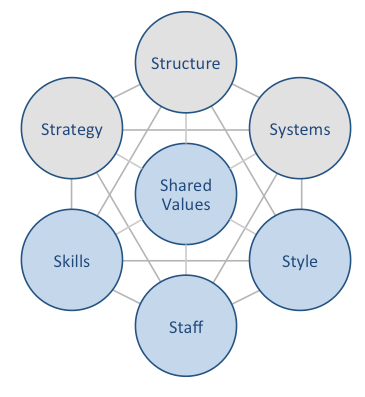
Gap Inc. McKinsey 7S model explains how seven elements of businesses can be aligned to increase the overall effectiveness. According to McKinsey 7S framework strategy, structure and systems represent hard elements, whereas shared values, skills, style and staff are soft elements. The essence of this model is this: there are links between elements in a way that a change in one element causes changes in others. As it is illustrated in figure below, shared values are positioned at the core of Gap Inc. McKinsey 7S framework, since shared values guide employee behavior with implications in their performance. Gap Inc. McKinsey 7S Framework Hard Elements Strategy. Gap Inc. uses cost leadership business strategy for all five brands within its portfolio – Gap, Banana Republic, Old Navy, Athleta, and Intermix. The company offers fashion, apparel and accessories products for much cheaper prices compared to the prices of premium fashion brands such as Prada, Dolce & Gabbana and Gucci. In other words, Gap Inc. business strategy capitalizes on the willingness of consumers to express themselves via clothes, to feel stylish, ‘cool’ and trendy in the cost effective manner. Structure. Gap organizational structure is hybrid and it integrates certain elements of divisional and hierarchical organizational structures. Gap organizational structure is divided into five divisions with each division representing a separate brand and headed by a president. At the same time, the organizational structure of each division is highly hierarchical and there are multiple levels of management between the president of the division and a shop floor assistant. Systems. There is a wide range of systems such as supply-chain system, quality control system, sales system, finance system, employee selection and recruitment system and others that facilitate Gap Inc. business operations. The company subjects the level of efficiency of its system into a critical analysis in…

Value chain analysis is a strategic analytical tool that analyses the sources of value creation for businesses. Gap Inc. value chain analysis presented below critically analyses the most important primary and support activities that contribute to the competitive advantage of the apparel and accessories retailer. The figure below illustrates the essence of value chain analysis. Gap Inc. Value chain analysis Primary Activities Inbound logistics Gap Inc. inbound logistics involves purchasing from about 1,000 vendors that have factories in about 40 countries. During the fiscal year of 2015, approximately 99 percent of purchases, by dollar value, were from factories outside the United States, while the remaining 1 percent of all purchases were from domestic factories. Moreover, about 24 per cent of total purchases by dollar value during the same period were made from factories based in China.[1] Due to the massive purchase volumes, economies of scale can be specified as the main sources of value creation for Gap Inc. Moreover, the company benefits from strategic, long-term relationships with its suppliers. In 2016, the company embraced supplier transparency practices disclosing the list of factories that produce its clothes around the world.[2] Operations GAP Inc. business operations are conducted in two formats[3]: Gap Inc. has company-operated stores in the United States, Canada, the United Kingdom, France, Ireland, Japan, Italy, China, Hong Kong, Taiwan, and beginning in October 2015, Mexico. The company also has franchise agreements with unaffiliated franchisees to operate Gap, Banana Republic, and Old Navy stores throughout Asia, Australia, Europe, Latin America, the Middle East, and Africa. Gap Inc. has 3,721 company-operated and franchise store locations throughout the world. The company derives value in operations primary activities mainly through opening its stores in locations and shopping centers frequently attended by the representatives of the target customer segment. Outbound logistics Gap Inc.…