

Procter and Gamble was founded in 1837 by William Procter a British citizen who emigrated to theUnited States, and James Gamble a U.S based Irish soap maker and industrialist. The company first sold candles. P& G as it is also called is a fortune 500 multinational corporation headquartered in Down town Cincinnati,Ohio, that manufactured a wide range of consumer goods. As at mid 2010, P& G is the 6th most profitable corporation in the world and the 5th largest corporation in the United States by market capitalisation. It spends more on US advertising than any other company. Total Revenue USD 79.03 Billion (2009) Operating Income USD 16.13 Billions (2009) Total Assets USD134.83 Billions (2009) Total Equity USD 63.099 Billions (2009) Employees 140,000(2009) President & CEO Bob McDonald As at July 1 2007, the company operation are categorised into three “Global Business Unit” with each Global Business Unit divided into “Business Segments” according the company‘s March 2009 earning release. Manufacturing operation are based in the following regions: United States Europe Canada China(31 wholly owned factories) and other parts of Asia Mexico Africa Latin America Australia 22 of P & G’s brands have more than a billion dollars in net annual sales and another 18 have between $500million and $1 billion. Motto “Touching lives, improving Life” 1. Beauty Care Beauty segment Grooming segment 2. Household Care Baby care and family care segment Fabric care and home care segment 3. Health and wellbeing Health care segment Snacks, Coffee and Pet care segment [ Wikipedia free encyclopedai 2010) APPLICATION OF STRATEGY OF INNOVATION AT PROCTER AND GAMBLE Procter and Gamble have continually used the strategy of innovation to lead the consumer goods industry. The constantly changing market place has forced the strategist at Procter and Gamble to focus on innovation as a way of maintaining their position in the…

Initially it had been presumed that consumers simply wanted their products and services with no questions asked but as the case may be people began to peer behind the brand facades and discovered all sorts of things they didn’t like from environmental irresponsibility to exploitation of child labour consequently social and moral concerns began to firmly exist in traditional marketing terms (Mitchell 2007). As a result of this progression major developments in the form of corporate social responsibility (CSR) began to occur. CSR is defined as ‘recognising that companies have a responsibility to a range of stakeholder groups such customers, employees and suppliers (Adkins 2005). Consumer reactions to CSR are not as straightforward as preferred with numerous factors affecting whether a firm’s activities translate into consumer purchases. Although people say that CSR matters in their purchase decisions, the reality is that customer responses to initiatives are not always consistent (Sen and Bhattacharya 2001). However over the past decade, CSR has gradually been integrated into the business activities of companies all over the world where businesses integrate social and environmental concerns into their corporate operations (Demetriou et al 2010). CSR allows businesses the opportunity to strengthen their corporate reputation and profitability by signalling to the various stakeholders with whom the organization interacts that it is committed to meeting its moral obligations. As a result, ‘many businesses have become more closely interrelated with society by focusing on charitable donations, corporate philanthropy, community participation, and Cause-related marketing’ (CAUSE-RELATED MARKETING ) (Demetriou et al 2010). CAUSE-RELATED MARKETING as it is purposefully referred to involves partnering charitable causes with products for marketing programs (Chang 2009) and applying strategies to support these causes whilst building the business (Adkins 2005). Cause related marketing recognises the importance of an alliance between businesses and charitable organisations for the same…

Porter’s competitive five force’s model as provides a useful stepping stone for an organization to identify its competitive position. Consumers are at the stage where they mane valid requests and are definite key stakeholders in companies. Acme appears to have taking this on board from the start by ensuring that it provides its customers with varied products and different designs. Acme Whistles exists on a global scale and it sufficiently able to defend its position against new entrants. The forces will allow Acme to determine where the company stands versus its buyers, suppliers, entrants, rivals and substitutes. Anticipating and exploiting shifts in the forces; and shaping the balance of forces to create a new industry structure that is more favourable to the company. Ease of Entry by competitors into the market As previously stated in the afore-mentioned Acme Whistles has an advantage over its competitors as it has not only gained a level of popularity but has had a level of longevity in its particular industry which makes it that bit more difficult for its competitors. Equally having patented designs which are individually tested as well as various designs, research and development and set up costs make it that more difficult for a potential competitor. The bargaining power of customers Customers in Acme’s market do not have as much buyer power as other industries. With the engraved whistle, there are other manufactures but Acme is able to offer it at a cheaper price as it has the existing foundation to do so. Equally the uniqueness of each design does not easily allow the buyer to switch to another producer and the large of buyers reduces any potential power. The bargaining power of suppliers Evidently Acme is at a stage where it has an established relationship with its suppliers. With…

Political Analysis Although it may not be the ‘credit crunch ’ and the restriction of credit itself that has an impact on SME survival, but rather the consequences arising from the recession, the difficulties may lie with downturn in trade leading to reduction in cash flow and turnover. (Ma and Shumin 2010) A Pestle analysis is therefore necessary to relay any future potential issues. Economic Analysis With the current state of the economy Acme Whistles Ltd has managed to avoid the negative impact of the recession by having the demands of the B2C customer as well as the B2B customer and offering a range of whistle products they appeal considerably to their particular target market. It is important in this particular economic climate to be aware of emerging markets entwined which consequently transforms to potential global competition where levels of resources could allow a level of some type of cost advantages and as well as cash flows for research and development. Social Analysis With emerging markets likeChinaandIndia, comes the demand for new products as well as the careful consideration for the needs and wants of the various types of customers. In additions customers across the globe are constantly moving towards being more environmentally conscious therefore careful deliberation has to be taken to determine what product is best suited to a particular market. Legal Analysis Even though one of Acme ‘s competitive advantages is that it has a range of patented designs which span back to the 1880’s it currently also has the longevity as well as the popularity in form of large customer base (both domestic and business) spanning across 120 countries. Evidently with low cost producers as well Acme Whistles existing and evidently with this particular climate, it might be difficult to exist or enter the…
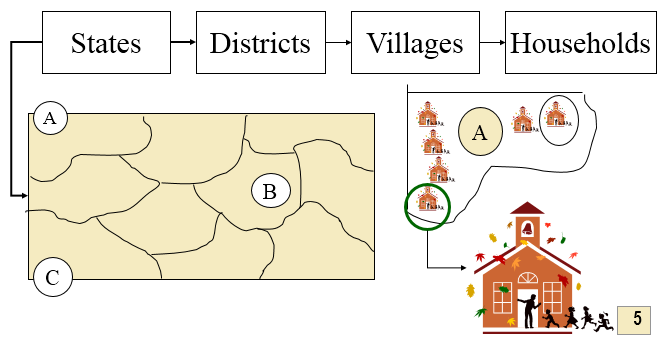
Multi-stage sampling (also known as multi-stage cluster sampling) is a more complex form of cluster sampling which contains two or more stages in sample selection. In simple terms, in multi-stage sampling large clusters of population are divided into smaller clusters in several stages in order to make primary data collection more manageable. It has to be acknowledged that multi-stage sampling is not as effective as true random sampling; however, it addresses certain disadvantages associated with true random sampling such as being overly expensive and time-consuming. Application of Multi-Stage Sampling: an Example Contrary to its name, multi-stage sampling can be easy to apply in business studies. Application of this sampling method can be divided into four stages: Choosing sampling frame, numbering each group with a unique number and selecting a small sample of relevant discrete groups. Choosing a sampling frame of relevant discrete sub-groups. This should be done from relevant discrete groups selected in the previous stage. Repeat the second stage above, if necessary. Choosing the members of the sample group from the sub-groups using some variation of probability sampling. Let’s illustrate the application of the stages above using a specific example. Your research objective is to evaluate online spending patterns of households in the US through online questionnaires. You can form your sample group comprising 120 households in the following manner: Choose 6 states in the USA using simple random sampling (or any other probability sampling). Choose 4 districts within each state using systematic sampling method (or any other probability sampling). Choose 5 households from each district using simple random or systematic sampling methods. This will result in 120 households to be included in your sample group. Advantages of Multi-Stage Sampling Effective in primary data collection from geographically dispersed. population when face-to-face contact in required (e.g. semi-structured in-depth interviews) Cost-effectiveness and time-effectiveness.…

One of the most comprehensive definitions of human resources management defines the term as “the policies and practices involved in carrying out the ‘people’ or human resource aspects of a management position, including recruitment, screening, training, rewarding and appraising” (Randhawa, 2007, p.2). Essential characteristics of human resources have been specified as valuable, rare, inimitable, and non-substitutable (Deb, 2006). Strategic human resource management, on the other hand, can be explained as an approach defining the manner in which organisational aims and objectives is going to be achieved through people with the use of HR strategies, as well as, integrated HR policies and practices (Armstrong, 2009). In other words, the main difference between HRM and strategic HRM relates to strategic framework the latter form of HRM adopts in relation to supporting long-term organisational aims and objectives. Three basic propositions of strategic HRM consist of idea that “the human resources or human capital of an organisation play a strategic role in its success and are a major source of competitive advantage” (Armstrong, 2008, p.34), integration needs to be maintained between HR strategies and business plans, and individual HR strategies need to be linked to each other in order to achieve horizontal integration. Increasing numbers of organisations are giving preference to strategic HRM approach over traditional HRM because a strategic approach effectively contributes to the improvement of a wide range of organisational elements and processes such as employee loyalty, organisational culture, organisational structure, effectively matching available resources in order to meet the demands of the future. Learning organisation can be defined as “an organisation in which everyone is engaged in identifying and solving problems, enabling the organisation to continuously experiment, improve, and increase its capacity” (Thomson and Baden-Fuller, 2010, p. 295). The role of HRM systems in facilitating organisational learning can be explained in…
By John Dudovskiy
Category: HRM

Work-life balance is no longer only a management buzzword, and it has become one of the most pressing HR issues globally. This is because intensifying level of competition has increased the amount of demand and pressure for organisations and their individual members. At the same time, it is understood that “for many employees throughout the world, balancing their work and personal lives is a significant concern” (Mathis and Jackson, 2011, p.67). First of all, it needs to be specified that “work-life balance can be seen as the reconciliation between paid work and life, or the balance that needs to be orchestrated between work and non work demands” (Al-Araimi, 2011, p.119). Organisations differ in terms of their approach and the level of their involvement in achieving work-life balance for employees. It has been stated that “those organisations who have recognised work/life balance as important, report they have increased the availability of flexible work options, such as part-time work, flexible starting and finishing times, study leave, paid parental maternity leave, and team work, and their employees have increasingly accessed these options” (Budhwar, 2004, p.245). Maintaining work-life balance is a considerable HR issue for UK organisations. It has been identified that “UK workers work the longest hours in Europe, and many managers and professionals claim to be working more than 60 hours per week” (Flexibility.co.uk, 2012, online). Moreover, according to a research conducted by Bupa, a leading international healthcare group, more than six million UK employees are chained to their desks, and only thirty per cent take a lunch hour (Bupa, 2012, online). At the same time, the numbers of alternative working patterns are increasing as a response and partial solution to this issue. Specifically, it has to be noted that “in the UK, around 3.5 million people are working full-time or part-time…

The so-called new science has been perceived as a possible source of influence on HRM by Audrey Collin (2010) in Contextualising HRM: developing critical thinking. The new science approach, also known as a holistic approach involves studying issues as a whole, rather than by dividing them into components. This approach has been developed to challenge Newton’s mechanic notion of universe that advocates the idea of dividing ideas and objects into small forming components so that they can be studied with an increased level of efficiency (Achouri, 2012). Collin (2010) advocates the idea of adopting a holistic approach towards HRM by convincingly claiming that this approach will assist in understanding the complexity of issues. Specifically, the author states that “to understand complexity, new approaches that recognise the whole rather than just its parts – a holistic approach – and attention to relationships between the parts needed, and these are being developed” (Collins, 2010, p.98). This viewpoint towards business management in general and HRM in particular deserves to be agreed with for several reasons. First of all, HRM functions need to be reminded and analysed to justify this claim. The functions of HRM can be divided into two, managerial and operative categories. Managerial HRM functions include planning, organising, staffing, directing, and controlling, whereas, operative functions consist of procurement, development, compensation, maintenance and motivation, integration, and industrial relations (Pravin, 2010). According to new science, or holistic approach these HRM functions need to be dealt with as whole, rather than separate components. For instance, “HR planning aims, in general, for the target and task oriented allocation of employable human resources for a specified or indefinite period” (Michalski, 2011, p.13). If this important HR function is dealt with as a separate issue from other HR and other organisational functions, than this may lead to loss of…
By John Dudovskiy
Category: HRM

As the biggest social networking site (SNS) Facebook pursues the mission of giving people the power to share and make the world more connected. Founded in 2004, Facebook has more than 843 million daily active users and employs more than 3000 people, who maintain website’s operations in more than 70 languages (Fact Sheet, 2012, online). Today Facebook is the biggest SNS in the world; nevertheless, it is faced with a range of serious business challenges that need to be dealt with timely and effectively in order to ensure the long-term growth of the business. Specifically, the emergence of recently launched Google+ as the main competitor, presents significant business challenges for Facebook taking into account high level of a wide range of tangible and intangible resources possessed by Google. Moreover, growing personal data security concerns fuelled by media represents another significant challenge for Facebook that threatens the company business perspectives unless dealt with effectively and efficiently. Also, the lifecycle of services introduced by SNS have greatly diminished increasing the importance of innovativeness and creativeness for Facebook. Furthermore, the world’s biggest SNS is faced with growing numbers of local competitors that possess substantial competitive advantage over the Facebook. Namely, local SNS associated with specific countries develop website’s design and various features taking into account cultural and other differences associated with specific regions whereas Facebook only able to offer standard design and features globally, and thus may find it difficult to attract the representatives of various cultural backgrounds. References Fact Sheet (2012) Facebook, Availabel at: http://newsroom.fb.com/content/default.aspx?NewsAreaId=22 Accessed April 5, 2012

Construction industry in UK is one of the biggest contributors to the local economy. Specifically, “in 2010 the Gross Value Added of the construction industry in the UK was £90.7 billion, 7.0% of the total GVA. There were 2.07 million workforce jobs in the UK construction industry in September 2011, 6.6% of all workforce jobs” (Maer, 2012, p.1). UK construction industry was among industries worst hit by recent global economic crisis of 2008-2012, particularly 2009 being the worst year since 1940s (Chan and Cooper, 2011). The biggest players in UK construction market include Balfour Beatty, Carillion, Laing O’Rourke, Babcock, Morgan Sindall, Skanska and others. The total turnover of top 100 construction companies in UK for 2011has amounted just under £64 billion (Construction Index, 2011). Balfour Beatty has maintained the market leadership in UK in terms of both, turnover (£105.41 million) and profit (£187 million) for several years. Skanska has been able to improve its position in the marketplace significantly during the last year to join top 10 UK construction companies by turnover, achieving the turnover of £1.267.3 million in 2011 (Construction Index, 2011). Current construction industry trends in UK involve cost-cutting as a means of survival as a direct result of the recent global economic crisis (Coughlan and Coughlan, 2011), increasing concern for environmental impacts of construction operations (Blewitt, 2008), and employee health and safety issues becoming even more significant. Construction companies in UK would find it highly challenging to address these trends in a simulations manner due to the presence of contradictions between these trends. Specifically, while construction companies have to explore the potential for cost-cutting as a result of the crisis, at the same time they are “forced” to become ‘greener’ and more environmentally friendly and these initiatives require substantial financial investments to be implemented. References Chan,…
By John Dudovskiy
Category: Industry Analysis