
Epistemology in research refers to the study of knowledge — how it is generated, validated, and what is considered acceptable knowledge. In business research, epistemology determines whether knowledge is based on observable facts or subjective interpretations. On this page: What is Epistemology? Epistemology vs Ontology Sources of Knowledge Epistemology in Research Methods Epistemology Across Research Philosophies How to Write Epistemology in a Dissertation Epistemological Position View of Knowledge Methods Positivism Knowledge from observable facts Quantitative Interpretivism Knowledge from subjective meanings Qualitative Realism Knowledge from observable phenomena + context Mixed Pragmatism Knowledge based on practical outcomes Mixed Epistemology at a glance What is Epistemology? Epistemology in a business research as a branch of philosophy deals with the sources of knowledge. Specifically, epistemology is concerned with possibilities, nature, sources and limitations of knowledge in the field of study. Alternatively, epistemology can be explained as the study of the criteria by which the researcher classifies what does and does not constitute the knowledge.[1] In simple words, epistemology focuses on what is known to be true. It is a way of thinking opposite to ontology. As a branch of research philosophy epistemology deals with the following questions: What is knowledge? Do we have knowledge? How we can gain knowledge? Although epistemology and ontology are closely related, they address different philosophical questions. Ontology concerns the nature of reality and asks what exists or what constitutes reality. Epistemology, on the other hand, focuses on how knowledge about that reality can be obtained and validated. In other words, ontology asks what is real, whereas epistemology asks how we can know what is real. These two concepts are interconnected because researchers’ assumptions about reality inevitably influence the methods they use to generate knowledge. Sources of Knowledge Epistemology is a vast field with multiple areas and…

Referencing is one of the most important aspects of any academic research and poor or lack of referencing will not only diminish your marks, but such practices may also be perceived as plagiarism by your university and disciplinary actions may follow that may even result in expulsion from the course. Difference between References and Bibliography It is very important to be able to distinguish between References and Bibliography. Under References you list resources that you referred to within the body of the work that also include quotations. For example, It has been noted that “time and the management of time is an important issue, and the supply of time management products – books, articles, CDs, workshops, etc. – reflects the huge demand for these products” (Walsh, 2007, p.3). Interchangeability of identical parts and a high level of straightforwardness of attaching these parts through the assembly line can be considered as revolutionary components of Fordism for the first part of the 20th century (Nolan, 2008). Under Bibliography, on the other hand, you need to list resources that you have read during the research process in order to widen your knowledge about the research area, but specific piece of information from these resources have not been used in your research in the direct manner. You do not need to refer to Bibliography within the body of the text. There are various methods of referencing such as Harvard, APA and Vancouver referencing systems. You should check with your dissertation handbook for the exact type of referencing required and follow this requirement thoroughly. My e-book, The Ultimate Guide to Writing a Dissertation in Business Studies: a step by step assistance offers practical assistance to complete a dissertation with minimum or no stress. The e-book covers all stages of writing a dissertation starting…
Samsung segmentation, targeting and positioning involves a set of activities performed in a sequence. These activities constitute the essence of Samsung marketing strategy. Segmentation involves dividing population into different groups on the basis of their common characteristics. Targeting is associated with selecting specific group(s) as consumers of products and services. Lastly, positioning refers to the selection of the marketing mix the most suitable for the target customer segment. Samsung uses the following types of positioning: Multi-segment positioning. Samsung targets more than one segments at the same time through offering several packages of products and services. For example, there are several variations of Samsung SMART Signage professional displays with different sizes, screen resolutions and functionalities and ultimately with different price tags. Thus, Samsung appeals to the needs and wants of consumers with varying financial capabilities. Imitative positioning. Samsung is known to imitative its main competitor Apple in product in design, functionalities, as well, as marketing strategy. Anticipatory positioning. Certain Samsung products such as mobile image sensors currently have low turnover. However, these product have been developed with the anticipation that the turnover will increase in the future. The following table illustrates Samsung segmentation, targeting and positioning: Type of segmentation Segmen-tation criteria Samsung target customer segment Samsung IT & Mobile Communications Samsung Consumer Electronics Samsung Device Solutions Geog-raphic Region 80 countries worldwide 80 countries worldwide 80 countries worldwide Density Urban/rural Urban/rural Urban/rural Demo-graphic Age 18-65 25-65 25-60 Gender Males & Females Males & Females Males & Females Life-cycle stage Bachelor Stage Newly Married Couples Full Nest I Full Nest II Full Nest III Empty Nest I Empty Nest II Solitary Survivor I Solitary Survivor II Bachelor Stage Newly Married Couples Full Nest I Full Nest II Full Nest III Empty Nest I Empty Nest II Bachelor Stage Newly Married…
Samsung marketing mix (Samsung 7Ps of marketing) comprises elements of the marketing mix that consists of product, place, price, promotion, process, people and physical evidence. Product Samsung Electronics products are designed in 6 global design centres and manufactured in 53 global production bases. There are 34 R&D centres worldwide that engage in new product development. As illustrated in table below, Samsung products can be divided into three divisions and there are more than one product categories under each division. Product division Product categories Consumer electronics Visual display business Digital appliances business Printing solutions business Health and medical equipments business IT & Mobile Communications Networks business Mobile communications business Device solutions Memory business System LSI business Samsung product divisions and categories Samsung products have won a number of awards and recognitions such as Best Product Award in 8 categories by BLI Summer Pick Award and Gold Award in Design by iF Design in 2015. Place. There are 53 Samsung international sales bases and the multinational electronics company uses the following sales channels: Sales and service dealers. This sales channel is associated with corporate sales. Modern retail outlets owned by the company. These are highly attractive stores with customer service representatives, as well as, employees known as Galaxy Consultants. In 2015, there were Galaxy Consultants at 158 stores under Samsung’s direct management in Korea.[1] The company has plans to expand Galaxy Consultants program beyond Korea. Distributors. Samsung has regional, territory and country distributors. Depending on the territory, size and experience of distributors, Samsung can grant distributorship rights of a single product category or all Samsung products. Online sales. Customers can choose and order Samsung products through official website of the company. Price Samsung pricing strategy can be described as the combination of the following pricing strategies depending on the product range, the…
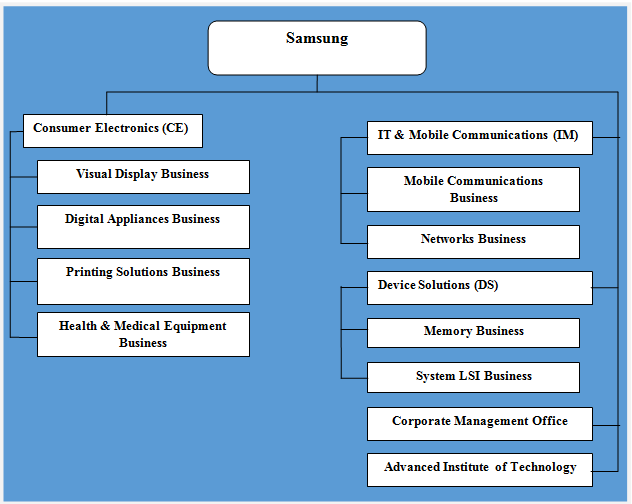
Samsung organizational structure is divisional and the company is divided into three key divisions: IT & Mobile Communications (IM), Consumer Electronics (CE), and Device Solutions (DS). The rationale behind the choice of divisional organizational structure relates to Samsung’s large product portfolio and differences between products and services the company offers to the market. Accordingly, Samsung’s each division is managed separately taking into account the characteristics of their products that have implications on new product development, marketing, selling and other aspects of the business. Moreover, Samsung Electronics has more than 200 subsidiaries around the world. Figure below illustrates Samsung organizational structure: Samsung organizational structure As it is illustrated in figure above, apart from three divisions, Samsung organizational structure also integrates corporate management office and Samsung Advanced Institute of Technology (SAIT). Corporate management office deals with overall management of the group and also has administrative responsibilities. SAIT is Samsung Group’s R&D hub, established as the incubator for the development of new products and services. The senior management completed its review of optimal organizational structure on April 2017 and decided not to convert to a holding company structure.[1] Following a series of recent scandals involving Samsung management that culminated in Jay Y. Lee, the former de facto head of the Samsung conglomerate being jailed for 5 years[2], it can be argued that Samsung organizational structure will change in the foreseeable future. Specifically, Samsung organizational structure may change to make governance and decision making practices more transparent to eliminate or at least to reduce the cases of future scandals. Samsung Group Report contains a full analysis of Samsung organizational structure. The report illustrates the application of the major analytical strategic frameworks in business studies such as SWOT, PESTEL, Porter’s Five Forces, Value Chain analysis and McKinsey 7S Model on Samsung. Moreover, the report contains analyses…
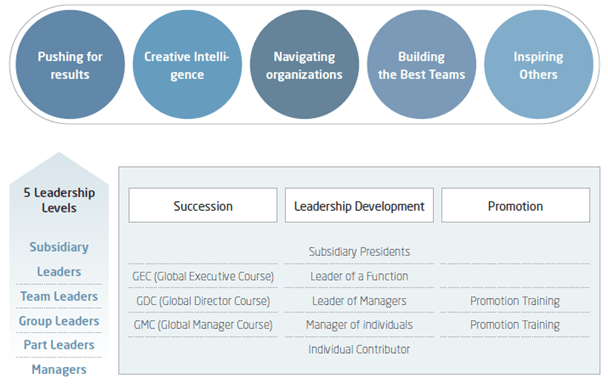
Samsung leadership at the most senior level has been found to be involved in a number of scandals and contradictions during the past years. There is a consensus among business theorists and practitioners that the main reasons of these scandals relate to owner-management model of the global electronics company. “Since taking over in 1987, Samsung Electronics chairman Lee Kun-hee, part of the second generation of managers from the ruling Lee family, made great contributions to the group’s astonishing management performance and the development of Samsung into South Korea’s leading global IT business”.[1] At the same time, Lee Kun-hee was convicted twice in 1995 and 2008 for slush fund cases, but escaped punishment over the X-files scandal. There were other incidents involving Samsung senior leadership belonging to the ruling family as well. These have escalated into the emergence of massive leadership crisis in 2017. Specifically, Jay Y. Lee, the former de facto head of the Samsung conglomerate, was given 5-year jail term for his role in bribery and embezzlement, part of a series of scandals that led in March to the ouster of Park Geun-hye, South Korea’s first female president.[2] Currently, the company is led by Dr. Oh-Hyun Kwon is Chief Executive Officer and Vice Chairman, Samsung Electronics; Head of Device Solutions. Samsung Board of Directors consists of four executive directors and five independent directors. The independent directors also meet separately from the Board of Director’s executive directors in order to promote a free exchange of ideas on all aspects of the company’s management.[3] As it is illustrated in figure below, Samsung has a leadership development program that comprises all five leadership levels throughout the company. Samsung Leadership Development Program Samsung Group Report contains a full analysis of Samsung leadership. The report illustrates the application of the major analytical strategic frameworks in…
Samsung business strategy is marked with a high level of flexibility in a way that the company is determined in changing its strategy dramatically according to changes in external business environment. Few people know that the Samsung initially started as a grocery store in Korea in 1938, switched to noodle business in 1940 and moved to sugar production in 1950. Later, Samsung became engaged in woollen mill in 1954 and insurance and securities business in 1956. Samsung produced black and white TV as the first technological product in 1960 and since then the company emerged as one of the leaders in technology and electronics market segments in the global scale. Frequent change of direction and new product development persists as important features of Samsung business strategy to this day. Samsung business strategy consists of the following three pillars/elements/parts: 1. Effective market readership. A market reader can be defined as a company that closely observes the market and is fast in replicating new products and/or introducing new features in existing products, initially introduced by other companies. Specifically, Samsung has proved effective in replicating the design and important features of smartphones from its main competitor, Apple. It has been noted that “one internal Samsung presentation from 2010 provided a step-by-step process for Samsung engineers to follow in an effort to steal so much of what made the iPhone such a unique product”.[1] 2. Scanning and utilising opportunities in the market. Samsung business strategy integrates constant search for gaps in the market and exploits the opportunity with positive implications on the bottom line for the business. For example, Samsung noticed that Asian-language speakers in particular wanted a device that they could hand-write on, because drawing characters is easier with a pen. The result was a development of series of Samsung Note devices as…
Samsung Corporate Social Responsibility (CSR) programs and initiatives are facilitated through the Sustainability Management Council, which consists of 14 related departments that handle issues from 10 different areas, including society and the environment.[1] Samsung Global Code of Conduct is based on the following principles: Compliance with laws and ethical standards Maintenance of clean organizational structure Respecting customers, shareholders and employees Caring for the environment, health and safety Being socially responsible corporate citizen CSR aspect of the business is managed by Samsung CSR Committee. The company releases Supplier Responsibility Progress Report annually and it includes the details of CSR programs and initiatives engaged by the company. Samsung Electronics addresses CSR aspects of the business in four directions: social contributions, green management, health and safety and sharing growth. Samsung Supporting Local Communities Samsung Tech Institute encourages independence and self-reliance among young adults via systematic vocational education. The initiative had 39,659 beneficiaries by the end of 2015. Samsung SMART School addresses an important gap in the global education by improving educational environment for students residing in disadvantaged areas. In 2015 alone 224,753 students attended Samsung SMART School. Samsung Solve for Tomorrow is a program that aims to tackle important social issues. The program engages students and non-profit organizations to identify the most pressing social problems and to find and to implement solutions to these problems Samsung Care Drive facilitates a range of healthcare programs in order to deal with the help of technology. As of 2014, the company had 30 active programs primarily in China, Russia, and several countries in Africa. Samsung Nanum Village aims to target the roots of poverty via providing an effective infrastructure to socially disadvantaged segments of the population. Within the scope of this program, partnerships are formed with national and local governments to provide an extensive…
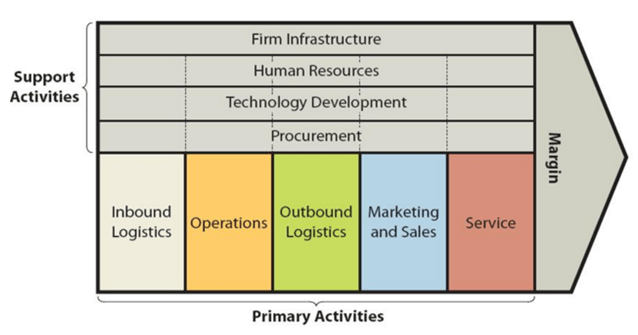
Samsung value-chain analysis is an analytical framework that assists in identifying business activities that can create value and competitive advantage for the global electronics company. Figure 1 below illustrates the essence of value chain analysis. Figure 1 Samsung Value chain analysis Samsung Primary Activities Samsung Inbound logistics Samsung has 579 suppliers globally and the company’s supply chain includes over 2,700 suppliers in various industries across the world.[1] The majority of Samsung suppliers are based in Asia and accordingly, 79.4% of its supply-chain expenses occur in Asia. This is followed by Americas (14.8%), Europe (4.4%) and other places.[2] In order control inbound logistics aspect of the business more effectively, Samsung owns a number of logistics firms as its subsidiaries. The most notably, Samsung Electronics Logitec, established in 1998, is an integrated enterprise logistics management agent that serves logistics needs of the company with 540 employees and 8,600 partner employees around the globe.[3] Figure 2 Samsung supply chain management principles[4] Strategic relationships with suppliers is one of the main sources of value creation for the multinational electronics company. For example, the company changed the payment cycle from twice a month to four times a month in 2011 and implemented early payments around Korea’s traditional holiday seasons, thereby helping to smooth the funding of operations for suppliers.[5] Samsung Operations Samsung Electronics is a global company that operates 38 production bases in 17 countries around the world.[6] The company manufactures 90% of its products in-house. Samsung operations are divided into three key divisions: IT & Mobile Communications (IM) Consumer Electronics (CE) Device Solutions (DS) At the end of 2015, Samsung Electronics maintained 199 worldwide operation hubs, including manufacturing subsidiaries, sales subsidiaries, design centres, research centres, and 15 regional head offices worldwide. Figure 3 below illustrates the full scope of Samsung global network of operations.…
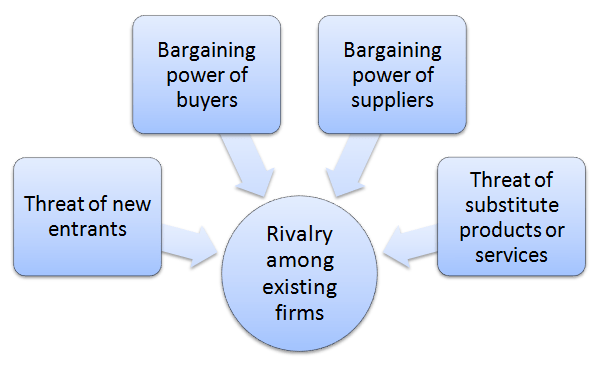
Porter’s Five Forces analytical framework developed by Michael Porter (1979)[1] represents five individual forces that shape the overall extent of competition in the industry. Samsung Porter’s Five Forces are represented in Figure 1 below: Figure 1 Samsung Porter’s Five Forces Threat of substitute products or services for each product category offered by Samsung is substantial. Samsung smartphones can be substituted with ordinary mobile phones at any time with no additional costs for customers. Moreover, there is an increasing range of mobile and desktop applications that represent relevant substitute for Samsung’s mobile communications business. Samsung visual display business is threatened by indirect substitution such as increasing popularity of leading active lifestyle and spending time outdoor. In other words, representatives of Samsung target customer segment may prefer to spend time outdoors, rather than in front of TV with negative implications on the volume of sales of Samsung TV’s. Furthermore, increasing popularity of cloud storage is emerging as viable alternative for printing and this tendency may decrease the sales of Samsung printing solutions products in the foreseeable future. Rivalry among existing firms is intense. Approaching market saturation for many product categories in consumer electronics industry intensifies the rivalry among existing firms and there is a little differentiation among the range of products offered. Moreover, the great number and diversity of competitors operating in the market fuels the extent of competition in the industry. In smartphone market segment, one of its critical product categories, Samsung competes with a wide range of suppliers such as Apple, LG, Lenovo, ZTE, Huawei, OPPO and others. Nevertheless, as it is illustrated in Figure 2 below, Samsung has been able to maintain leadership position in the global scale for the last six years. Figure 2 Global market share by leading smartphone manufacturers[2] Bargaining power of suppliers…