
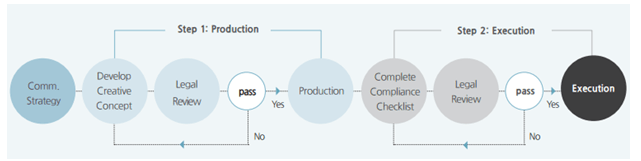
Samsung’s has the largest marketing budget in the competition and this fact partially explains the leadership position of the business in terms of market share. Samsung spent a total of USD10.2 billion (11.5 trillion won) on marketing in 2016 alone. This included USD3.9 billion (4.4 trillion won) toward advertisements, a 15% increase from 2015[1]. Samsung marketing strategy integrates various forms of advertising, events and experiences, public relations, direct marketing and personal selling as discussed further below in more details. The multinational electronics company has 53 global sales bases worldwide. Samsung marketing strategy is based on the following principles: Samsung 7ps of marketing places greater emphasis on product element of the marketing mix, compared to other elements such as process, people and physical evidence. Specifically, with 34 R&D centres worldwide and 53 global production bases, the multinational electronics company attempts to ensure the continuous pipeline of new products with innovative features and capabilities. Samsung segmentation targeting and positioning strategy integrates multi-segment, imitative and anticipatory positioning techniques. Samsung marketing communications strategy, as it is illustrated in figure below, comprises two steps and each step involves a set of separate activities. It has to be noted that legal review as an important element of marketing communication process is present in both steps – production and execution. This is because neglecting legal implications associated with the development and delivery of marketing communication messages can cause considerable damage to the brand image with severe financial implications. Samsung Electronics marketing communication process[2 Samsung Group Report contains a full analysis of Samsung marketing strategy. The report illustrates the application of the major analytical strategic frameworks in business studies such as SWOT, PESTEL, Porter’s Five Forces, Value Chain analysis and McKinsey 7S Model on Samsung. Moreover, the report contains analyses of Samsung leadership, organizational structure and…
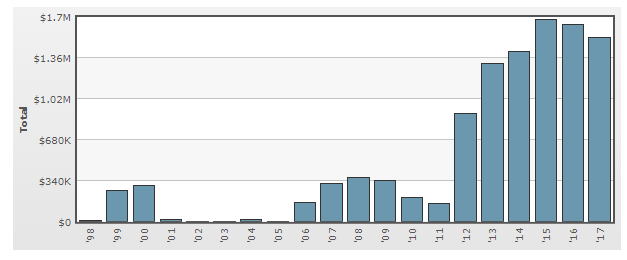
PESTEL is a strategic analytical tool used to assess the impact of external factors on businesses. Samsung PESTEL analysis involves critical analysis of political, economic, social, technological, environmental and legal factors affecting the multinational electronics company. Political Factors in Samsung PESTEL Analysis A set of political factors such as political stability in the country, government attitude towards the industry and the company, home market lobbying and pressure groups, international pressure groups, risk of military invasion of the country and others affect revenue and long-term growth prospects of Samsung Electronics in direct and indirect ways. Samsung Electronics is found to be involved in a number of political scandals in its home market in South Korea. Lee Kwang-jae, Uri Party representative working for South Korean President Roh Moo-hyun officially admitted the receipt of 50 to 60 billion KRW from Samsung Group in the forms of bonds to be used in the presidential campaign in 2002. Moreover, the prosecution found that the company has also funded the opposition, Grand National Party via 2.47 billion KRW before the election.[1] The instance mentioned above represents an attempt by the company to achieve positive impact of political factors via illegal means and methods with potentially severe detrimental impact on Samsung brand image. In August 2017, Jay Y. Lee, the former de facto head of the Samsung conglomerate, was given 5-year jail term for his role in bribery and embezzlement, part of a series of scandals that led to the ouster of Park Geun-hye, South Korea’s first female president.[2] As it is illustrated in figure below, Samsung has increased the amount of its political lobbying significantly starting from 2012. It can be argued that these spending included controversial payments as discussed above. Annual lobbying by Samsung Group[3] Economic Factors in Samsung PESTEL Analysis Strong Korean currency is one of…
SWOT is an acronym for strengths, weaknesses, opportunities and threats related to organizations. The following table illustrates Samsung SWOT analysis: Strengths 1. Leadership in visual display market segment 2. Strong patent portfolio 3. High brand value 4. Global leadership across all mobile and smartphone markets 5. Solid financial position of the company Weaknesses 1. Absence of own OS and software 2. Damage to brand image due to product safety issues 3. Low profit margin 4. Extensive product portfolio 5. Competitive advantage hard to sustain Opportunities 1. Further increasing investment in R&D 2. Focusing on mobile advertisements 3. Entering cloud business segment 4. Increasing presence in emerging markets 5. Entering into strategic collaboration with affiliated businesses Threats 1. Changes in currency exchange rate 2. Intensification of competition due to the slowing growth in the industry 3. Disruption in the pipeline of new products 4. Patent infringement lawsuits 5. Disruptive innovation by competitors Samsung SWOT analysis Strengths 1. Samsung has maintained the largest market share in the global market of visual display since 2006. Samsung Display Solutions has advanced the field of digital signage by introducing leading-edge new hardware, including new video walls featuring the world’s narrowest bezel and the world’s first TIZEN-powered premium signage.[1] Samsung had a global TV market share of 27.6% in 2015. The global market share for UHD TV market share amounted to 34.1% for the same year.[2] Moreover, in 2015 Samsung Electronics had mobile phone market share of 21.1%, smartphone market share of 22.2% and tablet market share of 15.0%.[3] 2. Strong patent portfolio is one of the solid bases of Samsung competitive advantage. In 2015 alone, the multinational electronics company registered 5072 global patents in the US Patent and Trade Office. Samsung is the 2nd largest patent holder in the US since 2006.[4] The multinational…
Founded in 1969, Samsung Electronics is one of the leaders in consumer electronics industry in an international scale. The company employs 325,677 people in 80 countries and has more than 200 subsidiaries around the world (Sustainability Report, 2016). The business is divided into three large segments – consumer electronics, IT & mobile communications and device solutions. Samsung delivered the sales of KRW200.7 trillion and earned KRW26.4 trillion in operating profits on a consolidated basis in 2015. From the financial perspective, Samsung maintained a sound financial structure by recording a debt ratio of 35.3 percent, an equity ratio of 73.9 percent, and a return on equity ratio of 11.0 percent on a consolidated basis (Sustainability Report, 2016). Business strategy of Samsung Electronics is directed at strengthening the competitiveness and profit structures and the focus is on the development of premium products. Moreover, the international electronics company is known to benefit from product innovation and expanding its product range in a regular manner. Thanks to efficient implementation of this strategy, Samsung currently maintains the global leadership in visual display market segment with the market share of 28.3% for all flat-panel TV product lines. In the first quarter of 2015 Samsung surpassed Apple to regain its position as the largest smartphone manufacturer in the world (Sustainability Report, 2016). Currently, the multinational electronics company has certain weaknesses such as the absence of own operating system (OS) and software, damaged brand image due to product safety issues and recent corruption scandal and low profit margin. Moreover, Samsung is finding increasingly difficult to sustain its competitive advantage. Samsung Group Report contains the application of the major analytical strategic frameworks in business studies such as SWOT, PESTEL, Porter’s Five Forces, Value Chain analysis and McKinsey 7S Model on Samsung. Moreover, the report contains analyses of Samsung’s business…
Below is Procter & Gamble SWOT analysis template Strengths 1. Ownership of more than 300 brands sold in more than 180 countries 2. A high level of brand awareness 3. Effective marketing strategy and experience and competency in branding 4. Solid financial position 5. Efficient product distribution network around the globe Weaknesses 1. Inability to deal with counterfeiting issue of P&G brands 2. Weak presence in online marketplace 3. Weak corporate social responsibility (CSR) performance 4. Lack of flexibility of the business due to its massive size Opportunities 1. Formation of strategic cooperation with local businesses 2. Focusing on health and beauty products for men 3. Playing a greater emphasis on CSR 4. New product development Threats 1. Increasing competition from local manufacturers in global markets 2. Emergence of more CSR-related scandals 3. Introduction of trade barriers in key international markets 4. Inability to sustain competitive advantage in long-term perspective How to use the Procter & Gamble SWOT template above Expand each point above into one or more paragraphs with discussions and analysis. Additional points related to Procter & Gamble strengths, weaknesses, opportunities and threats not listed above can also be included if you think they are relevant points and add value to the work. You will need to support your arguments with references from reliable sources such as annual report of the company, industry journals and magazines and government publications. Your discussions will need to include statistical data and preferably charts and graphs with references to the sources. You can also find many examples for the application of SWOT analysis using the case studies of famous global brands here.
By John Dudovskiy
Category: Beauty & Fashion
Strengths 1. One of the market leaders in the UK 2. Effective marketing strategy focused on health aspects of food 3. Benefits from the economies of scale 4. Greater range of products compared to many other budget supermarkets in the UK 5. Better Corporate Social Responsibility (CSR) practices compared to the competition Weaknesses 1. Lack of clear competitive advantage 2. Overdependence in the UK market 3. Sainsbury’s loyalty schemes are less attractive than Tesco Clubcard 4. The history of product recalls Opportunities 1. International market expansion with the focus on emerging economies 2. Engaging in cost savings via increasing the numbers of self checkout systems 3. Investing to increase the efficiency of online sales 4. Catering for increasing demand for private label products 5. Engaging in business diversification Threats 1. Price increases by suppliers 2. Further intensification of competition 3. Emergence of CSR-related scandals 4. Rising costs of human resources 5. Inability to sustain competitive advantage How to use the Sainsbury’s SWOT template above Expand each point above into one or more paragraphs with discussions and analysis. You will need to support your arguments with references from reliable sources such as annual report of the company, industry journals and magazines and government publications. Your discussions will need to include statistical data and preferably charts and graphs with references to the sources.
By John Dudovskiy
Category: Food & Grocery
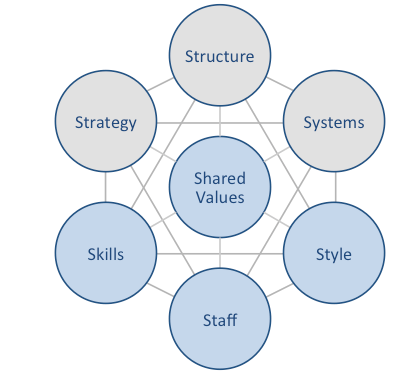
Google McKinsey 7S model illustrates how seven business elements can be aligned to increase effectiveness. Strategy, structure and systems are hard elements, whereas shared values, skills, style and staff represent soft elements. McKinsey 7S model attempts to illustrate that a change in one element causes changes in others. As it is illustrated in figure below, shared values are positioned at the core of Google McKinsey 7S model, since shared values guide employee behaviour with implications in their performance. Google McKinsey 7S model Hard Elements Strategy. Google core business strategy is business diversification and introduction of new products and services in a regular manner. Google business strategy is also based on the development of a closed eco-system to motivate customers to use greater range of products and services. Customers usually enter this ecosystem through using Chrome browser, watching YouTube videos or using Gmail. In no time, they are prompted to use additional services such as Drive, Play, Calendar, Blogger and others. Alphabet Inc., Google’s parent company also uses acquisitions business strategy extensively and more than 200 companies and 30 acquisitions were made in 2015 and 2016 alone. Structure. Google was restructured in 2015 to become a wholly owned subsidiary of a newly established parent company Alphabet Inc. Under the new structure, the company is divided into a number of divisions and each division is positioned as a separate brand such as Google, Calico, Nest, Access (Fiber) and others. The new structure helps the company to move beyond search engine business and to engage in diversification strategy to a greater extent. Systems. Google operations rely on a wide range of systems such as employee recruitment and selection system, team development and orientation system, transaction processing systems, customer relationship management system, business intelligence system, knowledge management system and others. Additionally, ranking of web-pages…
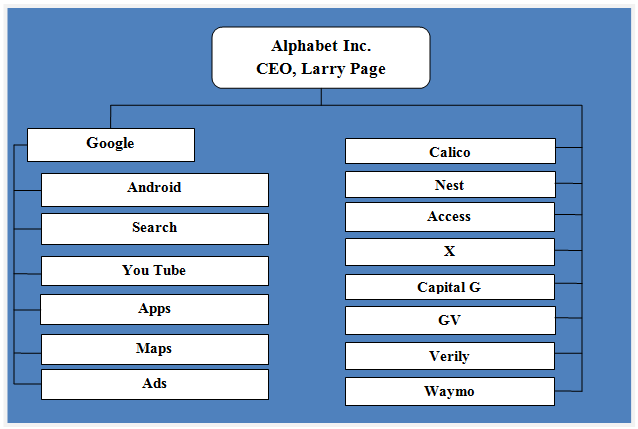
Alphabet Inc. organizational structure is divisional. Each division is positioned as a separate brand such as Google, Calico, Nest, Access (Fiber) and others. Alphabet’s individual divisions have flat organizational structure and this gives business a range of benefits such as lack of bureaucracy, high level of flexibility and effective two-way communication between senior management and other employees. Google Inc. was restructured in 2015 to become Alphabet Inc. “Google’s search product became a wholly owned subsidiary of a new parent company, Alphabet, with other Google projects and teams spun out into separate “Alphabet companies,” each with its own CEO.”[1]. Alphabet Inc. is a holding company with no business operations of its own. The main aim behind this restructuring was to help entrepreneurs build and run companies with the autonomy and speed they need. In other words, the company was restructured to move beyond search engine business and to engage in diversification strategy to a greater extent. Introduction of new businesses such as Waymo, a self-driving car company and Debug project, which aims to stop mosquitoes in their tracks have been enabled by this restructuring initiative. Figure below illustrates Alphabet Inc. organizational structure: Alphabet Inc. organizational structure The current pattern of Alphabet Inc. organizational structure gives CEO Larry page and the senior leadership greater freedom to explore new projects and acquisitions — regardless of how they fit into Google’s mission “to organize the world’s information and make it universally accessible and useful.” Alphabet Inc. (Google) Report contains a full analysis of Alphabet Inc. organizational structure. The report illustrates the application of the major analytical strategic frameworks in business studies such as SWOT, PESTEL, Porter’s Five Forces, Value Chain analysis and McKinsey 7S Model on Alphabet Inc. Moreover, the report contains analyses of Alphabet leadership, business strategy and organizational culture. The report also…

Alphabet Inc. leadership team is headed by CEO Larry Page. The executive team consists of 16 members, responsible for various aspects of the business. Formerly, Eric Schmidt was CEO of Google until the business was restructured in 2015 and Alphabet Inc. was instituted as a holding company of Google, along with other businesses. Alphabet Inc. was instituted as an analogue to Warren Buffett’s Berkshire Hathaway.[1] Alphabet Board of Directors comprises 13 members, led by Executive Chairman of the Board Eric Schmidt. The Board includes successful and experienced business leaders such as Alan Mulally and Paul Otellini, as well as, distinguished economists such as Roger W. Ferguson Jr. Ph.D. and Shirley M. Tilghman Ph.D. Table below illustrates the leadership of companies within Alphabet portfolio Alphabet Inc. Company CEO Google Sundar Pichai Access Greg McCray Calico Art Levinson, former CEO of Genentech CapitalG David Drummond GV David Krane Nest Marwan Fawaz Verily Andy Conrad, founding CEO with background in X Waymo John Krafcik, background in auto industry X Astro Teller Alphabet Inc. leadership challenges in present include ensuring the profitability of business subsidiaries other than Google such as Access, Calico, CapitalG, GV, Nest, Verily, Waymo, and X. Although Larry Page has proven leadership skills, being one of the driving forces behind the emergence of Google to its current state, it is not guaranteed that he is able to replicate that same success in relation to non-Google businesses within Alphabet portfolio. Alphabet Inc. (Google) Report contains a full analysis of Alphabet Inc. leadership. The report illustrates the application of the major analytical strategic frameworks in business studies such as SWOT, PESTEL, Porter’s Five Forces, Value Chain analysis and McKinsey 7S Model on Alphabet Inc. Moreover, the report contains analyses of Alphabet Inc. business strategy, organizational structure and organizational culture. The report also comprises…

Alphabet (Google) business strategy is based on the following three elements: 1. Business diversification and introduction of new products and services in a regular manner. This constitutes the core of Alphabet business strategy (Google business strategy). Starting from search engine business in 1998, the product portfolio of the company has been consistently expanded. Today Alphabet Inc. offers the widest ranges of products and services including self-driving cars, indoor and outdoor cameras, learning thermostats, and smoke alarms and even products to stop mosquitoes in their tracks. First mover advantage is the main Alphabet (Google) competitive advantage in relation to the majority of these products and services. 2. Business acquisitions. Alphabet (Google) business strategy involves rapid growths via acquisitions. As of December 2016, Alphabet acquired more than 200 companies and 30 acquisitions were made in 2015 and 2016 alone. The efficiency of the internet giant to effectively integrate its corporate culture to new businesses it acquires is one of the solid sources of Alphabet (Google) competitive advantage. 3. Profit maximization through creation of a closed eco-system. Google has created a collection of inter-connected services and applications. Customers usually enter this ecosystem through using Chrome browser, watching YouTube videos or using Gmail. In no time, they are prompted to use additional services such as Drive, Play, Calendar, Blogger and others. A greater range of products a customer uses, the more profit Google earns via advertising in various formats. Moreover, machine learning and Artificial Intelligence (AI) has been focus of the business for the past several years with direct implications on Alphabet business strategy (Google business strategy). Introduction of Google Assistant and its integration into a new family of hardware devices like the Pixel and Google Home in 2016 is a big step for the company towards enhancing machine learning and AI. Alphabet Inc.…